
Species · Shrimp & snails
Assassin Snail
Clea helena
A carnivorous snail that hunts pest snails — the natural way to control a bladder/ramshorn/trumpet-snail outbreak. Not an algae eater; it breeds slowly, and it will eat OTHER snails, so keep it away from snails you value.
Difficulty: Beginner Shrimp / invert tank ✓ Fact-checked care guide
Quick facts
| Adult size | ~2.5 cm / 1 in |
|---|---|
| Minimum tank | ~8 L / 2 US gal or more (one small snail; scale up for a group) |
| Temperature | 21–27 °C / 70–80 °F |
| pH | 7.2–8.0 (alkaline) |
| Hardness | Moderate to hard GH — needs calcium for a healthy shell |
| Filtration & flow | Any cycled tank; a sand/fine-gravel substrate it can burrow into. No copper. |
| Diet | Carnivore — hunts pest snails; also takes high-protein foods (bloodworm, sinking wafers, pellets) |
| Social | Non-social, but keep 6+ if you want them to breed (they are not hermaphrodites) |
| Temperament | Peaceful toward fish, plants and shrimp — but a predator of other snails |
| Lifespan | Commonly cited at ~2 years in the hobby (not stated by the primary source) |
Overview
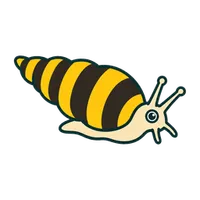
The assassin snail (Clea helena, also sold as Anentome helena) is a small, strikingly-marked carnivorous snail — a pointed spiral shell in alternating dark-brown and yellow "bumblebee" stripes — famous for one job: hunting and eating the pest snails (bladder, ramshorn, Malaysian trumpet) that plague many tanks.
It buries in the substrate with just its siphon showing, then pops out to hunt when it smells food. Unlike the algae-grazing nerite or mystery snail, it is a predator, not a clean-up-crew grazer — and that is exactly why keepers add it.
💷 Costing it out? See how much a assassin snail really costs to keep — the assassin snail itself is usually the cheapest part.
Water & tank
Assassin snails like alkaline, mineral-rich water — pH 7.2–8.0 with moderate-to-hard GH — at 21–27 °C / 70–80 °F, because they need calcium to build and hold a healthy shell. If the shell develops holes or pits, the water is likely too soft/acidic: add crushed coral and a mineral supplement.
Being small, one snail is happy in ~8 L / 2 US gal or more; give a group proportionally more. Provide a sand or fine-gravel substrate they can burrow into. As with all inverts: no copper.
Feeding
A carnivore. Its preferred food is other snails — it will steadily work through a pest-snail population and, in a group, can even take down larger snails. It also scavenges deceased animals, fish eggs, and newborn fry that cannot yet swim freely.
When the pest snails run out, feed high-protein foods — frozen bloodworm, fish flakes, pellets, sinking wafers — plus a mineral-enriched/calcium food for shell health so it never goes hungry.
Behaviour & tankmates
Peaceful with fish, plants, dwarf shrimp and other non-snail invertebrates — it does not attack its own kind. The critical caveat is in the name: it eats OTHER snails, including nerite, mystery and Sulawesi rabbit snails, so remove any snails you want to keep before adding assassins.
It generally leaves adult dwarf shrimp alone (many keepers run assassins with cherry shrimp), but as a carnivore it may opportunistically take shrimp fry or eggs. Avoid housing it with snail-eaters such as pufferfish and some loaches, or it becomes the hunted.
What to expect
A snail that spends much of its time buried with only its siphon tube extended, emerging to hunt when it smells food. Breeding is slow: they are not hermaphrodites, so you need a group (6+) for a male and female, and they lay single-egg, square translucent capsules one at a time on hard surfaces — no pest-snail-style population explosion.
Myths, kindly busted
“Assassin snails eat algae like nerite or mystery snails.”
They are carnivores, not algae grazers — they hunt other snails and eat high-protein foods. They will not clean algae off your glass.
“They will breed out of control like pest snails.”
They breed slowly and need both sexes (they are not hermaphrodites), laying one egg capsule at a time — a population builds gradually, if at all.
“They will wipe out my shrimp colony.”
They generally leave adult dwarf shrimp alone and are commonly kept with cherry shrimp, though as carnivores they may take the occasional fry or egg.
🐟 Did you know? — Assassin Snail fun facts
Little true delights about the assassin snail — each one checked against a named source, no pet-shop myths.
When to act
We triage, not diagnose — but these are worth a closer look (starting with a water test):
- A shell developing holes, pits, or a thinning/cracking edge — water too soft/acidic or short on calcium; raise GH and add crushed coral / a mineral supplement.
- A snail that stays sealed up and inactive for a long time, or floats and smells foul (dead) — check water quality and rule out copper.
- No burrowing or hunting activity and a snail sitting exposed and limp — test the water (ammonia/nitrite, temperature) and check for copper contamination.
Heading to a vet? Print the Assassin Snail vet-prep sheet — what to bring, what to tell them, and the questions to ask.
Sources & further reading
- Aquarium Co-Op — Care Guide for Assassin Snails — Adult up to ~1 in / 2.5 cm; one snail per ~2 US gal / ~8 L or more; temperature 70–80 °F / 21–27 °C; pH 7.2–8.0; moderate-to-hard GH (add crushed coral for soft water); carnivore that eats pest snails (and larger snails in groups), plus high-protein foods; not hermaphroditic (keep 6+ to breed), breeds slowly (single-egg capsules); safe with fish, plants, dwarf shrimp; may take fry/eggs; copper toxic.
Written & fact-checked by The Finfern Team against the sources above — kind, general guidance, not a diagnosis. If something looks wrong, test your water and, if it persists, contact a fish-savvy vet.

Get the free Assassin Snail Starter Kit
The essentials at a glance, a setup checklist and a first-30-days plan for your assassin snail — what to get right and what to watch for. Join the shoal and we’ll send it over. Free sheets and tools always stay open, no gatekeeping.
Water-first tips and new guides the moment they land. No spam — unsubscribe anytime. See how we handle your data in our privacy notice.