
Species · Shrimp & snails
Bamboo Shrimp
Atyopsis moluccensis
A big, peaceful fan-feeding shrimp that needs flow plus suspended food (never a clean, calm tank) — and dies to any copper.
Difficulty: Intermediate Shrimp / invert tank ✓ Fact-checked care guide
Quick facts
| Adult size | ~3–4 in / ~8–10 cm — one of the largest commonly-kept freshwater shrimp |
|---|---|
| Minimum tank | ~75 L / 20 US gal minimum (Aquarium Store Depot) |
| Temperature | ~20–29 °C / 68–85 °F (Aquarium Store Depot) |
| pH | 6.5–8.0 (Aquarium Store Depot) |
| Hardness | 3–10 KH (Aquarium Store Depot) |
| Filtration & flow | Moderate-to-high flow is essential (it starves in a calm tank); copper is lethal |
| Diet | FILTER FEEDER (not a scavenger) — needs current + fine suspended food; cannot be target-fed |
| Social | Peaceful and community-safe; sits mid-to-low in the flow |
| Temperament | Peaceful — no threat to fish; too large to be an easy target itself |
| Lifespan | Source is internally inconsistent — its table says 1–3 years, its FAQ says 4–6 years (Aquarium Store Depot) |
Overview
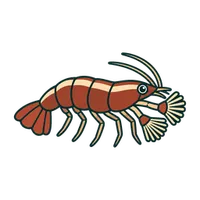
The bamboo shrimp (also sold as wood shrimp) is a big, peaceful filter-feeding shrimp that sits in the current and unfurls fan-shaped "hands" to comb food out of the flowing water. At 3–4 inches it is one of the largest freshwater shrimp commonly kept, and a genuinely mesmerising display animal in a planted community tank.
Here is the honest core of keeping it: it does not eat like other shrimp. It cannot be target-fed and it will not thrive by picking at the substrate. Everything about success with this species comes down to giving it flow plus suspended food — get that wrong and a "hardy-looking" shrimp quietly starves.
💷 Costing it out? See how much a bamboo shrimp really costs to keep — the bamboo shrimp itself is usually the cheapest part.
Water & tank
Aquarium Store Depot lists a temperature of 68–85 °F (~20–29 °C), a pH of 6.5–8.0, and a water hardness of 3–10 KH, in a freshwater tank of at least 20 gallons — and stresses stable parameters, because shrimp react badly to swings in chemistry. Ammonia, nitrite and sudden pH shifts are dangerous, so a fully cycled, mature, stable tank is mandatory before you add one.
Two setup points matter more than anything else. First, flow: the source calls for moderate-to-high water flow, because the shrimp feeds by filtering suspended particles from a current — "a clean, low-flow tank starves them". Second, copper: the source states copper is lethal, and even trace amounts from medications, pipes or fertilisers can wipe out shrimp — read every label before dosing anything into the tank.
Feeding
This is the make-or-break section. Bamboo shrimp are filter feeders, not scavengers — they cannot be target-fed and instead catch fine, suspended particles from the water column with their fans. Place the shrimp where moderate-to-strong flow carries food past it, and keep enough fine food in the water (for example powdered or finely crushed foods, or a dedicated liquid invertebrate food). The source is blunt: a shrimp walking the substrate picking at food is a hungry, starving shrimp — fix the flow and the food, not the shrimp.
Behaviour & tankmates
Bamboo shrimp are peaceful and community-suitable, sitting mid-to-low in the tank and posing no threat to fish. Their size actually helps them: the source notes they can share a tank with a betta in 20 gallons or more, being too large to be an easy target — though it flags a real trade-off, since the shrimp wants moderate current for feeding while a betta prefers calmer water.
Stability matters for how they look and behave. Keep water chemistry rock-steady, avoid anything copper-based near them, and remember they are escape artists during water changes — the source warns they climb siphon tubes and jump into buckets, so check your equipment and waste water for hitchhikers.
What to expect
Expect a large, peaceful, fascinating fan-feeder that will spend its day perched in the flow filtering the water — provided you supply both the flow and the suspended food it needs. Expect it to be sensitive to chemistry swings and instantly to copper, and to need a mature, stable, cycled tank. What you should not expect is a scavenger that cleans up leftovers on the bottom: if it is doing that, it is starving, and the setup needs fixing.
Myths, kindly busted
“Bamboo shrimp are algae-eating clean-up-crew scavengers.”
Aquarium Store Depot states they are "filter feeders, not scavengers" — they need current and suspended food particles, and a shrimp picking at the substrate "is starving".
“A clean, calm, spotless tank is best for shrimp.”
The source says "a clean, low-flow tank starves them"; they need moderate-to-high flow carrying suspended food to survive.
“A little copper-based fish medication won’t hurt the shrimp.”
The source states copper is lethal and even trace amounts from medications, pipes or fertilisers can wipe out an entire shrimp colony — read every label first.
🐟 Did you know? — Bamboo Shrimp fun facts
Little true delights about the bamboo shrimp — each one checked against a named source, no pet-shop myths.
- The bamboo shrimp is a filter feeder, using feathery fan-like claspers to strain food particles from the water current. Wikipedia
- If food is scarce it switches strategy, foraging through the substrate instead of fanning the current. Wikipedia
- These Southeast Asian freshwater shrimp live on volcanic islands from Sri Lanka to Samoa and as far north as Okinawa. Wikipedia
When to act
We triage, not diagnose — but these are worth a closer look (starting with a water test):
- A bamboo shrimp walking the substrate and picking at food instead of fan-feeding in the current — per the source this signals hunger/starvation; increase flow and add fine suspended food.
- Sudden death of the shrimp (or several inverts at once) shortly after adding a medication, fertiliser, or new tap water — treat as possible copper/chemistry exposure; stop dosing and review every product label.
- A shrimp that fails to complete a molt, or repeated molting problems — the source links successful molts to consistent mineral content (stable GH/KH); check that hardness and parameters are stable rather than swinging.
Heading to a vet? Print the Bamboo Shrimp vet-prep sheet — what to bring, what to tell them, and the questions to ask.
Sources & further reading
- Aquarium Store Depot — Bamboo Shrimp (Atyopsis moluccensis) care guide — ~3–4 in; min 20 US gal; temperature 68–85 °F; pH 6.5–8.0; hardness 3–10 KH; moderate-to-high flow REQUIRED (filter feeder, not a scavenger — "a clean, low-flow tank starves them"); copper is lethal. Lifespan self-inconsistent on the page: table "1–3 years" vs FAQ "4–6 years". Used because SeriouslyFish has no Atyopsis profile and Aquarium Co-Op has no parameterised article.
Written & fact-checked by The Finfern Team against the sources above — kind, general guidance, not a diagnosis. If something looks wrong, test your water and, if it persists, contact a fish-savvy vet.

Get the free Bamboo Shrimp Starter Kit
The essentials at a glance, a setup checklist and a first-30-days plan for your bamboo shrimp — what to get right and what to watch for. Join the shoal and we’ll send it over. Free sheets and tools always stay open, no gatekeeping.
Water-first tips and new guides the moment they land. No spam — unsubscribe anytime. See how we handle your data in our privacy notice.