
Species · Cichlids
Bolivian Ram
Mikrogeophagus altispinosus
The hardier, cooler-water cousin of the German blue ram — a peaceful, personable dwarf cichlid that still needs a mature, stable tank and a soft, sandy floor to sift.
Difficulty: Beginner–Intermediate Cichlid setup ✓ Fact-checked care guide
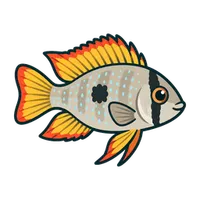
Quick facts
| Adult size | ~8 cm / 3.1 in SL |
|---|---|
| Minimum tank | ~182 L / ~48 US gal (a 90 × 45 cm base) for an individual or pair, per SeriouslyFish |
| Temperature | 24–28 °C / 75–82 °F |
| pH | 6.0–7.5 |
| Hardness | 1–10 dGH |
| Filtration & flow | Gentle flow, NOT excessive; a mature, well-cycled tank is essential |
| Diet | Substrate-sifting omnivore — live/frozen foods plus small sinking dried foods |
| Social | A solitary individual or a bonded pair; a group of 6–8 only in a spacious (120 cm+) tank |
| Temperament | Peaceful and a poor competitor — not a boisterous cichlid |
| Lifespan | Commonly cited at ~4 years in the hobby (not stated by the primary source) |
Overview
The Bolivian ram (Mikrogeophagus altispinosus) is the sensible, hardier relative of the famously delicate German blue ram. It has the same substrate-sifting charm and pair-bonding personality, but it tolerates normal community temperatures and is far more forgiving of a keeper still learning.
Endemic to the upper rio Madeira basin in Bolivia and Brazil, it is a gregarious little cichlid that is nonetheless a poor competitor — it wants a calm tank, not a rowdy one.
💷 Costing it out? See how much a bolivian ram really costs to keep — the bolivian ram itself is usually the cheapest part.
Water & tank
Bolivian rams want 24–28 °C / 75–82 °F, pH 6.0–7.5 and soft-to-moderate water (1–10 dGH) — a much more ordinary, community-friendly range than the German blue ram’s scorching, narrow band. The single most important thing is that the tank is mature and stable: never add this fish to a new or biologically immature aquarium.
The most essential piece of décor is a soft, sandy substrate so the fish can sift mouthfuls of sand naturally. Coarse gravel inhibits this natural feeding, can damage the gill filaments, and may even be swallowed. Add wood, shady spots and a flat rock or two, keep the flow gentle, and do modest 10–15% water changes rather than big ones. SeriouslyFish recommends a 90 × 45 cm base (~182 L) for an individual or pair.
Feeding
Bolivian rams are benthophagous — they naturally take mouthfuls of substrate and sift out edible items, so a soft sand bed is part of feeding, not just décor. Offer a variety of live and frozen foods (bloodworm, brine shrimp, daphnia, grindal worm) plus good-quality small sinking dried foods.
Behaviour & tankmates
Despite usually being sold as a community fish, the Bolivian ram is a poor competitor that needs pristine water — so pick calm tankmates. Groups of peaceful open-water characins (tetras) make excellent companions: their presence signals "no danger" and coaxes a shy ram into the open. Peaceful bottom-dwellers like Corydoras and smaller loricariids also work.
Avoid territorial or aggressive fish, most other cichlids, and hard-water species. This is a relatively gregarious cichlid best kept as a solitary fish or bonded pair; a mixed-sex group of 6–8 needs a genuinely spacious tank (120 cm / 47 in or longer), or the males turn aggressive over territory.
What to expect
A settled Bolivian ram is a confident, characterful sifter that follows you at the glass. Because it is sensitive to poor water, watch for small pits forming around the head and lateral line (an early sign of head-and-lateral-line erosion) — that is a water-quality warning to act on, not a cosmetic quirk.
Myths, kindly busted
“Bolivian rams are just as delicate as German blue rams.”
They are noticeably hardier and happy at ordinary community temperatures (24–28 °C), without the German blue ram’s demand for scorching 27–30 °C water.
“Any substrate is fine as long as the water is right.”
A soft, sandy substrate is essential — these fish feed by sifting sand; coarse gravel inhibits feeding, can damage the gills, and may be swallowed.
“It is a bulletproof community cichlid you can add to a new tank.”
It is a poor competitor that needs a mature, stable tank; added to an immature setup it is prone to head-and-lateral-line erosion when conditions slip.
🐟 Did you know? — Bolivian Ram fun facts
Little true delights about the bolivian ram — each one checked against a named source, no pet-shop myths.
- The Bolivian ram is a biparental substrate spawner: both parents share brood care and shuttle their fry between pits dug in the substrate. SeriouslyFish
- The genus name Mikrogeophagus means “small Geophagus”, from the Greek for “small” plus the eartheater genus Geophagus. SeriouslyFish
- The Bolivian ram was first imported to the hobby in 1985 by Horst Linke and Wolfgang Staeck. SeriouslyFish
When to act
We triage, not diagnose — but these are worth a closer look (starting with a water test):
- Small pits or eroding flesh around the head and lateral-line pores — a classic poor-water-quality sign; test and improve water and stability before anything else.
- A ram hiding, pale or refusing food in a busy tank — it is likely being out-competed; calm the tank and check the water.
- Rapid breathing, clamped fins or a fish sitting apart — test parameters and, if it persists, seek fish-savvy advice.
Heading to a vet? Print the Bolivian Ram vet-prep sheet — what to bring, what to tell them, and the questions to ask.
Sources & further reading
- SeriouslyFish — Mikrogeophagus altispinosus (Bolivian Ram) — Adult ~80 mm SL; recommended 90 × 45 cm base (~182 L / ~48 US gal) for an individual or pair; temperature 24–28 °C / 75–82 °F; pH 6.0–7.5; hardness 1–10 dGH; peaceful, water-quality-sensitive dwarf cichlid; needs a soft, sandy substrate; group of 6–8 only in a 120 cm+ tank.
Written & fact-checked by The Finfern Team against the sources above — kind, general guidance, not a diagnosis. If something looks wrong, test your water and, if it persists, contact a fish-savvy vet.

Get the free Bolivian Ram Starter Kit
The essentials at a glance, a setup checklist and a first-30-days plan for your bolivian ram — what to get right and what to watch for. Join the shoal and we’ll send it over. Free sheets and tools always stay open, no gatekeeping.
Water-first tips and new guides the moment they land. No spam — unsubscribe anytime. See how we handle your data in our privacy notice.