
Species · Danios & minnows
Celestial Pearl Danio
Danio margaritatus
The "galaxy rasbora" — a jaw-droppingly patterned nano fish for a calm, planted tank. Shy and tiny, so it wants a group, gentle tankmates, and small food.
Difficulty: Beginner–Intermediate Tropical community tank ✓ Fact-checked care guide
Quick facts
| Adult size | ~2 cm / 0.8 in |
|---|---|
| Minimum tank | ~30 L / 8 US gal for a shoal — SeriouslyFish recommends a 45 × 30 cm base |
| Temperature | 22–25 °C / 72–77 °F (within the species range of 20–26 °C / 68–79 °F) |
| pH | 6.5–7.5 |
| Hardness | 5–15 dGH (soft to moderately hard) |
| Filtration & flow | Cycled, gentle filtration; a calm, well-planted tank |
| Diet | Micro-omnivore — very small/crushed flake and tiny live/frozen foods |
| Social | Shoaling — keep at least 6, more helps the shy ones settle |
| Temperament | Peaceful but shy |
| Lifespan | 3–5 years |
Overview
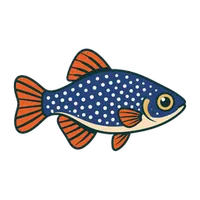
The celestial pearl danio (Danio margaritatus), long known in the hobby as the "galaxy rasbora", is one of the most beautiful nano fish there is — a deep blue-green body dusted with pearl spots and edged in orange-red fins.
It was almost collected to scarcity after its 2006 discovery, but is now widely captive-bred. It is easy in a mature, calm tank, asking mainly for a group and peaceful surroundings — it is small and easily bullied.
💷 Costing it out? See how much a celestial pearl danio really costs to keep — the celestial pearl danio itself is usually the cheapest part.
Water & tank
CPDs like stable water around pH 6.5–7.5, 5–15 dGH at 22–25 °C / 72–77 °F. They come from shallow, densely planted spring pools, so they thrive in a calm, heavily-planted tank with gentle flow.
A shoal is happy in ~30 L / 8 US gal (SeriouslyFish recommends a 45 × 30 cm base) — a superb planted-nano centrepiece.
Feeding
A tiny mouth needs tiny food — finely crushed flake, micro-pellets, and small live/frozen foods (baby brine shrimp, cyclops, daphnia). Feed small amounts once or twice a day.
Behaviour & tankmates
Peaceful but timid — best in a species tank or with other tiny, calm nano fish and dwarf shrimp (with cover). Keep a group of 6+; males display beautifully to each other in a settled shoal.
Avoid larger or boisterous tankmates that intimidate them into hiding.
What to expect
New CPDs are shy and may hide in the plants; in a calm, well-planted tank with a group they emerge, colour up, and the males display. Patience and cover bring out their best.
Myths, kindly busted
“The "galaxy rasbora" is a rasbora.”
It's actually a danio (Danio margaritatus) — the old trade name stuck, but care is that of a tiny, shy danio.
“Such a stunning fish must be hard to keep.”
It's straightforward in a mature, calm, planted tank with a group — the main needs are peace, cover, and small food.
🐟 Did you know? — Celestial Pearl Danio fun facts
Little true delights about the celestial pearl danio — each one checked against a named source, no pet-shop myths.
- The celestial pearl danio was discovered only in 2006 and reached the aquarium trade so fast it was a hit before being formally described. Wikipedia
- It lives in a tiny high-altitude area above 1,000 m near Inle Lake in Myanmar, where its transparent gill covers let the red gills show through. Wikipedia
- First mistaken for a Microrasbora and dubbed the “galaxy rasbora”, it was later shown by genetics to be a true Danio. Wikipedia
When to act
We triage, not diagnose — but these are worth a closer look (starting with a water test):
- Constant hiding and pale colour — usually too small a group or intimidating tankmates; add cover and calm companions.
- A thin, hollow belly — make sure food is small enough and it isn't out-competed.
Heading to a vet? Print the Celestial Pearl Danio vet-prep sheet — what to bring, what to tell them, and the questions to ask.
Sources & further reading
- SeriouslyFish — Danio margaritatus (celestial pearl danio) — Adult ~21 mm SL; 45 × 30 cm base; temperature 20–26 °C / 68–79 °F; pH 6.5–7.5; hardness 5–15 dGH; peaceful shoaling nano fish; now widely captive-bred.
Written & fact-checked by The Finfern Team against the sources above — kind, general guidance, not a diagnosis. If something looks wrong, test your water and, if it persists, contact a fish-savvy vet.

Get the free Celestial Pearl Danio Starter Kit
The essentials at a glance, a setup checklist and a first-30-days plan for your celestial pearl danio — what to get right and what to watch for. Join the shoal and we’ll send it over. Free sheets and tools always stay open, no gatekeeping.
Water-first tips and new guides the moment they land. No spam — unsubscribe anytime. See how we handle your data in our privacy notice.