
Species · Catfish & bottom-dwellers
Clown Pleco
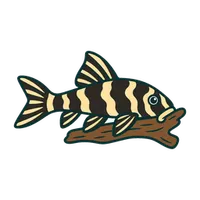
Panaqolus maccus
The honest small-tank pleco — a true dwarf (~9 cm) that EATS wood. Give it driftwood and strong filtration, not a common-pleco-sized tank.
Difficulty: Beginner–Intermediate Tropical community tank ✓ Fact-checked care guide
Quick facts
| Adult size | ~88 mm / 3.5 in SL (Fishbase max 8.8 cm SL) |
|---|---|
| Minimum tank | A small pleco: Aquarium Co-Op houses clown/rubber-lip/bristlenose plecos in ~20–29 US gal (~75–110 L) |
| Temperature | 23–28 °C / 73–82 °F (PlanetCatfish) |
| pH | 6.8–7.6 (PlanetCatfish) |
| Hardness | Not stated numerically; soft-to-moderately-hard, roughly neutral, kept stable |
| Filtration & flow | Good mechanical filtration (a wood diet makes a lot of waste); driftwood + caves essential |
| Diet | Xylivore (wood-eater) — driftwood is food, plus vegetables (squash/cucumber/yams) and some frozen foods |
| Social | Fine singly; a shy, wood-and-cave dweller rather than an active showpiece |
| Temperament | Peaceful, nocturnal community fish — provided it has driftwood |
| Lifespan | Commonly cited at ~10–12 years in the hobby (not stated by the primary sources) |
Overview
The clown pleco is the honest answer to "I want a pleco, but I don’t have a six-foot tank". It is a true dwarf loricariid — PlanetCatfish gives its size as just 88 mm (3.5 in) SL, and Fishbase records a max length of 8.8 cm SL — a fraction of the common pleco that so often outgrows its home. It is a boldly banded, characterful little Venezuelan catfish (the name maccus is Latin for "clown").
The one thing that defines keeping it is wood. This is a genuine wood-eater (xylivore): PlanetCatfish states plainly that it is "a wood-eating fish" whose tank "should be decorated with several different types of driftwood". A clown pleco without wood to rasp is a clown pleco kept wrong.
💷 Costing it out? See how much a clown pleco really costs to keep — the clown pleco itself is usually the cheapest part.
Water & tank
Get the water right first — and here it is undemanding. PlanetCatfish lists temperature 23–28 °C (73–82 °F) and pH 6.8–7.6. There is no fixed aquarium hardness figure; the wild Rio Tinaco data ("fairly hard" in the dry season, "softer" and neutral in the wet) shows it tolerates a range, so target soft-to-moderately-hard, roughly neutral water and keep it stable.
The tank itself is really a wood question. The primary sources state no minimum base dimension, so we will not invent one — but as a small pleco, Aquarium Co-Op houses clown, rubber-lip and bristlenose plecos in 20–29 US gal (~75–110 L), which is a sensible floor. The design brief is fixed: several different types of driftwood/bogwood to rasp and hide among, plus strong mechanical filtration, because PlanetCatfish warns these fish "produce lots of waste from their steady diet of wood".
Feeding
Diet starts with the driftwood itself — the fish rasps and digests wood, so the wood is food, not just décor. Beyond that, PlanetCatfish says vegetables "should be readily available to them", naming squash, cucumber and yams (a favourite), with frozen foods "two to three times weekly". It is a grazer that likes "something to chew on", not a fish that needs hunting or heavy protein.
Behaviour & tankmates
This is the easy-going part. PlanetCatfish describes it as "a peaceful fish well suited to the community tank provided it has driftwood" — the wood clause is doing real work, because it is both territory and food. It is a nocturnal, shy, cave-and-wood dweller rather than an active showpiece, so give it hiding places and do not expect it out front in daylight.
The main practical caution is not aggression, it is waste and filtration: a steady diet of wood produces a lot of mess, so PlanetCatfish stresses "good mechanical filtration". Keep it with peaceful community tankmates that suit its water, and it slots in quietly.
What to expect
Expect a small, long-lived, low-drama wood-grazer that stays under 9 cm — the sensible small-pleco choice, not a fish that will outgrow the tank. Expect to see it mostly at night, expect it to sculpt and consume its driftwood over time (that is normal and required), and expect to keep the filter and maintenance on point because a wood diet means real waste. Give it wood, and it more or less takes care of itself.
Myths, kindly busted
“A common pleco and a clown pleco are basically the same "algae eater".”
The clown pleco is a true dwarf — 88 mm / 3.5 in SL (Fishbase max 8.8 cm) — and a wood-eater, not a common pleco that reaches 30 cm+. It is the honest small-tank alternative.
“Driftwood is optional decoration for a pleco.”
PlanetCatfish calls it "a wood-eating fish" whose tank "should be decorated with several different types of driftwood" — wood is diet, not décor. Without it the fish is being kept wrong.
“A small pleco means you can go easy on filtration.”
PlanetCatfish warns these fish "produce lots of waste from their steady diet of wood" and require "good mechanical filtration" — small fish, big mess.
🐟 Did you know? — Clown Pleco fun facts
Little true delights about the clown pleco — each one checked against a named source, no pet-shop myths.
- The clown pleco is a genuine wood-eater (xylivore) and needs driftwood, mirroring its wild home among submerged driftwood tangles. Wikipedia
- Native to the tannin-stained Apuré and Caroní basins of Venezuela and Colombia, it's a tiny suckermouth catfish reaching only about 8.8 cm. Wikipedia
- Its stripe pattern isn't fixed: some fish have straight bars while others show broken or wavy lines depending on their river of origin. Wikipedia
When to act
We triage, not diagnose — but these are worth a closer look (starting with a water test):
- A clown pleco with a visibly sunken belly, or that ignores wood and vegetables, may be underfed or stressed — confirm real driftwood is present, offer squash/cucumber, and review water quality.
- Hanging out in the open by day, breathing hard, or listless can signal water-quality problems (often waste-driven if filtration is weak) — test and improve filtration/maintenance rather than medicating.
- Reddened, ragged or fungus-looking skin/fins, or new sores, warrant a water-quality check and advice from an experienced keeper/fish-savvy vet — not guesswork medication.
Heading to a vet? Print the Clown Pleco vet-prep sheet — what to bring, what to tell them, and the questions to ask.
Sources & further reading
- PlanetCatfish — Panaqolus maccus (Clown Pleco, L104/LDA022) — Size 88 mm / 3.5 in SL; temperature 23–28 °C / 73–82 °F; pH 6.8–7.6; "a wood-eating fish" — tank needs several types of driftwood; vegetables (squash/cucumber/yams) + frozen 2–3×/week; "peaceful… well suited to the community tank provided it has driftwood"; produces lots of waste (needs good mechanical filtration). SeriouslyFish has NO P. maccus profile.
- FishBase — Panaqolus maccus — Max length 8.8 cm SL; tropical freshwater, benthopelagic; Apuré and Caroni River basins, Venezuela.
- Aquarium Co-Op — Pleco Care Guide (small-pleco tank size) — Small plecos (bristlenose, rubber-lip, clown) "stay between 4 to 6 inches" and "can be housed in 20 to 29 gallons of water or more" — the honest small-tank alternative to the common pleco.
Written & fact-checked by The Finfern Team against the sources above — kind, general guidance, not a diagnosis. If something looks wrong, test your water and, if it persists, contact a fish-savvy vet.

Get the free Clown Pleco Starter Kit
The essentials at a glance, a setup checklist and a first-30-days plan for your clown pleco — what to get right and what to watch for. Join the shoal and we’ll send it over. Free sheets and tools always stay open, no gatekeeping.
Water-first tips and new guides the moment they land. No spam — unsubscribe anytime. See how we handle your data in our privacy notice.