
Species · Tetras & rasboras
Congo Tetra
Phenacogrammus interruptus
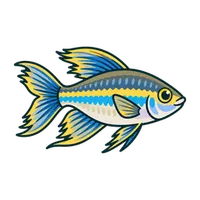
The "ugly duckling" tetra — drab and grey in the shop, it matures into an iridescent, long-finned showpiece in soft, clean, well-circulated water with a real mixed-sex shoal.
Difficulty: Beginner–Intermediate Tropical community tank ✓ Fact-checked care guide
Quick facts
| Adult size | ~80 mm / 3.1 in SL |
|---|---|
| Minimum tank | ~108 L / ~29 US gal — a 120 × 30 × 30 cm base for adults, per SeriouslyFish |
| Temperature | 23–28 °C / 73–82 °F |
| pH | 6.0–7.5 (acidic side of neutral, soft water) |
| Hardness | 3–18 dGH |
| Filtration & flow | Soft, acidic-of-neutral water with good circulation; sensitive to poor water quality |
| Diet | Omnivore — dried food plus a good proportion of live/frozen for best colour |
| Social | Keep in a mixed-sex shoal; easily frightened when kept in too few numbers |
| Temperament | Peaceful but shy; its size and activity can unsettle timid nano fish |
| Lifespan | Commonly cited at ~3–5 years in the hobby (not stated by the primary source) |
Overview
The Congo tetra is the classic "ugly duckling" of the fish shop — SeriouslyFish notes it is "most often seen for sale as a fairly drab, greyish 1½" fish and is often overlooked". Give it time, numbers and the right water and it transforms: males develop iridescent blue-gold flanks and long, flowing fin filaments. It is a soft-water shoaler native to the Congo drainage, though most fish in the trade are commercially bred.
At ~80 mm SL (3.1 in) it is a substantial, active tetra rather than a nano fish, and it needs room to swim and a real group to feel secure. This is a fish you buy for what it will become, not what it looks like in the bag.
💷 Costing it out? See how much a congo tetra really costs to keep — the congo tetra itself is usually the cheapest part.
Water & tank
Lead with the chemistry. SeriouslyFish lists 23–28 °C (73–82 °F), pH 6.0–7.5 and hardness 3–18 dGH, and the maintenance notes say water "should be on the acidic side of neutral and soft with good circulation". This is a genuine soft-water fish — colour and fin development suffer in hard, alkaline water. For adults the profile recommends a base of 120 × 30 × 30 cm (~108 L / ~29 US gal), though young specimens can start in smaller tanks.
The profile is blunt that they are "quite sensitive to water quality" and that if a high standard is not maintained "the development of the males’ fins may be impaired and the fish will lose colour". So the spectacular Congo tetra you see in photos is a direct result of soft, clean, well-circulated water — get the water right first and the looks follow.
Feeding
An omnivore that in nature feeds on small worms, insects, crustaceans, algae and other zooplankton. SeriouslyFish calls it "relatively unfussy" — it will accept most foods — but stresses that live and frozen food should make up a good proportion of the diet for the fish to show their best colouration. A quality dried food (an algae-inclusive one is recommended) plus regular live/frozen feeds is the practical routine.
Behaviour & tankmates
Peaceful, but with two honest caveats from the source. First, its active swimming and large adult size may scare shy species — so pair it with confident, similarly sized community fish, not timid nano fish. Second, it is itself easily frightened, "particularly if they are not maintained in numbers", so a proper mixed-sex shoal is non-negotiable for a settled, colourful group.
Crucially: "Do not keep congo tetras with fin-nipping species as the spectacular fins of the males will be destroyed", and avoid boisterous tankmates given the fish’s shy nature. Suggested company includes other tetras, rainbowfish, Corydoras, loricariids, Synodontis and peaceful cichlids. The whole appeal — those trailing male fins — is fragile, so tankmate choice is a colour-and-fin decision.
What to expect
Expect drab, nervous newcomers that need weeks to settle before they colour up. In a mixed-sex shoal, in soft acidic-to-neutral water with good circulation, males mature into iridescent, long-finned showpieces best appreciated lit from the front and above. Kept in poor water or small numbers, they stay grey, skittish and stunted-looking — so patience, numbers and water quality are the whole game.
Myths, kindly busted
“Congo tetras are dull grey fish — the pretty ones online are a fancier variety.”
They are the same species; SeriouslyFish notes they sell as drab greyish fish and "once they are settled… they develop spectacular colouration". Colour comes with maturity and good water.
“A tetra is a tetra — they’ll be fine in hard tap water at any pH.”
The profile specifies soft water on the acidic side of neutral (pH 6.0–7.5, 3–18 dGH); in the wrong water males’ fins can fail to develop and the fish lose colour.
“You can keep just a few, or mix them with anything peaceful.”
They should be kept in a mixed-sex shoal, are easily frightened when not in numbers, and must not be housed with fin-nippers, which will destroy the males’ fins.
🐟 Did you know? — Congo Tetra fun facts
Little true delights about the congo tetra — each one checked against a named source, no pet-shop myths.
- This iridescent characin is African, endemic to the Congo River drainage in the Democratic Republic of Congo. SeriouslyFish
- Males grow larger and far more colourful, developing trailing filaments on the tail and a greatly extended dorsal fin. SeriouslyFish
- Young fish are sold as drab greyish juveniles and often overlooked, only developing their spectacular shimmer once settled and mature. SeriouslyFish
When to act
We triage, not diagnose — but these are worth a closer look (starting with a water test):
- Males failing to develop fins or colour, or losing colour they had — the profile links this directly to sub-standard water quality; test and improve water quality and check softness/pH first.
- Constant skittishness, hiding or crashing into décor — often too small a group or too-boisterous tankmates for a shy shoaling fish; increase group size and reassess tankmates.
- Ragged or shortening fins on males — suspect fin-nipping tankmates (or aggression) rather than assuming disease; remove or rehome the culprits and keep the tank calm.
Heading to a vet? Print the Congo Tetra vet-prep sheet — what to bring, what to tell them, and the questions to ask.
Sources & further reading
- SeriouslyFish — Phenacogrammus interruptus (Congo Tetra) — Max ~80 mm SL; adult base 120 × 30 × 30 cm (~108 L / ~29 US gal); temperature 23–28 °C / 73–82 °F; pH 6.0–7.5; hardness 3–18 dGH; soft, acidic-of-neutral water with good circulation; peaceful mixed-sex shoaler; sensitive to water quality (males lose fins/colour otherwise); never with fin-nippers.
Written & fact-checked by The Finfern Team against the sources above — kind, general guidance, not a diagnosis. If something looks wrong, test your water and, if it persists, contact a fish-savvy vet.

Get the free Congo Tetra Starter Kit
The essentials at a glance, a setup checklist and a first-30-days plan for your congo tetra — what to get right and what to watch for. Join the shoal and we’ll send it over. Free sheets and tools always stay open, no gatekeeping.
Water-first tips and new guides the moment they land. No spam — unsubscribe anytime. See how we handle your data in our privacy notice.