
Species · Bettas & gouramis
Croaking Gourami
Trichopsis vittata
If you remember one thing: this is a shy, soft-water nano fish that breathes air at the surface and can jump, so it needs a warm, calm, planted tank with a tight lid and a warm air gap under the glass, never a bowl.
Difficulty: Beginner–Intermediate Nano / betta tank ✓ Fact-checked care guide
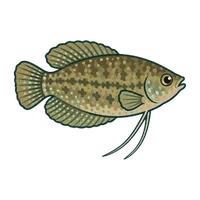
Quick facts
| Adult size | Around 5-7 cm (2-2.8 in) in the aquarium. SeriouslyFish lists 7 cm standard length; FishBase records a scientific maximum of 8 cm total length (common length ~3.9 cm), so most kept fish settle at roughly 5-7 cm. |
|---|---|
| Minimum tank | A single pair does well in a 60 x 30 x 30 cm tank, about 54 litres (14 US gallons) - that is the SeriouslyFish footprint and the honest floor. Pet-shop labels often quote 40 L / ~10 gal; that scrapes by for one fish, but the 60 cm footprint gives far better surface space, cover and water stability. For a small group go wider and longer, not just taller: floor area and surface area matter more than raw volume for a slow, surface-breathing fish. Never a bowl, vase or unheated nano cube. |
| Temperature | 22-28 C (72-82 F); aim for a stable 24-27 C (75-81 F) on a reliable heater. It is a tropical fish, so do not keep it unheated at room temperature. |
| pH | Soft and slightly acidic to neutral is ideal, roughly pH 6.0-7.5. Reported tolerances run wider (SeriouslyFish 5.0-7.5; FishBase and UK retailers 6.0-8.0), but it colours up and spawns best on the softer, more acidic side. Stability matters more than chasing a perfect number. |
| Hardness | Soft to moderately hard. SeriouslyFish gives 1-15 dGH as the target; FishBase and UK sources list a wider 5-19 / 5-20 dH tolerance. Soft water (about 1-12 dGH) suits it best. KH is not critical, but avoid very hard, alkaline tap water. |
| Filtration & flow | Gentle. This is a slow, surface-oriented fish from still and sluggish waters, so use a filter with mild output (sponge filter or a baffled/low-flow filter). Keep the surface calm but not stagnant; strong current stresses it and stops males building a bubble nest. Cycle the filter fully before adding fish. |
| Diet | Micro-predator / omnivore leaning carnivore. Takes good-quality micro-pellets and flake, but relishes small live and frozen foods: daphnia, brine shrimp (Artemia), bloodworm and other chironomid larvae, and micro-worms. A varied diet with regular live/frozen foods brings out colour and breeding condition. |
| Social | Not an obligate shoaler. It can be kept singly, as a male-female pair, or in a small group of about 4-6 in a suitably larger, well-planted tank, where you will see the most natural interaction and hear the most croaking. If you keep several, add extra plants and broken sightlines so territorial males can spread out. |
| Temperament | Peaceful, shy and easily startled. Not aggressive toward other species, but males can be territorial with one another and around a bubble nest when breeding. It is a quiet micro-predator: anything small enough to fit in its mouth (dwarf shrimp, fry, the tiniest fish) may be eaten. Give it cover and calm and it will slowly grow confident enough to display and "croak." |
| Lifespan | Typically about 3-5 years with good, stable water; 4-5 years is a realistic average in a well-kept planted tank. |
Overview
The croaking gourami is a small labyrinth fish (family Osphronemidae) from still and sluggish freshwater across Southeast Asia - Thailand, Laos, Cambodia, Vietnam and the islands of Sumatra, Borneo and Java - in ponds, ditches, canals and paddy fields thick with plants.
Its claim to fame is sound: courting and sparring fish make a soft clicking or 'croaking' noise you can actually hear across a quiet room. It is one of the very few aquarium fish you can hear before you see.
It is a true nano centrepiece in the same spirit as a betta or sparkling gourami: gentle, planted, warm and quiet. It breathes air from the surface via a labyrinth organ, so the setup rules are more about surface air, cover and stability than about big filtration.
Honest expectation: bought as a cheap 'novelty community fish', it usually ends up hidden, silent and stressed in a bright, bare, high-flow tank. Given soft water, shade, plants and calm, it becomes a charming, characterful little fish.
💷 Costing it out? See how much a croaking gourami really costs to keep — the croaking gourami itself is usually the cheapest part.
Water & tank
Water first: target soft, slightly acidic to neutral water - about pH 6.0-7.5 and 1-12 dGH - held at a stable tropical 24-27 C (75-81 F). It tolerates a wider band (down to pH ~5 and up to moderately hard), but soft and acidic is where it thrives and breeds.
Cycle the tank before any fish go in. Run the nitrogen cycle to completion so ammonia and nitrite read 0 ppm and nitrate stays low with weekly water changes. A small nano volume swings fast, so test and change water regularly rather than trusting a heater-and-hope bowl.
Footprint over height: the SeriouslyFish reference is a 60 x 30 x 30 cm tank (~54 L / 14 US gal) for a pair. Choose length and surface area over a tall nano cube - surface access is life-or-death for an air-breather. The common 40 L / 10 gal 'minimum' is a floor for one fish, not a target.
A secure, tight-fitting LID is non-negotiable. Labyrinth fish gulp air at the surface and are described as excellent jumpers; an open or gappy tank invites a carpet death. Leave a gap of humid air between the water and the lid - do not fill to the brim - because both adults and (especially) fry need that warm, humid air layer to develop the labyrinth organ properly.
Aquascape for a shy fish: heavy planting, floating plants to shade and dim the surface, plus wood, leaf litter and caves for broken sightlines and hiding spots. A darker substrate deepens its colour. Keep flow gentle and the surface calm so bubble nests can hold.
Keep the room and tank calm and warm. Sudden chills, a cold draught over the surface, or being placed by a busy walkway keeps this timid fish hidden and silent. A stable, warm, quiet tank is what unlocks its personality and its croak.
Feeding
Feed small amounts once or twice a day, only what is eaten in a couple of minutes; a small fish in a small tank is easy to overfeed and foul the water.
Base the diet on a good micro-pellet or small flake sized for a tiny mouth, then rotate in live or frozen daphnia, brine shrimp, bloodworm and other small larvae several times a week.
Live and frozen foods bring out the best colour and are the fastest route to breeding condition; a monotonous dry-only diet leaves them dull.
It feeds slowly and shyly - make sure faster mid-water tank mates are not stripping the food before the gourami reaches it, or feed after lights-dim when it is bolder.
Fast one day a week if you like; a light, varied diet and clean water beat heavy feeding every time.
Behaviour & tankmates
Best tank mates are small, peaceful, calm species that share soft, warm water: small rasboras (e.g. chili/dwarf types), pygmy/small tetras, ember-sized fish, small peaceful corydoras and other quiet bottom dwellers.
Avoid boisterous or fin-nipping fish (tiger barbs, active danios), anything large or aggressive, and fast mid-water fish that outcompete it for the surface and for food. It will simply hide and stop displaying.
Not reliably shrimp- or micro-fry-safe: as a micro-predator it will eat dwarf shrimp, shrimplets and very tiny fish that fit its mouth. Plan around adult mouth size, not the size in the shop.
Give territorial males room: in a group, extra plants, wood and leaf litter break up sightlines and reduce squabbling, especially near a bubble nest.
Do not mix it with a betta or other surface-claiming anabantoids in a small tank - competition for surface air and territory causes chronic stress.
What to expect
A shy fish that hides at first and slowly grows bolder over weeks in a planted, calm tank - patience is part of the deal.
Soft clicking or 'croaking' sounds, most often from males courting or facing off - the signature payoff of keeping them settled and happy.
Males blowing bubble nests at the surface, usually under a floating leaf or plant, especially in soft, warm, still water.
Slow, deliberate movement and lots of time spent near the surface and among plants, not zooming around open water like a tetra.
Myths, kindly busted
“The croaking sound comes from grinding its throat (pharyngeal) teeth.”
It does not. The croak is made by a specialised pectoral-fin mechanism - modified fin tendons and muscles that are stretched and 'plucked' by the fin rays like guitar strings (SeriouslyFish; Wikipedia). The teeth-grinding claim is a common care-sheet error.
“It is a tough little 'novelty' fish that is fine in a small bowl or an unheated bright community tank.”
No. It is a tropical, air-breathing fish that needs a heated, cycled, planted tank with a lid and gentle flow. In a bare, bright, high-flow or cold setup it hides, stops croaking and stresses; it is never a bowl or vase fish.
“A tight lid is optional and you should fill the tank right to the top.”
The opposite. Labyrinth fish jump and must gulp air at the surface, so keep a secure lid AND leave a gap of warm, humid air below it - do not fill to the brim. Fry need that humid air layer or their labyrinth organ can develop poorly (SeriouslyFish).
“It is a schooling fish that must be kept in a group of six or more.”
It is not an obligate shoaler. It is happy kept singly, as a pair, or in a small group of about 4-6 in a larger planted tank. Groups show more interaction and croaking, but you do not need a big school - you need soft, calm, warm water and cover (SeriouslyFish).
When to act
We triage, not diagnose — but these are worth a closer look (starting with a water test):
- Fish gasping at the surface, clamped fins, or sitting listless on the bottom: stop feeding and test the water now for ammonia, nitrite (both should be 0 ppm) and nitrate. A spike or an un-cycled tank is the usual cause - do a water change and correct it, then seek help if it persists.
- It never surfaces for air, or seems to struggle to reach the surface: check the lid gap and that the surface is clear (no film sealing it over) and that flow is not too strong - an air-breather that cannot reach humid surface air is an emergency.
- A jumped fish found on the floor, or gaps around the lid: this species jumps - close every gap around filters, heaters and cords immediately.
- Sudden hiding, loss of colour, refusing food, or no more croaking in a previously settled fish: usually a sign of chill, too much flow, bullying, or a water-quality slip - review temperature, flow, tank mates and parameters.
- White spots, cottony fungus, ulcers, rapid breathing or fin rot: signs of disease or poor water. Quarantine if you can, test and improve water quality, and consult a knowledgeable aquatics vet or a trusted fish-health resource - do not guess at medications.
Heading to a vet? Print the Croaking Gourami vet-prep sheet — what to bring, what to tell them, and the questions to ask.
Sources & further reading
- SeriouslyFish - Trichopsis vittata (Croaking gourami) — Primary authority: 70 mm SL; temp 22-28 C; pH 5.0-7.5; hardness 1-15 dGH; 60 x 30 x 30 cm / ~54 L (14 US gal) for a pair; well-covered tank with humid air gap; pectoral-fin sound mechanism; pair-or-group.
- FishBase - Trichopsis vittata — Scientific reference: max length 8.0 cm TL (common 3.9 cm); freshwater; pH 6.0-8.0; hardness 5-19 dH; temperature 22-28 C; SE Asia distribution.
- Wikipedia - Croaking gourami — Size 6-7 cm; native range; bubble-nest builder; labyrinth organ / air breathing; sound produced via specialised pectoral fins (myth-buster corroboration).
- Maidenhead Aquatics (fishkeeper.co.uk) - Croaking Gourami — UK retailer care sheet: 7 cm; 22-28 C; pH 6.0-8.0; hardness 5-20 dH; heavily planted, gentle circulation; warm air layer under coverslides critical for fry.
- Riverpark Aquatics - Croaking Gourami care guide — Keeper care sheet: adult ~5 cm; lifespan 3-5 years; 24-28 C (75-82 F); pH 6.0-7.0; peaceful, pairs/small groups; gentle flow. (Repeats the pharyngeal-teeth sound myth, corrected in this record.)
Written & fact-checked by The Finfern Team against the sources above — kind, general guidance, not a diagnosis. If something looks wrong, test your water and, if it persists, contact a fish-savvy vet.

Get the free Croaking Gourami Starter Kit
The essentials at a glance, a setup checklist and a first-30-days plan for your croaking gourami — what to get right and what to watch for. Join the shoal and we’ll send it over. Free sheets and tools always stay open, no gatekeeping.
Water-first tips and new guides the moment they land. No spam — unsubscribe anytime. See how we handle your data in our privacy notice.