
Species · Shrimp & snails
Crystal Red Shrimp
Caridina cf. cantonensis 'Crystal Red'
Not a hardy cherry shrimp: CRS need soft, acidic, copper-free, rock-stable water — get the water right first, then get the shrimp.
Difficulty: Intermediate Shrimp / invert tank ✓ Fact-checked care guide
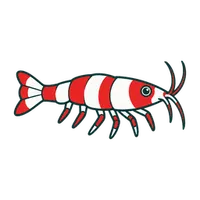
Quick facts
| Adult size | Males ~1 in / 2.5 cm; females ~1.5 in / 3.8 cm (The Shrimp Farm) |
|---|---|
| Minimum tank | ~19 L / 5 US gal can sustain a colony; ~38 L / 10 US gal is easier for beginners (The Shrimp Farm) |
| Temperature | 16.5–24.5 °C / 62–76 °F (The Shrimp Farm) |
| pH | 5.8–7.4 (The Shrimp Farm) |
| Hardness | gH 4–6, kH 0–4, TDS 100–200 (soft, low-mineral — The Shrimp Farm) |
| Filtration & flow | Gentle sponge filter; stable soft acidic water; NO copper (lethal); cycled tank only |
| Diet | Omnivore/grazer — algae and aufwuchs plus a quality shrimp food and occasional blanched veg |
| Social | A colony animal; avoid all but the most peaceful tankmates |
| Temperament | Peaceful and vulnerable — best in a shrimp-only or shrimp-plus-snails tank |
| Lifespan | About 1.5 years in the aquarium (stated by The Shrimp Farm) |
Overview
The Crystal Red Shrimp (CRS) is the candy-cane-red-and-white shrimp everyone falls for — a selectively-bred form of the wild Bee shrimp, Caridina cf. cantonensis. It is gorgeous, and it is the classic "next step" after cherry shrimp. The one thing to understand before you buy: it is NOT a hardy cherry shrimp. The Shrimp Farm is explicit that CRS "are a bit more demanding… a little more fragile" than Neocaridina, and rates them Moderate.
That fragility is the whole story. Get the water right and keep it stable and CRS breed readily and reward you; treat them like bulletproof cherries and they crash. This is a "get the water right first, then get the shrimp" species. (Sourced from The Shrimp Farm — Aquarium Co-Op has no parameterised Caridina article.)
💷 Costing it out? See how much a crystal red shrimp really costs to keep — the crystal red shrimp itself is usually the cheapest part.
Water & tank
Lead with the chemistry: pH 5.8–7.4, gH 4–6, kH 0–4, TDS 100–200, and temperature 62–76 °F (16.5–24.5 °C). That is soft, slightly acidic, low-mineral water — the opposite of the hard water cherry shrimp tolerate — and it usually means a buffering "active" substrate and remineralised RO water rather than straight tap. The source stresses stability above all: they are "extremely sensitive to ammonia and nitrite", don’t cope with high nitrate, and "sudden fluctuations can quickly prove fatal".
A colony can live in as little as 5 gallons (19 L), but the source recommends around 10 gallons (38 L) for beginners because larger tanks stay stable more easily. Use a gentle sponge filter (it won’t suck up babies), a heater to prevent temperature swings, plants and hiding spots — and critically, NO copper, which is lethal to dwarf shrimp (check that any medication or plant fertiliser is copper-free). Never add them to an uncycled tank.
Feeding
CRS are omnivores that forage on algae and aufwuchs all day; supplement with a high-quality shrimp food as a staple plus occasional blanched vegetables and frozen foods like bloodworm. Feed roughly once a day and — because they are so sensitive to water quality — "never offer more than they can consume in a few hours", removing leftovers so they don’t foul the water.
Behaviour & tankmates
These are tiny (males ~1 in, females ~1.5 in), peaceful, vulnerable prey animals. The Shrimp Farm’s advice is to "avoid combining them with all but the most peaceful tankmates", and notes most keepers run a CRS-only tank, especially for higher grades, optionally with harmless companions like snails. Any fish big enough to eat a shrimp will — so a species-only or shrimp-plus-snails setup is the safe default.
The reassuring part: once conditions are right, CRS are not hard to breed, females carry eggs that hatch in around 30 days into tiny copies of the parents, and a colony grows quickly. Note they hide while molting (every 3–4 weeks) — vanishing for a day around a molt is normal, not a crisis.
What to expect
With stable, soft, acidic, copper-free water in a cycled tank, CRS are a rewarding, breedable, jewel-like colony shrimp — but a short-lived one, with the source citing about 1.5 years of life. With unstable or too-hard water, ammonia/nitrite spikes, or fish tankmates, expect losses. The success formula is stability first, a shrimp-safe tank, and patience.
Myths, kindly busted
“Crystal Reds are just red cherry shrimp — keep them the same way.”
The source says CRS "are a bit more demanding… a little more fragile" than Neocaridina and need soft, slightly acidic water — not the hard water cherries tolerate.
“Shrimp are cleanup animals, so they’re hardy and low-maintenance.”
CRS are "extremely sensitive to ammonia and nitrite", dislike high nitrate, and "sudden fluctuations can quickly prove fatal".
“You can keep them in any community tank.”
They are "quite vulnerable"; the source recommends avoiding all but the most peaceful tankmates, and notes most keepers run a CRS-only (or shrimp-plus-snails) tank.
When to act
We triage, not diagnose — but these are worth a closer look (starting with a water test):
- Shrimp dying off after a water change, a new dose of anything, or a temperature swing — the source warns "sudden fluctuations can quickly prove fatal"; check for instability and copper exposure.
- Any detectable ammonia or nitrite, or rising nitrate — CRS are "extremely sensitive"; test and correct the water immediately.
- Failed molts, shrimp stuck half-out of the old shell, or no breeding despite mature adults — usually a sign water parameters (gH/kH/TDS/pH) are off; recheck against the target ranges. (A shrimp simply hiding for a day around a molt every 3–4 weeks is normal.)
Heading to a vet? Print the Crystal Red Shrimp vet-prep sheet — what to bring, what to tell them, and the questions to ask.
Sources & further reading
- The Shrimp Farm — Crystal Red Shrimp (Caridina cf. cantonensis) care — Males ~1 in / females ~1.5 in; 5 US gal min (10 easier); temperature 62–76 °F / 16.5–24.5 °C; pH 5.8–7.4; gH 4–6; kH 0–4; TDS 100–200 (soft/acidic — opposite of hardy cherry shrimp); extremely sensitive to ammonia/nitrite, "sudden fluctuations can quickly prove fatal"; copper lethal; molts every 3–4 weeks; lifespan ~1.5 years. Used because Aquarium Co-Op has no parameterised Caridina article.
Written & fact-checked by The Finfern Team against the sources above — kind, general guidance, not a diagnosis. If something looks wrong, test your water and, if it persists, contact a fish-savvy vet.

Get the free Crystal Red Shrimp Starter Kit
The essentials at a glance, a setup checklist and a first-30-days plan for your crystal red shrimp — what to get right and what to watch for. Join the shoal and we’ll send it over. Free sheets and tools always stay open, no gatekeeping.
Water-first tips and new guides the moment they land. No spam — unsubscribe anytime. See how we handle your data in our privacy notice.