
Species · Tetras & rasboras
Denison Barb
Sahyadria denisonii
A cool-water shoaler, not a solo showpiece — the roseline "shark" wants 6–10 fish, a 120 cm+ tank and spotless, oxygen-rich water.
Difficulty: Intermediate Tropical community tank ✓ Fact-checked care guide
Quick facts
| Adult size | ~110 mm / 4 in SL (the genus reaches 85–190 mm) |
|---|---|
| Minimum tank | ~243 L / ~64 US gal — a 120 × 45 cm base minimum, per SeriouslyFish |
| Temperature | 15–25 °C / 59–77 °F (a cool-water fish, not tropical) |
| pH | 6.5–7.8 |
| Hardness | 5–25 dGH |
| Filtration & flow | Pristine, oxygen-rich water with moderate flow; weekly 30–50% water changes |
| Diet | Omnivore — sinking dried foods plus live/frozen; carotenoid-rich foods intensify the red |
| Social | A schooling species — buy at least 6–10 |
| Temperament | Generally peaceful, but an active mid-water schooler that needs numbers |
| Lifespan | Commonly cited at ~5 years in the hobby (not stated by the primary source) |
Overview
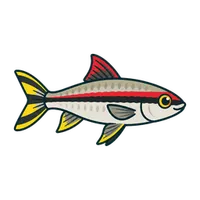
The Denison barb — sold as roseline shark, red-line torpedo barb or "Miss Kerala" — is one of the most striking fish in the freshwater trade, and one of the most commonly mis-sold. That torpedo body and red racing-stripe belong to an active, shoaling river fish from the highland streams of southern India, not to a solo showpiece. SeriouslyFish gives a maximum of 110 mm SL (4 in), and notes the genus reaches 85–190 mm (3.3–7 in) SL, so plan around a fish that keeps growing.
This is an endangered, wild-linked species that became hugely popular since the late 1990s. It is peaceful and plant-safe, but emphatically not a fish for a small tank or a lone purchase. Get the group and the water right and you get a spectacular, well-adjusted display; skimp on either and you get pale, nervous, stressed fish.
💷 Costing it out? See how much a denison barb really costs to keep — the denison barb itself is usually the cheapest part.
Water & tank
Lead with the numbers. SeriouslyFish lists 15–25 °C (59–77 °F), pH 6.5–7.8 and hardness 5–25 dGH — a genuinely cool-water fish, not a tropical one, and a wide, forgiving chemistry range. The profile specifies base dimensions of at least 120 × 45 cm (~243 L / ~64 US gal). That footprint is the floor for a proper group, not the ceiling.
Because it comes from pristine headwaters, it is "intolerant to accumulation of organic pollutants and requires more-or-less spotless water in order to thrive". Give it high dissolved oxygen, moderate water movement, and treat weekly 30–50% water changes as routine. This fish rewards a mature, clean, well-circulated tank and punishes a neglected one.
Feeding
Easily fed and unfussy. In the wild it takes worms, insects, crustaceans, plant material and other organic debris; in the aquarium SeriouslyFish recommends a balanced diet of small live and frozen foods such as bloodworm, Daphnia and Artemia alongside a good-quality dried product, noting that sinking foods are best. Red pigmentation is said to intensify on a diet rich in carotenoids such as astaxanthin — so colour is partly on your feeding, not just your lighting.
Behaviour & tankmates
Denison barbs are generally peaceful and make an ideal resident of a well-researched community aquarium — but they are a schooling species and SeriouslyFish is explicit that "at least 6-10 specimens should be purchased". A lone or paired Denison is a stressed Denison. Combine that group size with the 120 × 45 cm minimum footprint and you can see why this fish needs real space.
One honest caution on identity: the similar-looking S. chalakkudiensis is occasionally traded as S. denisonii and is known to be more belligerent. If your "roseline sharks" are unusually scrappy, check whether you actually have the mislabelled cousin. Avoid boisterous or fin-nipping tankmates; the appeal here is a calm, coordinated shoal.
What to expect
Expect an active, fast, mid-water shoaler that looks its best in a group of six-plus in a large, cool, spotless, well-oxygenated tank. Colour deepens as fish mature and settle, and with good current and clean water they are hardy. Buy juveniles knowing they will keep growing toward the genus’s larger sizes, and commit to the tank size and group up front — this is not a fish to "grow into" a small tank.
Myths, kindly busted
“Roseline sharks are small — a couple in a 60–90 cm community tank is fine.”
SeriouslyFish reaches 110 mm SL (4 in), the genus 85–190 mm, and calls for a base of at least 120 × 45 cm (~243 L) plus a group of 6–10. It needs a large tank and a proper shoal.
“They’re a warm tropical fish — keep them at 26–28 °C like most community fish.”
The cited range is 15–25 °C (59–77 °F) — a cool-water species from highland streams, happiest below typical tropical temperatures.
“You can keep one or two as feature fish.”
It is a schooling species; the profile states at least 6–10 specimens should be purchased. Kept in ones and twos they become nervous and washed-out.
🐟 Did you know? — Denison Barb fun facts
Little true delights about the denison barb — each one checked against a named source, no pet-shop myths.
- Endemic to India's Western Ghats, it is listed as Endangered on the IUCN Red List, with wild stocks thought to have fallen by up to 50% in about 15 years. SeriouslyFish
- In India it is known as “Miss Kerala” and “Chorai Kanni”, literally “bleeding eyes”, for the red streak that runs back from its eye. SeriouslyFish
- During the 2000s this barb was the Indian state of Kerala's single most important aquarium export, before wild collection was restricted. SeriouslyFish
When to act
We triage, not diagnose — but these are worth a closer look (starting with a water test):
- Faded colour, clamped fins or constant hiding — often too small a group, too small a tank, or poor water; recheck group size (6–10+), footprint and your water-change routine first.
- Gasping at the surface or rapid gill movement — a dissolved-oxygen or water-quality problem in a fish that demands high oxygen and spotless water; check aeration, flow and organic waste build-up.
- Unusual aggression far beyond normal sparring — verify you actually have S. denisonii and not the more belligerent S. chalakkudiensis sold under the same name, and confirm the tank is not overcrowded.
Heading to a vet? Print the Denison Barb vet-prep sheet — what to bring, what to tell them, and the questions to ask.
Sources & further reading
- SeriouslyFish — Sahyadria denisonii (Denison Barb / Roseline Shark) — Max ~110 mm SL (genus 85–190 mm); minimum base 120 × 45 cm (~243 L / ~64 US gal); temperature 15–25 °C / 59–77 °F (cool-water); pH 6.5–7.8; hardness 5–25 dGH; schooling — buy 6–10; needs spotless, oxygen-rich water + 30–50% weekly changes; watch for the more belligerent look-alike S. chalakkudiensis sold under the same name.
Written & fact-checked by The Finfern Team against the sources above — kind, general guidance, not a diagnosis. If something looks wrong, test your water and, if it persists, contact a fish-savvy vet.

Get the free Denison Barb Starter Kit
The essentials at a glance, a setup checklist and a first-30-days plan for your denison barb — what to get right and what to watch for. Join the shoal and we’ll send it over. Free sheets and tools always stay open, no gatekeeping.
Water-first tips and new guides the moment they land. No spam — unsubscribe anytime. See how we handle your data in our privacy notice.