
Species · Cichlids
Discus
Symphysodon aequifasciatus
The round, colour-morphed jewel of the Amazon — shy, disc-shaped and demanding not because of mystery but because it wants hot, clean, stable water kept consistently.
Difficulty: Advanced Cichlid setup ✓ Fact-checked care guide
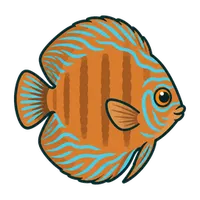
Quick facts
| Adult size | ~140 mm / 6 in SL (Aquarium Co-Op: ~5–7 in / 13–18 cm in diameter) |
|---|---|
| Minimum tank | Aquarium Co-Op recommends a 75 US gal (~284 L) tank or larger for a group; a 55 forces heavier water changes |
| Temperature | ~29–30 °C / 85–86 °F (Aquarium Co-Op — discus want it genuinely hot) |
| pH | 6.8–7.6 (Aquarium Co-Op; lower is needed only for breeding) |
| Hardness | Soft to medium (Aquarium Co-Op) |
| Filtration & flow | Pristine, stable water with generous cover; heavy planting and a mature tank suit them |
| Diet | Micro-invertebrate feeder — small, frequent foods; discus have small mouths and feed slowly |
| Social | A schooling cichlid — buy 10–12 juveniles together and grow on to a settled group of ~6 |
| Temperament | Very shy and skittish; a slow, timid cichlid, not a bruiser |
| Lifespan | Commonly cited at ~10–15 years in the hobby (not stated by the primary source) |
Overview
Discus (Symphysodon aequifasciatus, the common discus) are the round, disc-shaped, endlessly colour-morphed jewels of the Amazon. SeriouslyFish records a modest maximum standard length of 140 mm (6 in), but with an important twist: "they can grow to be as tall as they are long", so they need vertical as well as horizontal room. Aquarium Co-Op describes adults at roughly 5–7 inches in diameter.
They have a reputation for being demanding, and part of that is temperament: SeriouslyFish describes them as "very shy, skittish fish" that "require as much cover as possible to feel comfortable". The difficulty with discus is consistency, not mystery — get the water hot, clean and stable and keep it that way.
💷 Costing it out? See how much a discus really costs to keep — the discus itself is usually the cheapest part.
Water & tank
Get the water right first — and hot. SeriouslyFish’s own profile does not publish water numbers (it is an incomplete entry), so we cite Aquarium Co-Op, who recommend 85–86 °F (~29–30 °C), a pH of 6.8–7.6, and soft-to-medium hardness for both wild-caught and captive-bred discus. The heat is non-negotiable: it keeps them active, feeding and coloured up, so tankmates and plants must tolerate it too.
On space, Aquarium Co-Op recommends a 75 US gal (~284 L) tank or larger and grows a group of 10–12 juveniles down to about six adults; a 55 is possible but "forces" heavier water changes. SeriouslyFish adds that a discus can be as tall as it is long, so give real vertical height, and note that a heavily-planted, well-covered layout suits these shy fish.
Feeding
SeriouslyFish records that wild discus "feed mainly on zooplankton, insects and other small invertebrates". In the aquarium, offer small, frequent foods: discus have small mouths and feed slowly, so Aquarium Co-Op warns that most people offer food that is too big — if you see a fish take food, spit it, and mouth it again, the pieces are too large. Keep the water pristine to match the extra feeding that hot water demands.
Behaviour & tankmates
Discus are calm but nervy. SeriouslyFish’s note is that they are "very shy, skittish fish and require as much cover as possible to feel comfortable". As a schooling cichlid they can bully each other in too small a group, which is why Aquarium Co-Op recommends buying 10–12 juveniles at once so no individual is outcompeted, then rehoming the rowdiest males as they mature.
Tankmates must meet two conditions per Aquarium Co-Op: they have to tolerate the mandatory hot water, and they must not outcompete the slow-feeding discus for food. Fast, bullet-shaped fish such as barbs or big tetra schools — and even other warm-water fish like clown loaches, German blue rams and angelfish — can be too quick at feeding time. Choose calm, heat-tolerant companions.
What to expect
Expect a beautiful but sensitive fish that reacts to its environment: it startles easily, hides without cover, and rewards patience and stability far more than tinkering. In a hot, clean, well-covered, spacious tank kept as a settled group, discus are calm and stunning. Treat them as an intermediate-plus fish — the "get the water right, keep it stable, don’t crowd them" philosophy pays off here more than almost anywhere.
Myths, kindly busted
“Discus are impossible and only for experts.”
They are demanding but knowable: Aquarium Co-Op’s core requirements are hot water (85–86 °F), stable pH 6.8–7.6, lots of cover and space, and a proper group — the difficulty is consistency, not mystery.
“A standard shallow community tank is fine for discus.”
SeriouslyFish stresses they "can grow to be as tall as they are long" and Aquarium Co-Op recommends a 75-gallon-plus tank — height and volume both matter.
“Discus are aggressive cichlids.”
SeriouslyFish describes them as "very shy, skittish fish" that need cover to feel secure — the opposite of a bruiser cichlid, though they can squabble in too small a group.
🐟 Did you know? — Discus fun facts
Little true delights about the discus — each one checked against a named source, no pet-shop myths.
- Adult discus secrete a nutritious “discus milk” through their skin, and their fry feed on this mucus for the first four weeks of life. Wikipedia
- The genus name Symphysodon, coined by Johann Jakob Heckel in 1840, refers to the unusual symphysis (joining) of the fish's teeth. Wikipedia
- Though discus reach only about 6 inches long, they can grow nearly as tall as they are long, giving their signature disc shape. SeriouslyFish
When to act
We triage, not diagnose — but these are worth a closer look (starting with a water test):
- A discus that darkens, clamps its fins and hides constantly — often a stress or environment signal in a shy species; check cover, tankmates, temperature and water stability.
- Refusing food, hanging listlessly, or breathing rapidly — general early warning signs in a sensitive fish; review water quality and temperature stability first, then consult a knowledgeable source.
- One fish being persistently chased or excluded by the group — reassess group size, space (especially height) and cover before assuming illness.
Heading to a vet? Print the Discus vet-prep sheet — what to bring, what to tell them, and the questions to ask.
Sources & further reading
- SeriouslyFish — Symphysodon aequifasciatus (Discus) — Max ~140 mm SL; "can grow to be as tall as they are long"; "very shy, skittish fish" needing cover; wild diet zooplankton/insects/invertebrates. NOTE: this SF profile is incomplete and does NOT state temperature/pH/hardness — water numbers here are cited to Aquarium Co-Op instead.
- Aquarium Co-Op — Discus Care Guide — Recommends 85–86 °F; pH 6.8–7.6 (lower only for breeding); soft-to-medium hardness; ~5–7 in diameter adults; 75 US gal+ tank; buy 10–12 juveniles and grow to ~6 adults; small mouths / slow feeders; tankmates must tolerate hot water and not outcompete them.
Written & fact-checked by The Finfern Team against the sources above — kind, general guidance, not a diagnosis. If something looks wrong, test your water and, if it persists, contact a fish-savvy vet.

Get the free Discus Starter Kit
The essentials at a glance, a setup checklist and a first-30-days plan for your discus — what to get right and what to watch for. Join the shoal and we’ll send it over. Free sheets and tools always stay open, no gatekeeping.
Water-first tips and new guides the moment they land. No spam — unsubscribe anytime. See how we handle your data in our privacy notice.