
Species · Loaches
Dwarf Chain Loach
Ambastaia sidthimunki
A planted-tank-safe mini loach — but it wants a real shoal of five or more, no long-finned tankmates, and it is not snail pest-control.
Difficulty: Intermediate Tropical community tank ✓ Fact-checked care guide
Quick facts
| Adult size | ~60 mm / 2.4 in SL |
|---|---|
| Minimum tank | ~72 L / ~19 US gal — an 80 × 30 cm base minimum, per SeriouslyFish |
| Temperature | 20–30 °C / 68–86 °F |
| pH | 5.5–7.5 |
| Hardness | 1–12 dGH |
| Filtration & flow | A mature, stable tank only; smooth substrate; a tight-fitting lid (it jumps) |
| Diet | Chiefly carnivorous omnivore — varied dried, live/frozen foods plus fresh vegetables |
| Social | Gregarious — keep at least 5–6, preferably 10 or more; never singly |
| Temperament | Usually peaceful, but observations conflict — can nip sedentary, long-finned fish |
| Lifespan | Commonly cited at ~8–12 years in the hobby (not stated by the primary source) |
Overview
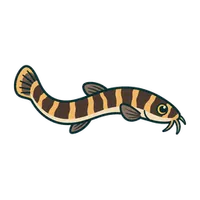
The dwarf chain loach — "sid" to its fans — is the botiid you can put in a fully-planted tank. SeriouslyFish notes it is "one of the few representatives suitable for the fully-planted aquarium due to its diminutive size and tendency to swim above the substrate", topping out at just ~60 mm (2.4 in). It is an active, sociable little fish with a chain-link pattern that looks great in a shoal.
It is also a fish the trade nearly lost — SeriouslyFish notes it "was unavailable to aquarists for several years", and it is potentially endangered in the wild, with Thai localities kept secret for conservation. Today’s fish are farm-bred. Small and pretty, yes — but still a proper loach with proper group needs.
💷 Costing it out? See how much a dwarf chain loach really costs to keep — the dwarf chain loach itself is usually the cheapest part.
Water & tank
Chemistry is flexible: SeriouslyFish gives temperature 20–30 °C (68–86 °F), pH 5.5–7.5 (noting wild sites measured up to 8.0), and hardness 1–12 dGH. That soft, wide range makes it easy to house, but it does not excuse the two things loaches are strict about — a cycled tank and clean water. The profile insists they "should never be introduced to biologically immature set-ups" and want weekly 30–50% water changes.
For a 60 mm fish the footprint is generous on purpose: SeriouslyFish sets the smallest tank at 80 × 30 cm (~72 L / ~19 US gal) — because you are housing a group, not one fish. As with all botiids, "a tightly-fitting cover is also essential" — these loaches jump.
Feeding
"Chiefly carnivorous" but omnivorous in practice. SeriouslyFish says offer "a varied diet comprising quality dried products, live or frozen chironomid larvae (bloodworm), Tubifex, Daphnia, Artemia, etc., plus fresh fruit and vegetables such as cucumber, melon, blanched spinach, or courgette". They will nibble snails, but — same honest line as the yoyo — "they are not obligate molluscivores and should never be considered as pest control".
Behaviour & tankmates
Here is where we will not oversell. SeriouslyFish calls it "generally considered an excellent choice for the community aquarium, but caution should possibly be exercised since conflicting observations exist" — some keepers find it peaceful, others report nipping, "with sedentary or long-finned fishes most at risk", and "typical injuries supposedly involve missing eyes or chunks of finnage". Skip the slow, long-finned tankmates.
That group is both the fix and the requirement: "gregarious… should be maintained in groups of at least 5 or 6 specimens, preferably 10 or more". Kept singly they turn "withdrawn or aggressive", and in a pair or trio the dominant fish can stress the others until they stop feeding. A bigger shoal actually reduces the fin-nipping risk — the aggression gets absorbed by the hierarchy instead of landing on your other fish.
What to expect
Expect a restless, busy, "chattering" little loach that shadows its groupmates, greys out during harmless sparring, and rests at odd angles. In a mature planted tank with a real group it is one of the most watchable community fish going. Newly-imported fish can arrive thin ("skinny disease"), so quarantine and confirm feeding before they join a display.
Myths, kindly busted
“It’s a peaceful nano loach — safe with any community fish.”
SeriouslyFish says "conflicting observations exist"; nipping is reported "with sedentary or long-finned fishes most at risk", including missing eyes or finnage. Avoid slow, long-finned tankmates.
“Being tiny, a couple of them is plenty.”
The profile says keep "at least 5 or 6, preferably 10 or more" — kept singly or in twos/threes they turn withdrawn or aggressive and can stop the weaker fish feeding.
“It’ll clear out my snail problem.”
SeriouslyFish is explicit: "not obligate molluscivores and should never be considered as pest control".
🐟 Did you know? — Dwarf Chain Loach fun facts
Little true delights about the dwarf chain loach — each one checked against a named source, no pet-shop myths.
- Its genus name Ambastaia honours a river, Ambastai, named in the geographer Ptolemy's 2nd-century Geography and thought to be the Mekong. SeriouslyFish
- A miniature social Botia relative, it forms complex hierarchies and needs company — kept alone it turns withdrawn or aggressive. SeriouslyFish
- Nicknamed “chipmunk botia”, it nearly vanished from the hobby before 2000; today's fish are farm-bred, as wild-type breeding is almost unheard of. SeriouslyFish
When to act
We triage, not diagnose — but these are worth a closer look (starting with a water test):
- Tankmates turning up with nipped fins or eye injuries — the profile documents this risk with long-finned/sedentary fish; increase the loach group size and remove vulnerable tankmates.
- A thin, sunken-bellied new loach — "skinny disease" is common in newly-imported fish; isolate, confirm it is actually eating, and seek qualified advice rather than dosing blind.
- A single loach hiding all day, or a jumper on the floor — under-grouping and jumping are both documented; the answers are a proper shoal of 5–6+ and a tight-fitting lid, plus confirming the tank is fully mature.
Heading to a vet? Print the Dwarf Chain Loach vet-prep sheet — what to bring, what to tell them, and the questions to ask.
Sources & further reading
- SeriouslyFish — Ambastaia sidthimunki (Dwarf Chain Loach) — Max ~60 mm SL; minimum base 80 × 30 cm (~72 L / ~19 US gal); temperature 20–30 °C / 68–86 °F; pH 5.5–7.5; hardness 1–12 dGH; gregarious, keep 5–6+ (preferably 10+); "conflicting observations" on temperament — can nip sedentary/long-finned fish; mature tank + tight lid; NOT pest control. Suitable for planted tanks (swims above substrate).
Written & fact-checked by The Finfern Team against the sources above — kind, general guidance, not a diagnosis. If something looks wrong, test your water and, if it persists, contact a fish-savvy vet.

Get the free Dwarf Chain Loach Starter Kit
The essentials at a glance, a setup checklist and a first-30-days plan for your dwarf chain loach — what to get right and what to watch for. Join the shoal and we’ll send it over. Free sheets and tools always stay open, no gatekeeping.
Water-first tips and new guides the moment they land. No spam — unsubscribe anytime. See how we handle your data in our privacy notice.