
Species · Rainbowfish
Dwarf Neon Rainbowfish
Melanotaenia praecox
The rainbowfish for tanks that are not six feet long — a 3-inch electric-blue shoaler that fits a small tank but still needs a real group and softly-lit, clean water.
Difficulty: Beginner–Intermediate Tropical community tank ✓ Fact-checked care guide
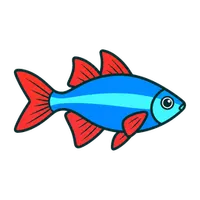
Quick facts
| Adult size | ~80 mm / 3.1 in SL |
|---|---|
| Minimum tank | ~54 L / ~14 US gal — a 60 × 30 × 30 cm base, per SeriouslyFish |
| Temperature | 23–28 °C / 73–82 °F |
| pH | 6.8–7.5 |
| Hardness | 5–15 dGH |
| Filtration & flow | Gentle-to-moderate flow; dislikes bright light — floating plants suit it; weekly water changes |
| Diet | Unfussy omnivore — dried, frozen and live foods; live foods bring out the best colour |
| Social | A skittish shoaler — keep at least 6–8, preferably more |
| Temperament | Very peaceful; suitable for many community tanks given its small size |
| Lifespan | Commonly cited at ~4–5 years in the hobby (not stated by the primary source) |
Overview
The dwarf neon rainbowfish is the rainbowfish for people who do not have a six-foot tank. It tops out at ~80 mm (3.1 in), and males glow an electric blue that lights up a planted aquarium. SeriouslyFish rates it "Easy" — but "easy" here means forgiving on chemistry, not "keep one in a bowl".
Like its big cousins, it is a shoaling fish that shows its best colour in a group and in the right light. The trap people fall into is treating a small fish as a low-need fish. It is an active swimmer that wants company and clean water; give it those and the blue does the rest.
💷 Costing it out? See how much a dwarf neon rainbowfish really costs to keep — the dwarf neon rainbowfish itself is usually the cheapest part.
Water & tank
The chemistry is gentler than the Boesemani’s. SeriouslyFish lists temperature 23–28 °C (73–82 °F), pH 6.8–7.5, and hardness 5–15 dGH — a middle-of-the-road range most dechlorinated tap water can hit. It also notes that "high water quality is essential to the well-being of this species, so weekly partial water changes are recommended".
On space, do not let the small size fool you: SeriouslyFish calls it "an active species, so despite its small size it requires an aquarium measuring at least 60 × 30 × 30 cm (~54 litres / ~14 US gal)". One nice detail — it "doesn’t appreciate bright conditions", so floating plants to diffuse the light both suit it and bring out its colour.
Feeding
An "unfussy, omnivorous species" per SeriouslyFish — it "will accept most dried, frozen and live foods". As with the Boesemani, the colour tip is the same: regular feedings of live/frozen foods "will help to ensure the fish exhibit their best colours". A good flake or micro-pellet plus frozen daphnia, brine shrimp or bloodworm covers it.
Behaviour & tankmates
These are "very peaceful and suitable for many community aquaria given its relatively small size". SeriouslyFish’s suggested tankmates include other similarly-sized rainbowfish, characins, danios, barbs, dwarf cichlids, freshwater gobies and Corydoras catfish — a genuinely easy community fish.
The one rule that is not negotiable is numbers. SeriouslyFish says it "can be quite skittish and does far better when kept in a shoal of at least 6-8, preferably more", with males colouring up "in the company of conspecifics". Two or three will hide and stay dull; a proper group spreads out, displays and holds colour. A small fish still needs a real shoal.
What to expect
Expect a busy, sociable little fish that colours best in a group, in softly-lit, planted water, with weekly water changes. Mature males are larger, deeper-bodied and brighter than females and display to each other constantly. If the blue looks washed out, check the group size and lighting before you worry — dull colour here is usually a husbandry signal, not a health one.
Myths, kindly busted
“It’s tiny, so it needs almost no space and no group.”
SeriouslyFish calls it "an active species" needing a 60 × 30 × 30 cm tank and a shoal of "at least 6-8, preferably more". Small body, real requirements.
“Brighter light shows off the neon colour better.”
The profile says it "doesn’t appreciate bright conditions" and recommends floating plants to diffuse the light — subdued, planted tanks bring out the best colour.
“Easy-rated means you can skip water changes.”
SeriouslyFish states "high water quality is essential to the well-being of this species, so weekly partial water changes are recommended". Easy on chemistry, not on maintenance.
🐟 Did you know? — Dwarf Neon Rainbowfish fun facts
Little true delights about the dwarf neon rainbowfish — each one checked against a named source, no pet-shop myths.
- The dwarf neon rainbowfish is endemic to the Mamberamo river system in New Guinea, one of the island's largest rivers at over 2,000 km long. SeriouslyFish
- Females attach their eggs to plants one by one on a tiny thread, spawning small batches daily over several weeks. SeriouslyFish
When to act
We triage, not diagnose — but these are worth a closer look (starting with a water test):
- Dull, greyish colour and constant hiding — a classic under-stocked-shoal or too-bright-tank signal; add to the group and add floating cover before assuming illness.
- A fish gasping at the surface or off its food after skipped water changes — SeriouslyFish stresses high water quality; test your parameters and get back on the weekly-change routine.
- Sudden faded patches, clamped fins, or flicking against décor — general stress/health warning; check temperature (23–28 °C) and water quality first.
Heading to a vet? Print the Dwarf Neon Rainbowfish vet-prep sheet — what to bring, what to tell them, and the questions to ask.
Sources & further reading
- SeriouslyFish — Melanotaenia praecox (Dwarf Neon Rainbowfish) — Max ~80 mm SL; minimum 60 × 30 × 30 cm (~54 L / ~14 US gal); temperature 23–28 °C / 73–82 °F; pH 6.8–7.5; hardness 5–15 dGH; very peaceful community fish; skittish — keep 6–8+; dislikes bright light (use floating plants); weekly water changes essential.
Written & fact-checked by The Finfern Team against the sources above — kind, general guidance, not a diagnosis. If something looks wrong, test your water and, if it persists, contact a fish-savvy vet.

Get the free Dwarf Neon Rainbowfish Starter Kit
The essentials at a glance, a setup checklist and a first-30-days plan for your dwarf neon rainbowfish — what to get right and what to watch for. Join the shoal and we’ll send it over. Free sheets and tools always stay open, no gatekeeping.
Water-first tips and new guides the moment they land. No spam — unsubscribe anytime. See how we handle your data in our privacy notice.