
Species · Cichlids
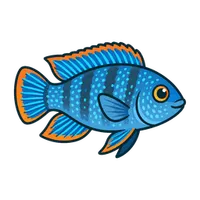
Electric Blue Acara
Andinoacara pulcher
A calm, beginner-friendly cichlid — but still a cichlid: give it stable water, sand to dig, and tankmates too big to swallow.
Difficulty: Beginner–Intermediate Cichlid setup ✓ Fact-checked care guide
Quick facts
| Adult size | ~150 mm / 6 in SL |
|---|---|
| Minimum tank | A 120 × 30 cm base is just sufficient for a pair, per SeriouslyFish (no volume stated) |
| Temperature | 22–28 °C / 72–82 °F |
| pH | 6.5–8.0 |
| Hardness | 5–25 dGH |
| Filtration & flow | Efficient biological filtration + a strict maintenance regime; soft sand for digging |
| Diet | Mainly carnivorous — meaty live/frozen foods (bloodworm, brine shrimp, mussel, prawn, earthworm) |
| Social | A single fish or a bonded pair; tankmates must be too large to swallow |
| Temperament | Peaceful for a cichlid of its size — pairs off and defends territory when breeding |
| Lifespan | Commonly cited at ~8–10 years in the hobby (not stated by the primary source) |
Overview
The Blue Acara is one of the calmest cichlids you can start with — SeriouslyFish literally calls it "a wonderful beginner’s cichlid" and rates it Easy. The bright "Electric Blue" version you see in shops is a captive-bred colour form of this same fish, Andinoacara pulcher. It stays a manageable size (150 mm / 6 in SL) and is described as "peaceful for a cichlid of this size".
But peaceful-for-a-cichlid is not the same as a peaceful community tetra. It still pairs off, still digs, and still needs room. SeriouslyFish notes it "can be combined with other species that are too large to swallow" — the honest read is that it is a friendly cichlid, not a fish you mix with anything small.
💷 Costing it out? See how much a electric blue acara really costs to keep — the electric blue acara itself is usually the cheapest part.
Water & tank
Aim for 22–28 °C (72–82 °F), pH 6.5–8.0, and hardness 5–25 dGH — a genuinely wide, forgiving window, which is part of why it suits beginners. The one hard rule the source stresses is stability: "the blue acara can be quite sensitive to deteriorating water quality so employ an efficient biological filter, along with a stringent maintenance regime". Get the filtration and water-change habit right first.
On space, SeriouslyFish says a base of 120 × 30 cm "is just about sufficient to house a pair" (it does not record a litre/gallon figure). Because it is "an avid digger", give it a soft sandy substrate and skip delicate rooted plants — attach Anubias or java fern to wood or rock instead.
Feeding
Feed it as the "mainly carnivorous" fish it is: meaty foods such as bloodworm, brine shrimp, chopped mussel or prawn and earthworms, per the source. "Most dried foods are also accepted", so a good staple pellet plus regular meaty treats keeps colour and condition up.
Behaviour & tankmates
This is a peaceful cichlid, not a peaceful fish full-stop. SeriouslyFish’s rule is simple: tankmates must be "too large to swallow". Good options it names are medium-sized characins, Corydoras and other catfish, loricariids, and — in a big enough tank — other relatively peaceful cichlids. The classic beginner mistake is housing an Acara with tiny tetras or shrimp and being surprised when they vanish.
The other thing to plan for is pairing. The recommended way to get a pair is to raise a group of young fish and let them pair off naturally, then remove the spares once a pair forms — expect territorial behaviour around spawning even from a "peaceful" cichlid.
What to expect
A hardy, good-tempered starter cichlid that tolerates a wide range of water, digs the substrate, reaches about 6 in, and pairs off to breed readily. Give it stable, well-filtered water and mid-sized tankmates and it is genuinely beginner-friendly. Note that many hobby fish are narrowed-gene-pool or hybrid stock, so buy from a good source.
Myths, kindly busted
“Electric Blue Acaras are a separate, delicate species.”
The profile covers Andinoacara pulcher; the electric-blue is a captive-bred colour form of that species, and the fish is rated Easy — "a wonderful beginner’s cichlid".
“It’s a peaceful cichlid, so it’s safe with any community fish.”
SeriouslyFish only clears tankmates that are "too large to swallow" — small fish and shrimp can become food.
“Being hardy, it doesn’t mind so-so water.”
The source warns it "can be quite sensitive to deteriorating water quality" and calls for efficient biological filtration plus a stringent maintenance regime.
🐟 Did you know? — Electric Blue Acara fun facts
Little true delights about the electric blue acara — each one checked against a named source, no pet-shop myths.
- The electric blue acara isn't a wild fish but a selectively bred captive colour form of the blue acara, Andinoacara pulcher. Maidenhead Aquatics
- Its parent species is named for the Andes plus “acara”, the Tupi-Guarani word for cichlids; pulcher is Latin for “beautiful”. SeriouslyFish
- Blue acaras are devoted biparental parents, the male guarding the spawning site while the female fans the eggs, sometimes swapping roles. SeriouslyFish
When to act
We triage, not diagnose — but these are worth a closer look (starting with a water test):
- Fish gasping at the surface, darkening or clamping fins, or going off food — check water quality first, as this species is called out as sensitive to deteriorating water.
- Sudden aggression, chased or hiding tankmates, or a fish penned in a corner — often a pair forming and defending territory; re-evaluate stocking/space.
- Small tankmates disappearing — likely being eaten; the source only clears fish too large to be swallowed.
Heading to a vet? Print the Electric Blue Acara vet-prep sheet — what to bring, what to tell them, and the questions to ask.
Sources & further reading
- SeriouslyFish — Andinoacara pulcher (Blue Acara) — Max ~150 mm SL; a 120 × 30 cm base just suits a pair (no volume stated); temperature 22–28 °C / 72–82 °F; pH 6.5–8.0; hardness 5–25 dGH; "a wonderful beginner’s cichlid" but sensitive to deteriorating water; tankmates must be "too large to swallow"; avid digger (soft sand). The "electric blue" is a captive-bred colour form.
Written & fact-checked by The Finfern Team against the sources above — kind, general guidance, not a diagnosis. If something looks wrong, test your water and, if it persists, contact a fish-savvy vet.

Get the free Electric Blue Acara Starter Kit
The essentials at a glance, a setup checklist and a first-30-days plan for your electric blue acara — what to get right and what to watch for. Join the shoal and we’ll send it over. Free sheets and tools always stay open, no gatekeeping.
Water-first tips and new guides the moment they land. No spam — unsubscribe anytime. See how we handle your data in our privacy notice.