
Species · Cichlids
Keyhole Cichlid
Cleithracara maronii
If you remember one thing: the keyhole is a shy, gentle South American cichlid that needs a mature, cycled, soft-ish-water tank with lots of cover and broken sightlines, not a bare tank or hard Rift-lake water.
Difficulty: Beginner–Intermediate Cichlid setup ✓ Fact-checked care guide
Quick facts
| Adult size | Around 10-12 cm (4-4.5 in). SeriouslyFish lists 110 mm / 4 in standard length; males grow a little larger and more pointy-finned than the slightly smaller, rounder females (roughly 4.5 in vs 3 in). "Dwarf" in the cichlid sense, but bigger and longer-lived than most people expect at the shop. |
|---|---|
| Minimum tank | Keeper-facing minimum for a bonded pair: about 150 L / 40 US gal (a real 90 cm / 3 ft tank). SeriouslyFish gives a base footprint of 90 x 30 cm (~81 L / ~21 US gal), but that is a floor for the species, not a comfortable pair-plus-community home. Bigger-is-better reality: for a small group grown out together, or a pair in a planted community, aim for a 75 US gal / ~280 L tank. Footprint (floor length x width) matters far more than raw litres for a territorial fish. |
| Temperature | 21-28 C (70-82 F); most keepers settle around 24-26 C (75-79 F). |
| pH | Adaptable 6.0-7.5 in the aquarium; wild blackwater fish tolerate pH as low as 4.0. Avoid hard, alkaline water above ~7.5 - this is a soft-water South American, not a Rift-lake cichlid. |
| Hardness | Soft to moderately hard, roughly 2-15 dGH (SeriouslyFish). For breeding, softer water under ~8 dGH helps. |
| Filtration & flow | Gentle to moderate flow - these are slow-water/blackwater fish and dislike strong current. Use efficient biological filtration (a mature, well-cycled filter) but diffuse or baffle the outflow so the water surface is calm. Sensitive to poor water quality, so filtration + regular water changes matter more than turnover rate. |
| Diet | Omnivore (foraging omnivore in the wild) with a lean toward meaty foods. Takes most prepared foods readily. |
| Social | Not a shoaling fish. Buy a group of about 6 young fish to grow out and let a bonded pair form, OR keep an established pair. Never keep one entirely alone with no dither fish - it becomes a permanent hermit; the presence of small peaceful schooling fish is what tells a keyhole the coast is clear. |
| Temperament | Genuinely peaceful and shy - the exception to the "cichlids are aggressive" rule. Not aggressive unless actively breeding, when a pair will defend a territory a couple of feet across. Timid enough that it hides if it feels exposed. |
| Lifespan | 7-10 years with good care; well-kept fish can pass 10. Long-lived for a small cichlid - a genuine multi-year commitment. |
Overview
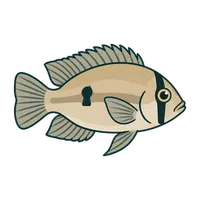
The keyhole cichlid gets its name from the dark keyhole-shaped mark on its side and a black bar running down through the eye - both of which fade and flush depending on mood and stress, making it a living water-quality mood ring.
It is one of the very few cichlids you can honestly recommend for a peaceful community: shy, slow, and non-aggressive outside of breeding. The trade-off is that a nervous keyhole in a bare or busy tank will simply hide and you will rarely see it.
Native to slow-moving and standing blackwater in the Guianas (French Guiana, Guyana, Suriname), the Orinoco delta and Trinidad - soft, acidic, mineral-poor water stained by tannins, with lots of leaf litter and cover.
A dwarf by cichlid standards but a long-term resident: ~10-12 cm adults that can live a decade, so plan the tank, tankmates and water for years, not months.
💷 Costing it out? See how much a keyhole cichlid really costs to keep — the keyhole cichlid itself is usually the cheapest part.
Water & tank
Water first. Aim for soft-to-moderate, slightly acidic-to-neutral water: pH 6.0-7.5, hardness roughly 2-15 dGH, temperature 24-26 C (75-79 F) within a tolerated 21-28 C (70-82 F). This is a SOUTH AMERICAN soft-water cichlid - do NOT put it in the hard, alkaline water suited to African Rift-lake cichlids; that is the single most common chemistry mistake.
Cycle the tank fully before the fish arrive. Keyholes are reasonably hardy once settled but genuinely sensitive to ammonia, nitrite and creeping nitrate. You want 0 ammonia, 0 nitrite, and nitrate kept low with regular partial water changes.
SeriouslyFish gives a base footprint of 90 x 30 cm (~81 L / ~21 US gal). Treat that as a floor: for a comfortable bonded pair in a planted community, ~150 L / 40 US gal is a fair keeper-facing minimum, and a group grown out together is happier in a 75 US gal / ~280 L tank. Floor space and length beat height.
Aquascape for security and broken lines-of-sight: fine sand substrate, driftwood, leaf litter, rockwork and caves, with dense planting around the back and sides and open swimming lanes at the front. A shy fish with hiding spots is a visible, confident fish; a shy fish in a bare tank is an invisible one.
Keep flow gentle - baffle or spread the filter return so the surface stays calm, echoing the slow blackwater they come from. Subdued lighting and floating plants or tannin-stained water bring out their colour and confidence.
Add a few small, peaceful dither fish (see tankmates). Keyholes use the calm behaviour of open-swimming schoolers as an all-clear signal, so dithers make the cichlids bolder and more visible.
Feeding
Feed a quality staple - sinking pellets or flakes formulated for community/cichlid fish - as the everyday base.
Supplement several times a week with frozen or live meaty foods: bloodworm, Artemia (brine shrimp), Daphnia. They forage over the substrate, so foods that sink suit them.
Offer some plant/veg matter too; they are omnivores, not pure carnivores. Vary the menu rather than feeding one thing.
Feed small amounts once or twice a day - only what is eaten in a couple of minutes. Overfeeding fouls the water this water-sensitive fish depends on, so err light and let the filter and water changes keep pace.
During breeding, condition the pair with extra live/frozen foods; free-swimming fry take newly hatched brine shrimp.
Behaviour & tankmates
Peaceful and shy - safe with small, calm community fish and one of the only cichlids that truly earns a community-tank recommendation.
Great tankmates: peaceful open-water schoolers as dithers (larger tetras such as rummynose or lemon tetras, harlequin rasboras), Corydoras and other calm bottom-dwellers, and other gentle South American community fish that like similar soft-ish water.
Avoid: boisterous, fin-nipping or aggressive/territorial fish, anything that out-competes a slow, timid feeder, and hard-water specialists (African Rift-lake cichlids) whose water needs conflict with the keyhole's.
Very small fish or dwarf shrimp risk being eaten - a 10-12 cm cichlid will treat tiny tankmates and shrimplets as food, so pair with tankmates too big to swallow.
During breeding a pair becomes territorial and will clear a patch a couple of feet across to guard eggs and fry; in a big, well-scaped tank this is usually manageable rather than destructive, but give tankmates room to stay clear.
Myths, kindly busted
“All cichlids are aggressive, so a cichlid can't go in a community tank.”
The keyhole is the classic exception - genuinely peaceful and shy, non-aggressive except when guarding a spawn. It's one of the few cichlids you can honestly keep with small peaceful community fish.
“Cichlids need hard, alkaline water and lots of rocks like African lake fish.”
That's Rift-lake cichlids. The keyhole is a South American blackwater fish that wants soft, slightly acidic water (pH 6.0-7.5, ~2-15 dGH) and cover from wood and plants - hard alkaline water is a mistake for this species.
“A keyhole cichlid is fine kept singly in a small tank because it's shy and small.”
Kept alone with no dither fish it usually turns into a permanent hermit you never see. It's happiest as a bonded pair or a small grown-out group, in a mature ~40 gal+ / 150 L+ tank with cover; small size doesn't mean small tank.
“It's a tiny beginner cichlid that won't live long.”
Adults reach ~10-12 cm and routinely live 7-10 years, sometimes longer, forming long-term monogamous pairs - a decade-long commitment, not a throwaway starter fish.
When to act
We triage, not diagnose — but these are worth a closer look (starting with a water test):
- Colours washed out, keyhole/eye markings gone dark and the fish hiding constantly and refusing food - stress or water-quality problem: test the water (ammonia/nitrite/nitrate, pH, temperature) and do a partial water change first.
- Any detectable ammonia or nitrite, or nitrate climbing high - the tank isn't keeping up or wasn't fully cycled; do water changes and check filtration/feeding before it harms this water-sensitive fish.
- Rapid or laboured gilling, gasping at the surface, or clamped fins - check temperature, aeration/flow and water parameters immediately; act on the water, don't wait.
- White spots, fuzzy patches, film over the eyes, red or ulcerated skin, bloating or stringy white faeces - possible illness; isolate/observe, correct water quality, and seek a fish-savvy vet or experienced-keeper help rather than guessing at medications.
- A breeding pair suddenly attacking tankmates - this is normal territorial guarding; give the tank more cover and space, and be ready to rehome fry or move fish if the tank is too small to absorb it.
Heading to a vet? Print the Keyhole Cichlid vet-prep sheet — what to bring, what to tell them, and the questions to ask.
Sources & further reading
- SeriouslyFish - Cleithracara maronii (Keyhole Cichlid) — Primary authority for size (110 mm SL), tank footprint 90 x 30 cm (~81 L/~21 US gal), temperature 21-28 C / 70-82 F, pH 4.0-7.5, hardness 2-15 dGH, diet, temperament (not aggressive unless breeding), pair-forming behaviour and distribution.
- Fish Laboratory - Keyhole Cichlid Care Guide — Cross-check: size 4 in / 10 cm, temperature 72-81 F / 22-27 C, pH 6.0-7.2, lifespan 7-10 years (up to 10+), monogamous pairs, must not be kept alone.
- Aquariadise - Full Care Guide for Keyhole Cichlids — Cross-check: sexual size difference (males ~4.5 in, females ~3 in), pair tank ~30 gal / group of 6 in 75 gal, pH 5.0-7.5, hardness <12 dGH, lifespan up to 10 years, keep as pair or group, breeding on flat rocks.
Written & fact-checked by The Finfern Team against the sources above — kind, general guidance, not a diagnosis. If something looks wrong, test your water and, if it persists, contact a fish-savvy vet.

Get the free Keyhole Cichlid Starter Kit
The essentials at a glance, a setup checklist and a first-30-days plan for your keyhole cichlid — what to get right and what to watch for. Join the shoal and we’ll send it over. Free sheets and tools always stay open, no gatekeeping.
Water-first tips and new guides the moment they land. No spam — unsubscribe anytime. See how we handle your data in our privacy notice.