
Species · Catfish & bottom-dwellers
Panda Cory
Corydoras panda
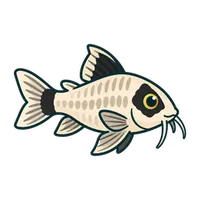
A tiny, endearing panda-masked catfish — peaceful, hardy and easy, but it wants a cooler tank than most tropicals, smooth sand, and a group of at least six.
Difficulty: Beginner Tropical community tank ✓ Fact-checked care guide
Quick facts
| Adult size | ~5 cm / 2 in SL |
|---|---|
| Minimum tank | ~41 L / ~11 US gal for a small group — SeriouslyFish suggests a 45 × 30 × 30 cm tank |
| Temperature | 22–25 °C / 72–77 °F (cooler than most tropicals — see below) |
| pH | 6.0–7.4 |
| Hardness | 1–12 dGH |
| Filtration & flow | Cycled, well-maintained filtration; smooth sand and scrupulously clean substrate |
| Diet | Omnivore bottom-feeder — sinking pellets/tablets plus live/frozen; it needs its own food |
| Social | Highly social — keep a group of at least 6 |
| Temperament | Very peaceful |
| Lifespan | Commonly cited at ~10 years in the hobby (not stated by the primary source) |
Overview
The panda cory (Corydoras panda) is one of the most popular of the 180-plus Corydoras species — a tiny, hardy, panda-masked catfish that potters along the bottom in a busy little shoal. Almost every one sold is captive-bred, which makes them hardy and adaptable.
Like all corys it is peaceful, long-lived, and profoundly social — a lone panda cory is a withdrawn, unhappy animal, while a group of six or more is confident and constantly active.
💷 Costing it out? See how much a panda cory really costs to keep — the panda cory itself is usually the cheapest part.
Water & tank
The panda cory’s standout requirement is temperature: it wants 22–25 °C / 72–77 °F — cooler than many tropical community fish. Its wild streams run cold with Andean meltwater, and kept warmer than this long-term its lifespan is reduced considerably. Pair it with fish that share that cooler range. Chemistry is easy: pH 6.0–7.4, 1–12 dGH.
The other non-negotiable is the substrate: smooth sand or well-rounded gravel, kept scrupulously clean. Panda corys sift the substrate with delicate barbels, and sharp or dirty gravel wears those barbels down and invites infection. Never use undergravel filtration. A 45 × 30 × 30 cm tank (~41 L) suits a small group; give them open floor space plus wood and leaf-litter cover.
Feeding
Panda corys are omnivores and easy to feed, but they are not a "clean-up crew" that lives off scraps — that slowly starves them. Use a good-quality sinking pellet or tablet as the staple, supplemented with live and frozen foods (daphnia, brine shrimp, bloodworm).
Feed sinking food, or feed after lights-out, so the corys get their share before faster mid-water fish hoover it up.
Behaviour & tankmates
One of the best community citizens there is — peaceful with everything and a fine companion for small characins, cyprinids, anabantoids, dwarf cichlids and other peaceful catfish, as long as those tankmates are happy in the cooler water panda corys prefer.
Keep a group of at least six panda corys; they are far more confident and active among their own kind. Avoid very large or aggressive tankmates.
What to expect
A happy group is constantly on the move, sifting sand and resting together. Occasional dashes to the surface to gulp air are completely normal — corys can breathe air through their gut. Frantic, repeated surfacing, though, points to poor water.
Myths, kindly busted
“Panda corys like the same warm water as most tropical fish.”
They prefer a cooler 22–25 °C / 72–77 °F; kept warmer long-term their lifespan is reduced considerably. Choose tankmates that suit the cooler range.
“Corys are a clean-up crew that lives off leftovers.”
They need their own sinking food. Relying on scraps slowly starves them.
“One or two panda corys are fine.”
They are highly social shoaling fish — keep at least six or they become stressed and reclusive.
🐟 Did you know? — Panda Cory fun facts
Little true delights about the panda cory — each one checked against a named source, no pet-shop myths.
- The panda cory is named for its panda-like markings — a dark eye-patch and body blotches recalling the giant panda. SeriouslyFish
- Like all Corydoras, the panda cory is a facultative air-breather, gulping air at the surface and absorbing oxygen through a modified, blood-rich intestine. SeriouslyFish
- When it first reached the hobby in the late 1970s the panda cory was wildly expensive and sought after; it is now mass-bred and hugely popular. SeriouslyFish
When to act
We triage, not diagnose — but these are worth a closer look (starting with a water test):
- Worn, stubby or missing barbels — usually a sharp or dirty substrate; move to smooth, clean sand and improve water quality.
- Constant frantic surfacing for air (beyond the occasional normal gulp) — test the water; it often signals low oxygen or poor quality.
- Reddened patches, clamped fins, or a fish sitting apart and off its food — check parameters and, if it persists, seek fish-savvy advice.
Heading to a vet? Print the Panda Cory vet-prep sheet — what to bring, what to tell them, and the questions to ask.
Sources & further reading
- SeriouslyFish — Corydoras panda (Panda Cory) — Adult ~50 mm SL; recommended 45 × 30 × 30 cm tank (~41 L / ~11 US gal) for a small group; temperature 22–25 °C / 72–77 °F (cooler than most tropicals; warmer long-term shortens lifespan); pH 6.0–7.4; hardness 1–12 dGH; very peaceful shoaling catfish — keep a group of 6+.
Written & fact-checked by The Finfern Team against the sources above — kind, general guidance, not a diagnosis. If something looks wrong, test your water and, if it persists, contact a fish-savvy vet.

Get the free Panda Cory Starter Kit
The essentials at a glance, a setup checklist and a first-30-days plan for your panda cory — what to get right and what to watch for. Join the shoal and we’ll send it over. Free sheets and tools always stay open, no gatekeeping.
Water-first tips and new guides the moment they land. No spam — unsubscribe anytime. See how we handle your data in our privacy notice.