
Species · Loaches
Panda Garra
Garra flavatra
If you remember one thing: the Panda Garra is a fast-water hillstream grazer, so give it a long, well-oxygenated, brisk-flowing, fully mature tank — and keep it either alone or in a proper group of 5-6+, never as a tense little pair or trio.
Difficulty: Beginner–Intermediate Tropical community tank ✓ Fact-checked care guide
Quick facts
| Adult size | About 8-9 cm (roughly 3-3.5 in). SeriouslyFish lists 90 mm standard length; most keepers see 6-9 cm, with the occasional individual pushing 10 cm. |
|---|---|
| Minimum tank | Keeper-facing minimum around 80-90 L (about 20-24 US gal) on a footprint of at least 90 x 30 cm (36 x 12 in). Reality: swimming LENGTH and flow matter more than volume here — for a settled group of 5-6+ a 90-120 cm long tank (roughly 120 L / 30+ US gal) is much kinder, because these are stream fish that dart and graze across open, current-swept surfaces. |
| Temperature | 22-27 °C (72-81 °F). They sit comfortably in the typical community-tropical band of about 22-26 °C; they come from cool, oxygen-rich hill streams, so avoid the warm end of tropical for long stretches. |
| pH | 6.5-7.5 (neutral, slightly soft to slightly hard is fine). |
| Hardness | Soft to moderately hard: GH about 2-12 dGH. They are not fussy about hardness as long as it is stable and the water is clean and well-oxygenated. |
| Filtration & flow | Wants brisk, well-oxygenated water — this is the single biggest key to success. Aim for turnover comfortably in excess of 10x tank volume per hour; a canister with a spray bar and/or an added powerhead creates the linear stream flow and high oxygen it evolved for. Provide smooth rocks and driftwood for grazing surfaces and current breaks. |
| Diet | Omnivore and, above all, a biofilm/aufwuchs and algae grazer. It rasps the film off rocks, wood and glass, and also takes small meaty foods and quality sinking vegetable-based foods. |
| Social | Not a true shoaler. Keep either a SINGLE fish, or a larger group of at least 5-6 (bigger is better) so aggression is spread out. The worst option is 2-3 — one fish gets relentlessly bullied. State it as: 1, or 5-6+. |
| Temperament | Peaceful toward unrelated tankmates but genuinely spiky toward its own kind and similar-shaped fish — expect a pecking order with charging and fin-flaring, not gentle schooling. |
| Lifespan | Around 5 years is typical; 4-6 years is the common range with good water quality, and some individuals live longer. |
Overview
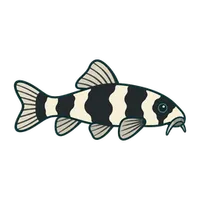
The Panda Garra (Garra flavatra) is a small, boldly barred cyprinid from the fast, cool hill streams of the Rakhine Yoma range in western Myanmar. It reached the hobby around 2005 and got popular fast for its panda-like black-and-gold pattern and busy, grazing personality.
It is a rasping algae- and biofilm-eater with a sucker-like mouth, built to cling to rock in current. That biology drives everything about its care: fast oxygenated water, a mature grazing surface, and a long tank rather than a tall one.
It is peaceful with other fish but famously prickly with its own species, so it is best kept either singly or in a proper group where squabbles get diffused. It is also an accomplished jumper and glass-climber, so a tight lid is non-negotiable.
💷 Costing it out? See how much a panda garra really costs to keep — the panda garra itself is usually the cheapest part.
Water & tank
Water first: target pH 6.5-7.5, GH about 2-12 dGH, and temperature 22-27 C (72-81 F) — the cooler-tropical end (22-26 C) suits them best. Above all, keep it clean and very well oxygenated.
Cycle the tank fully before any garra goes in. This species should never be added to a biologically immature setup — it needs an established, mature tank because grazable biofilm is a core part of its diet and it is sensitive to poor water. Test that ammonia and nitrite read 0 ppm and keep nitrate low with regular water changes.
Flow is the make-or-break variable. These are stream fish; aim for turnover well over 10x the tank volume per hour using a canister (spray bar) and/or a powerhead to create a strong, oxygen-rich current rather than still water.
Footprint over volume: a long base of at least 90 x 30 cm (36 x 12 in), roughly 80-90 L (20-24 US gal), is the practical minimum, and a 90-120 cm long tank is much better for a group. Length gives swimming and grazing room along the current.
Aquascape for grazing and current: smooth water-worn rocks, cobbles and driftwood give biofilm surfaces plus current breaks where fish can rest out of the flow. Plants are fine but the fish will happily graze film off leaves and glass.
Fit a tight-fitting lid with no gaps. Panda Garras are skilled jumpers and can literally climb the glass using their mouths, so an open-topped tank will eventually cost you fish.
Feeding
Let a mature tank do the heavy lifting: they naturally graze biofilm and algae off rock, wood and glass all day, which is why an established tank matters.
Supplement with quality sinking foods that include vegetable/algae matter (algae wafers, sinking green pellets) so they get consistent nutrition beyond what the tank grows.
Offer small meaty foods a few times a week — frozen or live bloodworm, Tubifex, Artemia (brine shrimp), daphnia, or finely chopped prawn — but keep meaty portions modest; they are grazers, not gorgers.
Feed little and often rather than one big meal, and watch that faster tankmates do not out-compete them at the bottom. Blanched vegetables (courgette/zucchini, cucumber) are usually accepted too.
Behaviour & tankmates
Peaceful, active and inquisitive with unrelated fish; they spend the day busily grazing surfaces rather than chasing tankmates.
The catch is with their own kind and similar shapes: they are not very tolerant of conspecifics and form a hierarchy with charging and fin-flaring. Keep them either singly or in a group of 5-6+ so no single fish becomes the target; avoid pairs and trios.
Good tankmates are other peaceful, current-tolerant community fish that occupy different zones — e.g. danios, rasboras, and other hillstream-friendly species that enjoy flow. Match their preference for cool, brisk, oxygen-rich water.
Avoid slow, long-finned, or delicate fish that dislike strong flow (such as bettas or fancy guppies), and avoid other territorial bottom-grazers with the same body shape, which can trigger squabbling.
May snack on dwarf-shrimp fry and shrimplets — adult shrimp are usually fine, but a dedicated breeding-shrimp tank is not the place for one.
Myths, kindly busted
“Panda Garras are peaceful schoolers, so a happy little group of 2-3 is ideal.”
They are peaceful toward OTHER fish but prickly toward their own kind, and they do not school. Small groups of 2-3 usually end with one fish being bullied. Keep either a single fish or a larger group of 5-6+ so aggression is spread out.
“It is an algae-eater, so you can drop it into a brand-new tank to clean up.”
Biofilm and algae are core to its diet AND it is sensitive to unstable water, so it must only go into a fully cycled, mature tank with established grazing surfaces. A new tank starves and stresses it.
“As a small fish it will be fine in a standard 40-60 L (10-15 gal) starter tank.”
It is a fast-water stream fish that needs LENGTH and strong oxygenated flow, not just a few litres. Plan for a long footprint (about 90 cm+) and high turnover; cramped, still tanks cause stress.
“A normal aquarium hood is enough to contain them.”
They are determined jumpers and can climb glass with their mouths. You need a genuinely tight-fitting lid with gaps blocked, or you will lose fish over the edge.
When to act
We triage, not diagnose — but these are worth a closer look (starting with a water test):
- Fish gasping at the surface, hanging in the filter outflow, or lethargic can signal too little oxygen or flow — increase surface agitation/turnover and test the water.
- One fish hiding constantly, clamped, or with nipped fins in a small group means the group size is wrong — you likely have too few; move to a single fish or increase to 5-6+ and add cover.
- Any ammonia or nitrite reading above 0 ppm, or a sudden loss of appetite, means test the water now and do a water change — this species does not tolerate an immature or dirty tank.
- Rapid colour fading or persistent dark blotching can indicate stress (aggression, poor water, or wrong temperature); check parameters, flow and tankmates before assuming illness.
- White spots, cottony patches, rapid gilling, or a fish sitting listless on the bottom are triage signs — isolate if needed, test water, and seek advice from a fish vet or an experienced fishkeeping community rather than guessing at treatments.
Heading to a vet? Print the Panda Garra vet-prep sheet — what to bring, what to tell them, and the questions to ask.
Sources & further reading
- SeriouslyFish — Garra flavatra species profile — Primary authority: 90 mm SL, 90 x 30 cm base, 22-27 C, pH 6.5-7.5, 2-12 dGH, turnover >10x/hr, 'not particularly tolerant of conspecifics', must not be added to an immature tank, jumps and climbs glass, endemic to Rakhine, Myanmar.
- Shrimp and Snail Breeder (Aquarium Breeder) — Panda Garra detailed guide — ~8 cm adult size, ~80 L / 20 gal for a group, 21-25 C (70-77 F), pH 6.5-7.5, GH 2-12, lifespan ~5-6 years, group of 4-6, fast highly-oxygenated water, needs cycled/established tank, jumps and climbs.
- Guidarium — Panda Garra care guide & profile — 8 cm, min 80 L volume and 80 cm length, 22-27 C, pH 6.5-7.5, 2-12 dGH, high flow, biofilm/algae grazer, aggressive to same species / mostly peaceful to tankmates, tight lid essential.
- Shrimpy Business — The Panda Garra detailed guide — 2.5-4 in, lifespan 4-6 years, 20 gal single / 30 gal groups, 72-82 F, pH 6.5-7.5, GH 2-12 dGH, strong current, group of 4-6 in a large tank, poor tolerance of own kind in small tanks, skilled jumpers.
Written & fact-checked by The Finfern Team against the sources above — kind, general guidance, not a diagnosis. If something looks wrong, test your water and, if it persists, contact a fish-savvy vet.

Get the free Panda Garra Starter Kit
The essentials at a glance, a setup checklist and a first-30-days plan for your panda garra — what to get right and what to watch for. Join the shoal and we’ll send it over. Free sheets and tools always stay open, no gatekeeping.
Water-first tips and new guides the moment they land. No spam — unsubscribe anytime. See how we handle your data in our privacy notice.