
Species · Bettas & gouramis
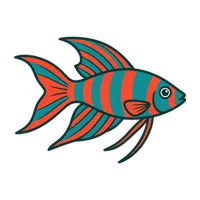
Paradise Fish
Macropodus opercularis
A hardy, subtropical labyrinth fish with old-world charm — but keep it cool, give it floor space, and never house two males together.
Difficulty: Beginner–Intermediate Tropical community tank ✓ Fact-checked care guide
Quick facts
| Adult size | ~80 mm / 3.1 in SL |
|---|---|
| Minimum tank | ~72 L / ~19 US gal — an 80 × 30 cm base for a single pair, per SeriouslyFish |
| Temperature | 10–22 °C / 50–72 °F (subtropical — can be kept unheated) |
| pH | 6.0–8.0 |
| Hardness | 5–20 dGH |
| Filtration & flow | A labyrinth air-breather; floor space, sight-breaks, floating cover and a tight lid |
| Diet | Micro-predator — small live/frozen Daphnia, Artemia, white/grindal worm; some dried accepted |
| Social | One male only; provide two or more females per male |
| Temperament | Not a community fish — males are territorially aggressive, especially when breeding |
| Lifespan | Commonly cited at ~8 years in the hobby (not stated by the primary source) |
Overview
The paradise fish is one of the oldest ornamental fish in the hobby — introduced to Europe in 1869, one of the very first tropical fish ever imported. It is a labyrinth fish, meaning it can gulp atmospheric air at the surface, and it is famously hardy.
What surprises many keepers is how cool it likes to run. SeriouslyFish gives a temperature range of 10–22 °C (50–72 °F) and says the species can be kept unheated in most cases and even benefits from a cool winter period. This is a subtropical fish, not a tropical one — a genuinely different proposition from most community stock.
💷 Costing it out? See how much a paradise fish really costs to keep — the paradise fish itself is usually the cheapest part.
Water & tank
Get the water right first. SeriouslyFish lists temperature 10–22 °C (50–72 °F), pH 6.0–8.0, and hardness 5–20 dGH — a wide, forgiving window that reflects how adaptable this farmed fish is. The cool end of that temperature range is the headline: many indoor tanks are actually too warm for a paradise fish to thrive long-term.
For space, the source calls for a base of 80 × 30 cm (~72 L / ~19 US gal) as the minimum for a single pair. Because males are territorial, floor space and sight-breaks matter more than raw volume. Driftwood and some floating or surface plants give the shade and cover this fish appreciates, and a tight lid is sensible for any labyrinth fish.
Feeding
SeriouslyFish describes a fish that preys on insect larvae in nature and should be offered small live or frozen Daphnia, Artemia, white worm and grindal worm in the aquarium; high-quality dried foods may also be accepted, particularly by commercial strains. A varied menu built around small meaty live and frozen foods, with dried food as a supplement rather than the whole diet.
Behaviour & tankmates
This is where honesty matters. SeriouslyFish flags the paradise fish as "not a community fish" and states plainly that males are territorially aggressive, more so when breeding, and should not be housed together unless the tank is very large. The source advises two or more females per male to spread out male attention, and says similarly-shaped fish should be avoided.
That said, it can live alongside peaceful schooling species with comparable environmental requirements — the key word being comparable, since most community fish want warmer water than a paradise fish is happiest in. Plan the tank around the paradise fish’s subtropical, territorial nature rather than trying to slot it into a standard tropical community.
What to expect
Expect a hardy, characterful, air-breathing fish with real colour and real attitude. Kept cool, given floor space, and not paired with a rival male, it is a rewarding centrepiece. Kept too warm, or with a second male in too small a tank, expect chasing, torn fins and stress. This is a fish you build the tank around, not one you add last.
Myths, kindly busted
“Paradise fish are tropical fish that need a heater like everything else.”
SeriouslyFish gives a range of 10–22 °C (50–72 °F) and says the species can usually be kept unheated and even benefits from a cool winter period. It is subtropical, not tropical.
“Two male paradise fish will sort out a pecking order and settle down.”
The source says males are territorially aggressive and should not be housed together unless the aquarium is very large.
“It’s a peaceful community fish.”
SeriouslyFish tags it "not a community fish" and warns similarly-shaped fishes should be avoided; only peaceful schoolers with comparable requirements are suggested.
🐟 Did you know? — Paradise Fish fun facts
Little true delights about the paradise fish — each one checked against a named source, no pet-shop myths.
- The paradise fish was the second Chinese ornamental fish brought to the West after the goldfish, reaching Paris in 1869. Wikipedia
- It was the first freshwater tropical fish ever successfully bred in captivity in Europe. Wikipedia
- One of few fish able to change colour in response to stimuli, a fighting male often flushes dark blue lateral lines along its sides. Wikipedia
When to act
We triage, not diagnose — but these are worth a closer look (starting with a water test):
- A male constantly chasing, cornering, or fin-nipping tankmates or a second male — a sign the group or tank layout is wrong; separate or rehome before injuries mount.
- Fish gasping frantically at the surface far more than usual, or clamped fins and hiding — check temperature, water quality and oxygenation, and act on the water first.
- Torn or ragged fins, or a fish that stops eating and hides — isolate stressors and review conditions rather than reaching for medication first.
Heading to a vet? Print the Paradise Fish vet-prep sheet — what to bring, what to tell them, and the questions to ask.
Sources & further reading
- SeriouslyFish — Macropodus opercularis (Paradise Fish) — Max ~80 mm SL; base 80 × 30 cm (~72 L / ~19 US gal) for a pair; temperature 10–22 °C / 50–72 °F (subtropical — can be unheated, benefits from a cool winter); pH 6.0–8.0; hardness 5–20 dGH; "not a community fish"; males territorially aggressive — one male only, 2+ females per male.
Written & fact-checked by The Finfern Team against the sources above — kind, general guidance, not a diagnosis. If something looks wrong, test your water and, if it persists, contact a fish-savvy vet.

Get the free Paradise Fish Starter Kit
The essentials at a glance, a setup checklist and a first-30-days plan for your paradise fish — what to get right and what to watch for. Join the shoal and we’ll send it over. Free sheets and tools always stay open, no gatekeeping.
Water-first tips and new guides the moment they land. No spam — unsubscribe anytime. See how we handle your data in our privacy notice.