
Species · Danios & minnows
Pearl Danio
Danio albolineatus
A hardy, fast, subtropical-tolerant danio that wants swimming length, a shoal of 8–10, and — above all — a tight-fitting lid.
Difficulty: Beginner Tropical community tank ✓ Fact-checked care guide
Quick facts
| Adult size | ~55 mm / 2.2 in SL |
|---|---|
| Minimum tank | ~81 L / ~21 US gal — a 90 × 30 cm base (an active swimmer needs length), per SeriouslyFish |
| Temperature | 16–25 °C / 61–77 °F (subtropical-tolerant) |
| pH | 6.0–8.0 |
| Hardness | 1–20 dGH |
| Filtration & flow | Active fish that needs horizontal swimming length; an accomplished jumper — needs a tight lid |
| Diet | Chiefly insectivorous in the wild; in the tank an unfussy feeder that accepts most foods |
| Social | A schooling species — keep a group of at least 8–10 |
| Temperament | Very peaceful indeed — an ideal community resident |
| Lifespan | Commonly cited at ~3–5 years in the hobby (not stated by the primary source) |
Overview
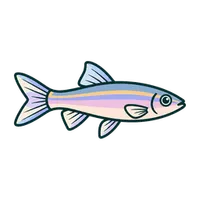
The pearl danio is a slim, fast, iridescent minnow-type fish with a pinkish-pearl sheen along active flanks — one of the classic hardy community danios. It grows to about 55 mm (2.2 in) SL and spends its day zipping through the upper water column.
It is genuinely easy and forgiving on chemistry, which is what makes it such a common beginner fish — but "easy" is not the same as "undemanding on space". This is an active species that wants swimming length, a real shoal, and (importantly) a tight lid.
💷 Costing it out? See how much a pearl danio really costs to keep — the pearl danio itself is usually the cheapest part.
Water & tank
Target 16–25 °C (61–77 °F), a pH of 6.0–8.0, and hardness anywhere from 1–20 dGH — an extremely wide, tap-water-tolerant window, and again a subtropical-friendly temperature range rather than a strictly tropical one. Because it "places no special demands in terms of water chemistry", it fits most community setups.
SeriouslyFish recommends minimum base dimensions of 90 × 30 cm (~81 L / ~21 US gal) specifically because this is an active fish — length for swimming matters more than fancy chemistry here. And the single most important piece of hardware is the lid: this genus are accomplished jumpers that fit through surprisingly small gaps, so a very tightly-fitting cover is not optional.
Feeding
Wild pearl danios are chiefly insectivorous (aquatic and terrestrial insects and their larvae). In the aquarium they are largely unfussy and will accept most foods: a good-quality dried product as the staple, supplemented with small live and frozen fare such as bloodworm, Daphnia and Artemia.
Behaviour & tankmates
SeriouslyFish describes the pearl danio as "very peaceful indeed" and an ideal community resident that pairs with most popular small cyprinids, tetras, livebearers, rainbowfishes, anabantoids, catfishes and loaches — with the caveat that its small adult size must be considered when choosing tankmates. It is fast and busy, so very timid or slow long-finned fish may find it a bit boisterous at feeding time.
Crucially, it is a schooling species by nature and "really should be kept in a group of at least 8–10 specimens". A proper group is calmer, less nervous, more natural-looking, and brings out the males’ best colour as they compete for female attention.
What to expect
Expect a lively, glinting upper-tank shoal that is almost always on the move — hardy, adaptable across a wide temperature and chemistry range, and forgiving of beginner mistakes. The two things it will punish you for are keeping it in small numbers (nervy, faded fish) and leaving the tank uncovered (a jumped, dried-out fish on the floor).
Myths, kindly busted
“A couple of danios will be fine.”
SeriouslyFish states it should be kept in a group of at least 8–10; in small numbers it is more nervous and less colourful.
“Danios are hardy, so a lid is optional.”
The source explicitly warns this genus are accomplished jumpers that fit through surprisingly small gaps, and calls a very tightly-fitting cover a requirement.
“Pearl danios need warm tropical water.”
The stated range is 16–25 °C (61–77 °F) — a subtropical-tolerant band; they do not need to be kept hot.
🐟 Did you know? — Pearl Danio fun facts
Little true delights about the pearl danio — each one checked against a named source, no pet-shop myths.
- The pearl danio has a genuine iridescent, pearly sheen and can appear brownish-yellow, pink or silver depending on the light. Wikipedia
- In the wild it lives along the surface of small, clear rivers and hill streams across Sumatra, Myanmar, Thailand and Vietnam. Wikipedia
- The golden pearl danios sold in shops are in reality semi-albino fish, not a separate species. Wikipedia
When to act
We triage, not diagnose — but these are worth a closer look (starting with a water test):
- A missing fish plus an open or loose lid — check the floor and behind the tank first; jumping is the pearl danio’s most common cause of loss.
- A shoal that stays tightly bunched, hides, or dashes at the glass — usually a sign the group is too small, the tank too short for its activity, or the water needs checking.
- Rapid gilling, clamped fins, or off-colour flanks across several fish — treat as a water-quality warning; test parameters and review recent changes before assuming disease.
Heading to a vet? Print the Pearl Danio vet-prep sheet — what to bring, what to tell them, and the questions to ask.
Sources & further reading
- SeriouslyFish — Danio albolineatus / Brachydanio albolineata (Pearl Danio) — Max ~55 mm SL; minimum base 90 × 30 cm (~81 L / ~21 US gal) for this active swimmer; temperature 16–25 °C / 61–77 °F (subtropical-tolerant); pH 6.0–8.0; hardness 1–20 dGH; "very peaceful indeed"; schooling — keep 8–10+; accomplished jumper — needs a very tight lid.
Written & fact-checked by The Finfern Team against the sources above — kind, general guidance, not a diagnosis. If something looks wrong, test your water and, if it persists, contact a fish-savvy vet.

Get the free Pearl Danio Starter Kit
The essentials at a glance, a setup checklist and a first-30-days plan for your pearl danio — what to get right and what to watch for. Join the shoal and we’ll send it over. Free sheets and tools always stay open, no gatekeeping.
Water-first tips and new guides the moment they land. No spam — unsubscribe anytime. See how we handle your data in our privacy notice.