
Species · Loaches
Rosy Loach
Physoschistura mango (formally described 2023). Long sold under the trade names Petruichthys sp. 'rosy', Yunnanilus sp. 'rosy', and Tuberoschistura arakanensis. Note: Petruichthys brevis is a related but separate species (the Inle Loach), not the trade Rosy Loach.
If you remember one thing: this tiny loach needs a fully cycled, mature planted tank and a shoal of 8-10 or more, because its small body makes ammonia and nitrite spikes, and lonely single-fish keeping, quickly fatal.
Difficulty: Beginner–Intermediate Tropical community tank ✓ Fact-checked care guide
Quick facts
| Adult size | Tiny: around 3 cm / just over 1 inch (about 30 mm standard length per SeriouslyFish). Most adults land at 2.5-3 cm; a well-fed, long-lived fish can push a little larger, but this is firmly a nano fish. |
|---|---|
| Minimum tank | Keeper-facing minimum is roughly 40-55 litres (about 10-14 US gallons) for a group of 8-10. But with nano fish the FOOTPRINT matters more than raw volume: aim for a tank at least 60 cm / 24 inches long (SeriouslyFish's recommended 60 x 30 cm / 24 x 12 in base is about 54 L / 14 US gal) so the shoal has swimming length and the water column stays stable. Bigger and longer is genuinely better here, because more water dilutes the ammonia and nitrite swings that kill fish this small, and a longer footprint supports the group of 8-10+ that keeps them relaxed. |
| Temperature | 20-26 C / 68-79 F. Sit around the middle for everyday keeping. At the warm end, keep dissolved oxygen high with extra surface movement, because warm water holds less oxygen and this species wants well-oxygenated (but not turbulent) water. |
| pH | 6.5-8.0. Adaptable across slightly acidic to slightly alkaline water; a stable value inside this band matters far more than hitting an exact number. |
| Hardness | Soft to moderately hard: about 5-15 dGH (some care guides tighten this to 5-12 dGH). Stability beats precision. |
| Filtration & flow | Gentle to moderate, well-oxygenated but not turbulent flow. A cycled sponge filter or a baffled/gentle hang-on-back works well. Avoid strong powerheads or a harsh outflow; these are fish of still and slow-moving waters, not river rapids. |
| Diet | Omnivorous micropredator. In the wild it hunts tiny live prey, so it does best on small meaty foods with some plant/biofilm grazing, not a flake-only diet. |
| Social | Shoaling: keep a group of at least 8-10 (more is better). This is not optional. In small numbers they become skittish, hide, and fail to show their colour and confident behaviour; a real shoal is what makes them settle in and thrive. |
| Temperament | Peaceful, active, and surprisingly bold for its size. It is a busy little grazer that constantly patrols the middle and lower levels of the tank. There is mild in-group jostling around food, but it is not aggressive toward tankmates. |
| Lifespan | Around 5-7 years with excellent water quality, a varied diet, and a proper shoal. That is a long life for such a tiny fish, so it is a genuine multi-year commitment, not a throwaway "starter" nano fish. |
Overview
The Rosy Loach is one of the smallest loaches in the hobby, a peaceful, endlessly busy nano fish that suits a mature, well-planted community.
It came into the trade from Myanmar (Shan State, around the Hopong area) under a string of wrong names and was only formally described as Physoschistura mango in 2023. You will still see it labelled Petruichthys sp. 'rosy', Yunnanilus sp. 'rosy', or Tuberoschistura arakanensis in shops.
Do not confuse it with Petruichthys brevis, the Inle Loach, which is a related but different, larger species; the aquarium Rosy Loach is the tiny ~3 cm fish covered here.
It is hardy and bold once settled, but its small size makes water quality and group size make-or-break. This is a fish for a keeper who can commit to a cycled tank and a proper shoal, not a quick nano impulse buy.
💷 Costing it out? See how much a rosy loach really costs to keep — the rosy loach itself is usually the cheapest part.
Water & tank
Water first: target 20-26 C / 68-79 F, pH 6.5-8.0, and hardness around 5-15 dGH. These fish are adaptable, so a STABLE value inside those ranges beats chasing a perfect number.
A fully cycled, biologically mature tank is non-negotiable. SeriouslyFish is blunt: do not add this fish to a biologically immature aquarium. Their tiny bodies cannot ride out the ammonia and nitrite swings a bigger fish shrugs off, so cycle the tank first and only add them once ammonia and nitrite read 0 ppm and nitrate is being kept low with water changes.
Footprint over volume: aim for a tank at least 60 cm / 24 inches long (the SeriouslyFish 60 x 30 cm / 24 x 12 in base, about 54 L / 14 US gal). A shop may say 10 gallons / ~38 L is 'enough,' but more length and more water give the shoal room and buffer the water chemistry, which matters enormously at this size.
Keep the flow gentle to moderate and the water well-oxygenated but not turbulent. Add surface movement at the warm end of the range, since warm water holds less oxygen.
Use a fine sand or smooth fine-gravel substrate to protect their delicate sensory barbels; sharp or coarse gravel can wear and damage them.
Plant it densely (Java moss and similar are ideal) and add gentle hiding spots. Dense planting brings out their confidence and gives fry cover if they spawn. Keep up regular partial water changes to hold nitrate down.
Feeding
Feed a variety of small foods: live or frozen Daphnia, Moina, Artemia (baby brine shrimp), cyclops, microworm, and mini/crushed bloodworm are all taken eagerly.
Offer small or crushed floating dried foods (micro-pellets, quality flake) as a supplement, but do not rely on dry food alone; the meaty live/frozen items are what keep them in top condition.
They are constant grazers with a fast metabolism, so feed small amounts more than once a day rather than one big meal.
Match food size to their tiny mouths; whole large bloodworm or big pellets are too big. Crush or choose micro-sized foods.
Feed sparingly per portion and watch that faster middle-water tankmates do not out-compete them; make sure food actually reaches the loaches lower down.
Behaviour & tankmates
An ideal, peaceful community fish for a nano/planted tank, best with other small, gentle species that will not out-compete or intimidate it.
Great tankmates: small cyprinids and rasboras such as Boraras (chili/phoenix rasbora), Microdevario, Trigonostigma (harlequin types), Tanichthys (white cloud), and Microrasbora, plus small peaceful loaches and small catfish like pygmy Corydoras.
Avoid larger or boisterous fish (roughly anything over about 2 inches / 5 cm), and anything fin-nippy or predatory; a fish this small is easily bullied or eaten.
Shrimp caution: adult Neocaridina shrimp usually cohabit fine, but Rosy Loaches are micropredators and will eat baby shrimp and very small snails, so do not rely on them in a dedicated shrimp-breeding tank.
Keep them in their shoal of 8-10+; a proper group is the single biggest factor in whether they act bold and colourful or stressed and hidden.
What to expect
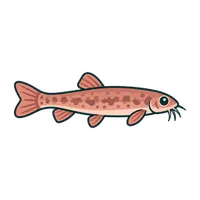
A busy, confident little shoal that patrols the mid and lower tank all day once settled, showing a warm rosy/pinkish body with dark barring that intensifies as they relax and colour up.
Fish that hide and look washed-out for the first days after introduction; give them dense planting, a stable mature tank, and their full group, and confidence builds over a week or two.
Occasional harmless jostling and 'chasing' around food within the group; this is normal shoal behaviour, not fighting.
In a mature, well-planted tank they may spawn readily as egg-scatterers with no parental care; Java moss gives eggs and any fry a chance to survive.
Myths, kindly busted
“The Rosy Loach is Petruichthys brevis.”
The aquarium Rosy Loach was formally described in 2023 as Physoschistura mango. Petruichthys brevis is a related but separate, larger species (the Inle Loach from Inle Lake). The trade just cycled through several wrong names (Tuberoschistura arakanensis, Yunnanilus sp. 'rosy', Petruichthys sp. 'rosy') before it was properly described.
“It is a tiny fish, so a small group in a small bowl or 5-gallon is fine.”
Its small size makes water stability and group size MORE important, not less. It needs a shoal of at least 8-10 in a cycled, mature tank with a 60 cm+ footprint. Too few fish leaves them stressed and hiding, and a tiny/unstable tank swings ammonia and nitrite fast enough to kill fish this small.
“Loaches are algae and pest-snail cleaners you can add to handle leftovers.”
The Rosy Loach is a micropredator that wants small live and frozen foods fed several times a day. It is not a clean-up crew, it will not survive on scraps or algae, and it will actually eat tiny snails and baby shrimp rather than serve as a peaceful janitor.
“You can drop them straight into a brand-new tank because they are hardy.”
They are hardy in STABLE, mature water, but SeriouslyFish specifically warns against adding them to a biologically immature aquarium. Cycle the tank first; add them only once ammonia and nitrite read 0.
When to act
We triage, not diagnose — but these are worth a closer look (starting with a water test):
- Fish gasping at the surface, clamped fins, or lying listless: stop feeding, test the water immediately for ammonia, nitrite, and nitrate, and do a water change. At this size, ammonia/nitrite above 0 is an emergency.
- A newly stocked tank showing any ammonia or nitrite reading: the tank was not fully cycled. Do partial water changes to keep both near 0 and hold off adding more fish.
- Loaches constantly hiding, skittish, or refusing food: usually too small a group or an unsettled/nippy tankmate. Increase the shoal toward 8-10+ and reduce stress from boisterous fish.
- A single fish looking pale, thin, or with sunken belly: check it is getting enough small meaty food (not out-competed by faster fish) and watch for signs of disease; isolate/observe and seek advice from a knowledgeable aquatic source rather than guessing at treatments.
- Rapid breathing at normal temperature or worse at the warm end of the range: likely low dissolved oxygen. Increase surface agitation/aeration and check the temperature is not too high.
- Any white spots, cottony patches, or unusual film: quarantine/observe, test water, and consult a reputable fishkeeping or vet-reviewed source for guidance; do not medicate blindly.
Heading to a vet? Print the Rosy Loach vet-prep sheet — what to bring, what to tell them, and the questions to ask.
Sources & further reading
- SeriouslyFish, Petruichthys sp. 'rosy' (Rosy Loach) species profile — Primary authority: 30 mm SL size, 20-26 C / 68-79 F, pH 6.5-8.0, 5-15 dGH, 60 x 30 cm base, group of 8-10+, micropredator diet, do not add to an immature tank, peaceful bold temperament, tankmate genera.
- Aquarium Store Depot, Rosy Loach Care Guide — Cross-check: 2.5-3 cm size, 20-26 C / 68-78 F, pH 6.5-7.5, 5-12 dGH, 5-7 year lifespan, 8-10 group minimum, fine sand substrate, gentle flow, mature-tank warning.
- Fish Laboratory, Rosy Loach (Tuberoschistura arakanensis) Care Guide — Cross-check on lifespan (5-7 years), group size (6-10, 8-10 optimal), predatory/live-food diet, and warning that they eat tiny snails and baby shrimp.
- Aquarium Glaser (original importer), Physoschistura mango (= Yunnanilus sp. Rosy) — Taxonomy: formally described 2023 as Physoschistura mango; reclassified from Yunnanilus on lip structure + DNA; ~23.4 mm SL wild size; breeds at 26-27 C; Java moss preference.
- Wikipedia, Petruichthys brevis (Inle Loach) — Confirms P. brevis is a distinct species (Inle Loach, Inle Lake, Myanmar; IUCN Vulnerable), separate from the trade Rosy Loach, clarifying the naming confusion in the prompt.
Written & fact-checked by The Finfern Team against the sources above — kind, general guidance, not a diagnosis. If something looks wrong, test your water and, if it persists, contact a fish-savvy vet.

Get the free Rosy Loach Starter Kit
The essentials at a glance, a setup checklist and a first-30-days plan for your rosy loach — what to get right and what to watch for. Join the shoal and we’ll send it over. Free sheets and tools always stay open, no gatekeeping.
Water-first tips and new guides the moment they land. No spam — unsubscribe anytime. See how we handle your data in our privacy notice.