
Species · Catfish & bottom-dwellers
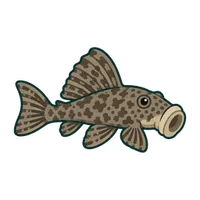
Rubber Lip Pleco
Chaetostoma formosae (the hobby name "rubber lip pleco" also covers close Chaetostoma relatives such as L146, and older books use C. milesi or C. thomsoni)
If you remember one thing: this is a cool, fast-water, high-oxygen hillstream grazer, not a warm-tank "clean-up crew" fish, so give it clean, cooler, briskly moving water and real algae to graze, or it slowly starves in a corner.
Difficulty: Beginner–Intermediate Tropical community tank ✓ Fact-checked care guide
Quick facts
| Adult size | About 10-13 cm / 4-5 in. SeriouslyFish lists the true C. formosae at 105 mm standard length (body only, roughly 4 in); most hobby sources quote 5-7 in total length including the tail, so plan around a 5-inch adult. |
|---|---|
| Minimum tank | Keeper-facing minimum around 110-115 L (30 US gal). A footprint of about 120 x 30 cm (48 x 12 in) is the sensible floor; realistically ~150 L / 40 gal or more with strong flow is better. For a bottom-dwelling grazer the swimming/grazing LENGTH and floor area matter far more than raw volume. |
| Temperature | 20-25 C / 68-77 F. This is a COOL-leaning species. SeriouslyFish gives 20-24 C (68-75 F); aim for the low-to-mid 20s and avoid the warm 27-28 C that many "tropical community" tanks run at. |
| pH | 6.5-7.8 (tolerates up to about 8.0). A stable pH matters more than hitting an exact number. |
| Hardness | Adaptable: GH roughly 8-25 dGH (SeriouslyFish). Soft to fairly hard water is fine as long as it is clean and stable; many keepers also cite KH around 8-12. |
| Filtration & flow | High flow and high oxygen. SeriouslyFish suggests turnover of roughly 10-15x tank volume per hour (5-10x at minimum) with well-oxygenated, spotless water at all times. Use strong filtration, aim the outflow across rock/hardscape, and add a powerhead or airstone if there are dead/stagnant zones. |
| Diet | Herbivore-leaning omnivore and dedicated "aufwuchs" (biofilm/algae film) grazer. In the wild it rasps algae, biofilm, tiny crustaceans and insect larvae off rocks; in the tank it needs algae/biofilm plus supplemental vegetables and sinking foods. It will NOT survive on tank leftovers alone. |
| Social | Solitary. Keep ONE per tank unless you have a large footprint (roughly 200 L / 55 gal or more), because adults squabble with conspecifics and other bottom-dwelling plecos. It is not a shoaling fish and does not need a group of its own kind. |
| Temperament | Peaceful and shy toward other species, but can be territorial toward its own kind and other plecos, especially as it matures. |
| Lifespan | Commonly 10-12 years with good, cool, clean, oxygen-rich water; often cut short by warm, low-oxygen tanks or slow starvation. |
Overview
The rubber lip pleco is a small, peaceful sucker-mouth catfish from fast, cool, oxygen-rich piedmont streams on the eastern slopes of the Andes in eastern Colombia (the species is endemic to Colombia, not Venezuela).
It is genuinely one of the better-behaved, better-sized plecos for a community tank: it stays around 4-5 inches instead of the foot-plus of a common pleco, and it does not usually rasp on other fish or uproot plants.
The catch, and the thing most shop tags get wrong, is that it is essentially a cool-water hillstream fish wearing a 'tropical pleco' label. It wants moving, cool, clean water more than it wants warmth.
It earns its keep grazing algae and biofilm, but it is a grazer, not a garbage disposal. A tank with no algae and no supplemental food will slowly starve it, even though it looks 'fine' for months.
Think of it as a low-drama, long-lived tankmate for calmer community fish, as long as you build the tank around cool, well-oxygenated, fast-moving water.
💷 Costing it out? See how much a rubber lip pleco really costs to keep — the rubber lip pleco itself is usually the cheapest part.
Water & tank
Water first: target 20-25 C / 68-77 F (lean cool, low-to-mid 20s), pH 6.5-7.8, GH about 8-25 dGH. In practice this is a hardy, adaptable fish on chemistry but a fussy one on temperature, oxygen and cleanliness.
Only ever add one to a fully CYCLED tank. Rubber lips need mature biofilm to graze and are intolerant of ammonia/nitrite spikes and dirty water; a new, uncycled tank is a common early killer. Wait for a stable nitrogen cycle and some natural algae before adding one.
Oxygen and flow are non-negotiable. These fish come from tumbling Andean streams and their gills are adapted to pull oxygen while clamped to rocks in current. Aim for strong turnover (roughly 10-15x volume/hour), point the outflow across hardscape, and add a powerhead or airstone if you see any still, stagnant corners.
Footprint over volume: a long, low tank (about 120 x 30 cm / 48 x 12 in and up, ~110-150 L / 30-40 gal) beats a tall narrow one. They want floor and rock surface to graze, plus open swimming length. Bigger is genuinely better here.
Aquascape for a grazer that hides by day: smooth rounded rocks, driftwood, and caves for daytime shelter (they are shy and largely nocturnal), plus plants and open algae-covered surfaces. Sand or smooth gravel protects their belly and barbels.
Keep it cool but oxygen-aware in summer. Warm water holds LESS oxygen, so heat and low flow compound each other. In hot spells, increase surface agitation/aeration and watch the fish, rather than trusting the heater number alone.
Keep nitrate low with regular water changes. Clean, high-oxygen water is the single biggest lever for a long, healthy life; treat 'crystal-clear and moving' as the target, not just 'warm'.
Feeding
Base the diet on algae and biofilm plus a quality sinking algae/spirulina wafer or a good bottom-feeder pellet given after lights-out or in the evening (they feed at night).
Offer blanched vegetables several times a week: courgette/zucchini, cucumber, deshelled peas, spinach, green beans, or a slice of sweet potato, weighted or clipped down. Remove uneaten veg within a day to protect water quality.
Add occasional protein: they take frozen/live bloodworm, Daphnia and brine shrimp (Artemia) and appreciate the variety, but keep the overall diet veg/algae-leaning.
Do NOT assume it will 'eat the algae' and need nothing else. A spotless tank has no food in it; a rubber lip in a clean, algae-free tank must be fed directly or it will slowly waste away.
Watch the belly. A healthy rubber lip has a gently rounded, filled-out belly; a sunken, pinched or hollow belly is an early sign of starvation and means feed more (and check there is grazable surface).
Behaviour & tankmates
Ideal tankmates are calm, cooler-tolerant community fish that share its temperature range: many tetras and rasboras, danios and white cloud mountain minnows, peaceful barbs, and Corydoras or other peaceful cories on the bottom.
It generally ignores other species and is safe with plants and shrimp, spending the day hidden and grazing at night. Provide caves/driftwood so it feels secure enough to come out and feed.
Keep only ONE rubber lip (or other Chaetostoma) per tank unless the footprint is large (~200 L / 55 gal+); adults are territorial toward their own kind and other bottom-dwelling plecos and will bicker over grazing turf and caves.
Avoid warm-water-obligate or aggressive tankmates: discus and many rams want temperatures too high for it, while large or nippy cichlids, aggressive barbs, and other territorial plecos cause stress or fights.
Because it is peaceful and largely nocturnal, it will not out-compete pushy surface feeders, so make sure sinking food actually reaches the bottom for it at night.
What to expect
A shy, mostly nocturnal fish that spends daytime tucked in a cave or under driftwood and comes out to graze in the evening; give it hides or you'll rarely see it.
A slow, low-drama tankmate that clings to rocks, glass and wood scraping biofilm, and drifts into the filter current. It is peaceful company for calmer community fish, not an active showpiece.
A long-term commitment: with cool, clean, oxygen-rich water it can live well over a decade, so plan filtration, temperature and stocking around a 10-year-plus resident.
Myths, kindly busted
“Rubber lip plecos are a clean-up crew that will keep the tank spotless and don't need feeding.”
They are grazers, not garbage disposals. They eat algae and biofilm, not fish waste or leftovers, and a clean, algae-free tank slowly starves them. They must be fed algae wafers and vegetables directly.
“It's a tropical pleco, so keep it warm at 27-28 C like other community fish.”
It comes from cool, fast Andean piedmont streams. SeriouslyFish lists 20-24 C (68-75 F). Warm water lowers oxygen and stresses it; aim for the low-to-mid 20s, not the high 20s.
“Any pleco needs a big tank, so a rubber lip needs a huge tank; or conversely a 15-gallon is plenty.”
At ~4-5 in it is far smaller than a common pleco, but 15 gal is too small. A cycled ~30-40 gal (110-150 L) with a long footprint and strong flow is the realistic home.
“You can keep several rubber lips together and they'll shoal.”
It is not a shoaling fish. Adults are territorial toward their own kind and other plecos; keep one per tank unless you have a large footprint (~55 gal / 200 L+).
“It's a hardy pleco, so basic filtration is fine.”
It is hardy on water chemistry but demands high oxygen and flow. It's adapted to oxygen-rich current, so under-filtered, stagnant, warm water is a genuine killer, not just 'not ideal'.
When to act
We triage, not diagnose — but these are worth a closer look (starting with a water test):
- Sunken, pinched or hollow belly, or noticeable weight loss over weeks: it is not getting enough to eat. Offer algae wafers and blanched veg directly and make sure food reaches the bottom at night.
- Gasping at the surface, rapid gilling, or hanging near the filter outflow for air: suspect low oxygen or too-warm water. Increase aeration/flow, cool the tank, and test the water.
- Staying hidden 100% of the time and never grazing, even at night: usually stress from too little cover, too much light, bullying, or poor water. Add caves/driftwood, dim the lights, and check tankmates and parameters.
- Any ammonia or nitrite reading above 0, or a sudden algae/biofilm crash: test the water and do a water change. Uncycled or fouled water hits this oxygen-hungry species hard, so act on the water, don't wait.
- Faded colour, clamped fins, lethargy, or reddened/irritated skin or gills: treat as a general 'something is wrong' triage cue. Test water, improve oxygen and cleanliness, and seek a fish vet or experienced help rather than guessing at a diagnosis.
Heading to a vet? Print the Rubber Lip Pleco vet-prep sheet — what to bring, what to tell them, and the questions to ask.
Sources & further reading
- SeriouslyFish - Chaetostoma formosae (Striped/Bulldog Pleco, L444, L187b) — Primary authority for the exact species: 105 mm SL, 120 x 30 cm minimum footprint (~108 L/29 gal), 20-24 C (68-75 F), pH 6.5-7.8, 8-25 dGH, aufwuchs grazer, high turnover 10-15x, can be territorial to congeners, native to eastern Colombia piedmont streams.
- Aquarium Co-Op - Pleco / armored catfish care guide — Vet-informed retailer guide grouping rubber lip with bristlenose/clown plecos: 4-6 in, 20-29 gal+, 74-80 F (23-27 C), pH 6.5-7.8; notes cool, oxygen-rich Andean foothill origins and need for flow.
- Aquariadise - Rubber Lip Pleco care — Cross-check: ~5 in, min 25 gal (55 gal for multiples, long tank), 70-78 F, pH 6.5-7.5, KH 8-12, up to ~12 yr, algae-based diet, peaceful but territorial with own species; explicitly notes cool-water/high-flow, well-aerated needs.
- Fishkeeping World - Rubber Lip Pleco care & species profile — Cross-check on size/lifespan/tankmates: up to 7 in TL, min ~30 gal, 72-80 F, pH 6.5-8, KH 8-12, up to 12-15 yr, peaceful but territorial with conspecifics; suggests keeping at most 2-3 only in a large tank.
- Aquarium Source - Rubber Lip Pleco 101 — Cross-check: ~7 in, 25-30 gal (15 gal too small), 72-80 F, pH 6.5-8, KH 8-12, ~10-12 yr lifespan, veg/algae diet, very peaceful, can be territorial with other plecos.
- Tankarium - Rubber Lipped Pleco care — Supports the oxygen/flow emphasis: needs very clean, well-filtered, well-oxygenated water, enjoys filter outflow, is sensitive to dead/stagnant zones, benefits from an airstone; ~5.5-7 in, 25-30 gal single, 72-80 F, pH 6.5-8, ~12 yr.
Written & fact-checked by The Finfern Team against the sources above — kind, general guidance, not a diagnosis. If something looks wrong, test your water and, if it persists, contact a fish-savvy vet.

Get the free Rubber Lip Pleco Starter Kit
The essentials at a glance, a setup checklist and a first-30-days plan for your rubber lip pleco — what to get right and what to watch for. Join the shoal and we’ll send it over. Free sheets and tools always stay open, no gatekeeping.
Water-first tips and new guides the moment they land. No spam — unsubscribe anytime. See how we handle your data in our privacy notice.