
Species · Catfish & bottom-dwellers
Salt and Pepper Cory
Corydoras habrosus
If you remember one thing: this is a shoaling fish, so buy at least 6 (ideally 8-10+) and give them soft sand to sift and a footprint at least 60cm long, in a fully cycled, gently filtered tank.
Difficulty: Beginner Tropical community tank ✓ Fact-checked care guide
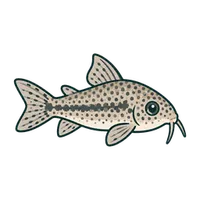
Quick facts
| Adult size | Tiny. Around 2-3.5 cm (roughly 1-1.4 in); females are the larger, rounder ones at up to about 3.5 cm. One of the true "dwarf" cories. |
|---|---|
| Minimum tank | Keeper-facing minimum is a tank with a base footprint of at least 60 x 30 cm (24 x 12 in) - that works out to roughly 54 L / ~14 US gal. In practice a standard "10-gallon long" (~40 L) is the smallest most keepers use for a starter group of 6, but the honest, bigger-is-better reality is that a longer 20-gallon-long-style footprint (~75 L / 20 US gal) lets you keep the 8-10+ group they actually want and gives them room to forage as a shoal. Swimming/foraging LENGTH matters far more than raw litres for a bottom-dwelling cory. |
| Temperature | 22-26 C (about 72-79 F). They tolerate down to ~20 C (68 F), but keep them warm and stable - they are a tropical species and need a heater in most homes. |
| pH | 6.0-7.5 is the safe, comfortable range (they are reported as low as 5.5 and up to ~7.5). Aim for stable neutral-to-slightly-acidic rather than chasing an exact number. |
| Hardness | Soft to moderately soft: GH roughly 2-10 dGH. They do best in softer water and are not a hard-water/high-mineral fish. |
| Filtration & flow | Gentle to gentle-moderate flow. In the wild they live where water movement is weak (lagoons, slow tributaries), so avoid a strong current - baffle a powerful filter or aim it at the glass. They still need a properly sized, cycled filter for water quality; "gentle" means flow, not skimping on filtration. |
| Diet | Foraging omnivore (scavenger of the bottom, not a "clean-up crew" that lives on leftovers). |
| Social | Shoaling - keep a group of at least 6, and ideally 8-10 or more. A pair or trio will hide, sit still and get stressed; the natural sifting, piling-up and group "air gulp" dashes only switch on in a proper shoal. |
| Temperament | Peaceful, gregarious and busy. A classic non-aggressive community bottom-dweller that spends its day sifting the substrate in a little group. |
| Lifespan | Around 3-5 years with good water and diet; up to ~5 years is realistic for well-kept fish. |
Overview
The Salt and Pepper Cory (Corydoras habrosus) is a tiny, hardy-natured dwarf catfish - one of the true miniature cories, usually only 2-3.5 cm long.
It is peaceful, endlessly busy, and spends its day snuffling along the bottom in a little gang, which makes it a favourite for planted nano and community tanks.
It comes from slow, soft waters of the Orinoco basin (the Llanos grassland plains of Venezuela/Colombia) - lagoons, small streams and flooded margins where flow is weak and there is plenty of cover.
Because it is a shoaling, bottom-sifting fish, the two things that make or break its care are (1) a real group and (2) soft sand over a long-enough footprint - not raw tank volume.
💷 Costing it out? See how much a salt and pepper cory really costs to keep — the salt and pepper cory itself is usually the cheapest part.
Water & tank
Water first: target 22-26 C (72-79 F), pH about 6.0-7.5, and soft-to-moderately-soft water (GH ~2-10 dGH). Keep these STABLE rather than perfect - swings stress cories more than a steady middling value.
Cycle the tank before any fish go in. A cory added to an uncycled tank is sitting in ammonia and nitrite; the tank must be fully cycled (0 ammonia, 0 nitrite, nitrate kept low with water changes) before you buy your group.
Footprint over volume: aim for a base of at least 60 x 30 cm (24 x 12 in), roughly 54 L / 14 US gal. A 10-gallon-long (~40 L) is the common floor for a group of 6; a longer ~75 L / 20-gal-long footprint is much better and lets you keep the 8-10+ shoal they really want.
Substrate is non-negotiable: use soft, fine, rounded SAND. Cories root in the substrate with delicate sensory barbels; sharp or dirty gravel wears those barbels down and leads to infection. If you must use gravel it has to be smooth and kept spotless.
Keep flow gentle. These fish evolved in near-still water, so baffle a strong filter and give them calm zones near the bottom.
Furnish for a shy sifter: live plants, driftwood, leaf litter and shady spots. Cover makes them bold and out in the open instead of hiding.
Keep the sand clean. Uneaten food and waste trapped in the substrate is a common cause of barbel erosion and bacterial trouble - gentle regular sand-surface cleaning plus routine water changes keep it healthy.
Feeding
Feed sinking foods - they eat off the bottom and will not reliably reach floating flake. Use good-quality sinking micro-pellets and wafers as the staple.
Add regular small live or frozen foods: bloodworm (chironomid larvae), daphnia, baby brine shrimp, microworms and similar. These little cories relish tiny meaty items.
Feed small amounts they can clear - because they are bottom foragers, over-feeding just fouls the sand. Do NOT rely on them to survive on other fish's leftovers; feed them their own sinking food.
Their small mouths suit small foods - crush or choose appropriately-sized pellets/wafers so everyone in the shoal gets a share.
Behaviour & tankmates
Best kept as a species shoal of 6+ (ideally 8-10+); a bigger group of the same species is the single best thing you can do for their behaviour and confidence.
Excellent peaceful community fish: pair them with other small, calm, soft-water species such as chili rasboras, ember/green neon tetras, celestial pearl danios (galaxy rasboras), clown killifish and other small non-aggressive fish.
Reef-of-the-substrate friendly: they generally coexist fine with snails and adult dwarf shrimp (though tiny shrimplets may be eaten), and with other small, gentle catfish.
Avoid large, boisterous, fin-nipping or aggressive tankmates and anything big enough to see a 3 cm fish as food - cichlids, big barbs, or predators are a bad match.
They are bottom-oriented and gentle at feeding time; make sure faster mid-water fish do not out-compete them, and always drop food where the cories can reach it.
Myths, kindly busted
“Cories are a clean-up crew that live off the other fish's leftovers.”
They are foraging omnivores that need their own sinking food. Relying on scraps starves them slowly - feed the shoal directly with sinking pellets, wafers and frozen foods.
“They're tiny, so a pair or trio in a nano tank is fine.”
They are shoaling fish. Fewer than 6 leaves them stressed, hidden and inactive. Keep at least 6, ideally 8-10+, in a tank with enough floor length.
“Any substrate works - gravel is fine.”
They constantly sift the bottom with delicate barbels. Sharp or dirty gravel erodes those barbels and invites infection. Soft, clean sand is strongly preferred.
“A big tank means you should give them strong flow to keep it clean.”
They come from slow, near-still water. Strong current stresses them - keep flow gentle and let the filter and water changes do the cleaning.
When to act
We triage, not diagnose — but these are worth a closer look (starting with a water test):
- Barbels look short, eroded or stubby, or the fish stop rooting in the sand - usually a sign of sharp/dirty substrate or poor water; check the sand and test/change the water, and seek advice if it worsens.
- Fish sit still, hide constantly, or 'clamp' their fins and lose their busy foraging behaviour - a stress signal. Check that the group is at least 6, test the water, and review temperature and flow.
- Rapid or laboured gilling, gasping, or repeated dashing to the surface as a group beyond the odd normal air-gulp - test the water immediately for ammonia/nitrite and do a water change; persistent gasping means act, don't wait.
- White spots, fuzzy patches, red streaks, ulcers, or a bloated/pinecone look - isolate/observe, test and correct water first, and consult a fish-savvy vet or trusted aquatics store rather than guessing at treatments.
- A new addition looks thin, pale or lethargic - quarantine new fish where possible; a sunken belly often means it was underfed and needs targeted sinking food.
Heading to a vet? Print the Salt and Pepper Cory vet-prep sheet — what to bring, what to tell them, and the questions to ask.
Sources & further reading
- Seriously Fish - Corydoras habrosus — Primary authority: 35mm SL max size; 60 x 30 cm (24 x 12 in) minimum base; 20-26 C / 68-79 F; pH 5.5-7.5; hardness 2-10 dGH; group of at least 4-6, ideally 10+; peaceful gregarious omnivore; fine sand; gentle flow; Orinoco/Llanos habitat.
- Aquarium Co-Op - Care Guide for Habrosus Corydoras — Females to ~1.5 in (3.5 cm); 10-gallon starting point; 70-78 F (20-26 C); pH 6-8; soft to moderately hard; school of at least 8-12; sinking foods + frozen; gentle-flow filter; peaceful active; community tankmates like chili rasbora, CPD, clown killifish.
- Fish Laboratory - Salt and Pepper Corydoras — Corroborating source: adult ~0.75-1.4 in; 72-79 F; pH 6.2-7.2; lifespan up to ~5 years; group of 6 or more; peaceful; omnivorous forager.
- Aquariadise - Caresheet: Pygmy/Dwarf Cory (incl. C. habrosus) — Corroborating welfare source: recommends at least 8 in ~50 L+; small shoals become skittish, stressed and stay out of view.
Written & fact-checked by The Finfern Team against the sources above — kind, general guidance, not a diagnosis. If something looks wrong, test your water and, if it persists, contact a fish-savvy vet.

Get the free Salt and Pepper Cory Starter Kit
The essentials at a glance, a setup checklist and a first-30-days plan for your salt and pepper cory — what to get right and what to watch for. Join the shoal and we’ll send it over. Free sheets and tools always stay open, no gatekeeping.
Water-first tips and new guides the moment they land. No spam — unsubscribe anytime. See how we handle your data in our privacy notice.