
Species · Tetras & rasboras
Serpae Tetra
Hyphessobrycon eques
Gorgeous in a real shoal, a menace in a small one — keep 12 or more, give them their own upper water, and skip slow, long-finned tankmates.
Difficulty: Beginner–Intermediate Tropical community tank ✓ Fact-checked care guide
Quick facts
| Adult size | ~40 mm / 1.6 in SL |
|---|---|
| Minimum tank | ~72 L / ~19 US gal — an 80 × 30 cm base (absolute minimum), per SeriouslyFish |
| Temperature | 20–28 °C / 68–82 °F |
| pH | 5.0–7.5 (farm stock is adaptable; wild fish prefer slightly acidic to neutral) |
| Hardness | 1–15 dGH |
| Filtration & flow | Undemanding; a 12–15 group needs the minimum tank to itself — a community needs bigger |
| Diet | Omnivore — dried foods plus live/frozen bloodworm, mosquito larvae, Daphnia, Moina |
| Social | A gregarious shoaler — SeriouslyFish sets a minimum of at least 12 |
| Temperament | Notoriously nippy when under-shoaled — a real group keeps the aggression inward |
| Lifespan | Commonly cited at ~5 years in the hobby (not stated by the primary source) |
Overview
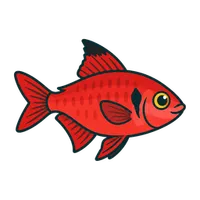
The serpae tetra (also called jewel, red minor or blood tetra) is a small, deep-red characin that is genuinely beautiful in a group — and genuinely nippy when kept badly. SeriouslyFish is blunt: it is "notorious as an aggressive community inhabitant with a reputation for nipping the fins of tankmates".
The saving grace, and the whole point of getting it right, is that the source ties that behaviour directly to being kept in too-small numbers or too little space. This is a fish that misbehaves when under-shoaled — so a real shoal is not optional.
💷 Costing it out? See how much a serpae tetra really costs to keep — the serpae tetra itself is usually the cheapest part.
Water & tank
Lead with the water. SeriouslyFish gives temperature 20–28 °C (68–82 °F), pH 5.0–7.5 for adaptable farm-raised stock, and hardness 1–15 dGH. The source notes wild stock prefers slightly acidic to neutral water, but the shop-bought fish most people buy are fairly flexible.
On space, the source calls a base of 80 × 30 cm (~72 L / ~19 US gal) the absolute minimum — and importantly, it says a group of 12–15 in that minimum tank should have no other upper-water species; adding compatible tankmates requires a larger tank. Plan the group and the tank size together.
Feeding
SeriouslyFish describes an omnivore that in nature eats small invertebrates, crustacea, filamentous algae and fallen fruit. In the aquarium it may survive on dried food but does best on a varied menu that also includes live and frozen bloodworm, mosquito larvae, Daphnia and Moina. Well-fed serpaes are also less likely to redirect their energy into nipping.
Behaviour & tankmates
This is the fish’s whole reputation, and the source is clear on the fix. It is gregarious, forms loose hierarchies, and rival males constantly spar for position — so SeriouslyFish sets a minimum group of at least 12, because a proper shoal keeps the fish focused on each other rather than on their tankmates. Under-buy the group and the nipping lands on everyone else.
Even in good numbers, the source calls it relatively boisterous and a poor companion for very shy, slow-moving or long-finned fish such as many livebearers, cichlids and anabantoids. The best tankmates are robust, comparably-sized, open-water fish. If you want serpaes and a mixed community, the source is explicit that you need a bigger tank than the bare minimum.
What to expect
Expect a stunning, active, blood-red shoal when you commit to 12 or more — the males colour up best in the presence of rivals. Expect chased and ragged tankmates if you keep a handful, crowd them, or pair them with slow, flowing-finned fish. Serpae tetras reward keepers who take the shoal size seriously and punish those who treat them as an incidental splash of colour.
Myths, kindly busted
“Serpae tetras are just aggressive and there’s nothing you can do.”
SeriouslyFish says the nipping is most pronounced when too few are bought or space is limited, and sets a minimum group of at least 12 to keep the aggression within the shoal.
“Six serpae tetras make a fine community shoal.”
The source’s stated minimum is at least 12 — and 12–15 in a minimum-size tank should have no other upper-water species.
“They’ll happily live with guppies, bettas and angelfish.”
The source specifically warns against very shy, slow-moving, or long-finned fishes such as many livebearers, cichlids and anabantoids.
🐟 Did you know? — Serpae Tetra fun facts
Little true delights about the serpae tetra — each one checked against a named source, no pet-shop myths.
- The serpae tetra is notorious as a fin-nipper, but nipping eases when it's kept in a big shoal so rivals distract each other instead of tankmates. SeriouslyFish
- Its species name eques is Latin for “knight” or “horseman”; the fish is also traded as the jewel, red minor, blood or callistus tetra. SeriouslyFish
- Serpae tetras form loose hierarchies in which rival males constantly spar, and males show their best colour with rivals present. SeriouslyFish
When to act
We triage, not diagnose — but these are worth a closer look (starting with a water test):
- Serpaes relentlessly nipping tankmates’ fins — almost always a too-small shoal or too-small tank; increase the group and space before anything else.
- Long-finned tankmates developing ragged, shredded fins — remove the vulnerable fish or rehome the tetras; review stocking.
- A serpae hiding, clamped, or refusing food — check water parameters and group dynamics; act on conditions rather than reaching for medication.
Heading to a vet? Print the Serpae Tetra vet-prep sheet — what to bring, what to tell them, and the questions to ask.
Sources & further reading
- SeriouslyFish — Hyphessobrycon eques (Serpae Tetra) — Max ~40 mm SL; base 80 × 30 cm (~72 L / ~19 US gal) absolute minimum; temperature 20–28 °C / 68–82 °F; pH 5.0–7.5; hardness 1–15 dGH; "notorious as an aggressive community inhabitant" — nipping worst when under-shoaled; minimum group of at least 12 (12–15 in the min tank with no other upper-water species); poor with slow/long-finned fish.
Written & fact-checked by The Finfern Team against the sources above — kind, general guidance, not a diagnosis. If something looks wrong, test your water and, if it persists, contact a fish-savvy vet.

Get the free Serpae Tetra Starter Kit
The essentials at a glance, a setup checklist and a first-30-days plan for your serpae tetra — what to get right and what to watch for. Join the shoal and we’ll send it over. Free sheets and tools always stay open, no gatekeeping.
Water-first tips and new guides the moment they land. No spam — unsubscribe anytime. See how we handle your data in our privacy notice.