
Species · Cichlids
Shell-Dweller (Multi)
Neolamprologus multifasciatus
If you remember one thing: this is the world's smallest cichlid, but it is still a hard-water Rift-lake cichlid with a colony's worth of attitude, so get the water alkaline, pile in a heap of empty snail shells, and give it floor space, not a bare little box.
Difficulty: Beginner–Intermediate Cichlid setup ✓ Fact-checked care guide
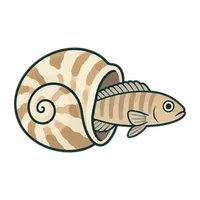
Quick facts
| Adult size | Tiny. Males reach roughly 4 to 4.5 cm (about 1.8 in); females are noticeably smaller, often only around 2.5 cm (1 in). It is widely cited as the smallest known cichlid species, and wild fish run even smaller than aquarium-raised ones. Do not be fooled by the size, though, because behaviourally these are full cichlids. |
|---|---|
| Minimum tank | A single pair or trio can technically live on a 40 L (about 10 US gal) footprint, roughly 45 x 30 cm (18 x 12 in), which is the SeriouslyFish and Aquarium Co-Op minimum. But these are colony animals, and the bigger-is-better reality is a 20-gallon "long", about 75 L (20 US gal), with a wide floor so a real colony can spread its shell territories. Add tankmates and you want 110 L (about 29 US gal) or more. Floor AREA matters far more than height, so pick the longest, widest tank you can. |
| Temperature | 24 to 27 degrees C (75 to 81 degrees F). Many keepers and Lake Tanganyika data centre on 24 to 26 C (75 to 79 F). |
| pH | 7.5 to 9.0, firmly alkaline. Aim for the middle-to-high end, around 8.0 to 8.5, which is also the sweet spot for breeding. This is a hard-water Rift-lake fish, the opposite of soft, acidic South-American dwarf cichlids. |
| Hardness | Hard water: GH roughly 8 to 25 dGH (Aquarium Co-Op says "at least 8 degrees GH"; Practical Fishkeeping cites 15 to 25). Alongside the high, stable pH this mimics mineral-rich Lake Tanganyika water. Soft, acidic water is simply wrong for this species. |
| Filtration & flow | Wants clean, well-filtered, well-oxygenated water but gentle flow at the sand bed. A sponge filter or a baffled hang-on-back is ideal, because a strong outflow scattering the substrate and shells stresses the colony. Keep nitrate low with regular water changes; these fish do best in stable, mature water. |
| Diet | Carnivore / micro-predator. In the wild it sifts sand for tiny invertebrates and zooplankton. |
| Social | Colony fish, not a solitary one. Keep a group of at least 6, and stock 2 to 3 females per male so no single female is harassed. In a mature colony you will see overlapping generations sharing the shell bed. |
| Temperament | Territorial and feisty despite the tiny size. Each fish claims and vigorously defends a small patch, usually no more than about 15 cm (6 in) across, centred on its shell. Aggression is mostly aimed at its own kind over shells and breeding rights; it is not a fish that will terrorise a whole tank, but it is not a docile "peaceful nano" either. |
| Lifespan | Around 5 to 8 years in a well-kept colony, which is impressively long-lived for such a small fish. |
Overview
The Multi (Neolamprologus multifasciatus) is a shell-dwelling cichlid endemic to Lake Tanganyika in East Africa, and it holds the title of smallest known cichlid in the world.
Wild-type only, so there are no hybrids or fancy colour morphs here: a slim silvery body with fine vertical banding and, up close, bright blue-flecked eyes.
The whole life of a Multi revolves around empty snail shells. Each fish lives in, defends, and breeds from a shell, and a group of them builds a bustling colony on the sand, constantly digging, rearranging, and burying shells to their liking.
This is a fantastic 'big personality in a small tank' fish, but it succeeds or fails on two things people underestimate: correct hard, alkaline water and enough shells and floor space for a colony.
💷 Costing it out? See how much a shell-dweller (multi) really costs to keep — the shell-dweller (multi) itself is usually the cheapest part.
Water & tank
Water first. This is a Rift-lake fish, so it needs HARD, ALKALINE water: pH about 7.5 to 9.0 (aim 8.0 to 8.5), GH around 8 to 25 dGH, and 24 to 27 C (75 to 81 F). If your tap water is soft and acidic, you will need to buffer it, for example with aragonite/crushed-coral sand or a cichlid mineral buffer. Do not try to keep these in the soft, acidic water suited to South-American dwarf cichlids.
Cycle the tank fully before any fish go in. A Multi colony wants stable, mature water: your target is ammonia 0 and nitrite 0 at all times, with nitrate kept low by routine water changes. Test during the first weeks and after adding fish.
Footprint over height. The signature setup is a long, wide, shallow tank with a large open sand floor. 40 L (about 10 US gal) is the bare minimum for a pair or trio; a 20-gallon long (about 75 L / 20 US gal) is far better for a colony, and 110 L (about 29 US gal) or more if you add tankmates.
Substrate is non-negotiable: use fine sand, at least 5 cm (2 in) deep, so the fish can dig, sift, and bury shells. Fine aragonite sand does double duty by helping hold the pH up.
Shells are the whole point. Provide MORE shells than fish, a good rule is 3 to 4 shells per fish, so there is never a shortage to fight over. Escargot or garden-snail shells sized so an adult can fully retreat are ideal. Space clusters of shells apart to create separate territories and break up lines of sight.
Gentle flow at the sand bed keeps the colony calm; a sponge filter or baffled hang-on-back works well. Add rockwork around the edges for extra broken sightlines, but leave the central sand open.
Feeding
Feed small, meaty foods: live or frozen baby brine shrimp, cyclops, daphnia, and finely chopped or micro bloodworm suit their tiny mouths.
Live and frozen foods should form the bulk of the diet, but good-quality dried foods (crushed micro-pellets or flakes) are usually accepted too.
Feed small amounts once or twice a day rather than one big meal, and only what the colony clears quickly, because uneaten food fouling the sand is a common water-quality problem in nano tanks.
Because they naturally sift sand for micro-invertebrates, sinking foods that reach the bottom feeders work better than food that all floats at the surface.
Behaviour & tankmates
Within the colony, expect near-constant, low-level squabbling over shells and breeding sites, plus lots of digging. This is normal, not a problem, as long as every fish has spare shells to retreat to.
Stock 2 to 3 females per male in a group of 6 or more so aggression is spread out and no individual gets bullied.
Keep tankmates that share hard, alkaline water and stay out of the sand zone. Good options are open-water Lake Tanganyika fish such as Cyprichromis, or peaceful upper/mid rock-dwellers, so the shell bed stays the Multis' territory.
Avoid soft-water community fish and anything that wants the same bottom real estate, and skip large or boisterous cichlids that will simply eat or terrorise a fish this small. In a dedicated species tank they arguably show the best behaviour.
Do not mix different shell-dwelling species in a small tank, as they compete for the exact same niche and will hybridise or fight.
What to expect
A busy little sand colony that spends all day excavating, carrying sand grain by grain, and rearranging its shells.
Standoffs and shimmy displays between neighbours over shell boundaries, mostly harmless posturing when shells are plentiful.
Readily bred in the home aquarium: females lay inside a shell, eggs hatch in about 24 hours, and fry become free-swimming around 6 to 7 days, after which they hang near the shell mouth.
Overlapping generations in an established colony, with older juveniles tolerated near the parents' shells, which is unusual and delightful to watch.
Myths, kindly busted
“They are so tiny you can keep them in any little bowl or 20 L nano.”
Size is not the issue; colony space and floor area are. A pair needs about 40 L (10 gal) minimum, and a proper colony does best in a 20-gallon long (about 75 L) or larger with a wide sand floor. Cramped, they fight over scarce shells.
“A cichlid is a cichlid, so soft, acidic 'tropical' water is fine.”
Multis are Lake Tanganyika fish that need HARD, ALKALINE water (pH about 8, GH 8 to 25 dGH). That is the opposite of what soft-water South-American dwarf cichlids like. Wrong water chemistry is a leading cause of poor health here.
“One or two shells will do.”
Shells are homes and breeding sites, not decoration. Provide MORE shells than fish, around 3 to 4 per fish, or the colony will fight constantly over the few available. Too few shells is a classic cause of aggression.
“They are peaceful nano fish because they are small.”
They are genuine cichlids with strong territorial instincts. They are not tank terrors, but they will defend their patch fiercely, especially when breeding, so plan stocking and shell layout accordingly.
When to act
We triage, not diagnose — but these are worth a closer look (starting with a water test):
- A fish that stops defending its shell, hides constantly, clamps its fins, or refuses food: isolate the stressor, and first test your water (ammonia, nitrite, nitrate, pH, GH) rather than assuming disease.
- Any reading of ammonia or nitrite above 0, or a sudden pH/hardness drop: do a water change and address the cause; unstable soft or acidic water is a common hidden problem for this hard-water species.
- Colony-wide, escalating aggression with torn fins: usually a signal of too few shells or too little floor space, so add more shells (3 to 4 per fish), spread them out, and check the male-to-female ratio.
- White spots, rapid gill breathing, flashing/rubbing on the sand, or a film/fungus on the body: treat as a triage warning to check water quality and temperature stability, and seek advice from an aquatic vet or a trusted fish-health resource rather than guessing at medications.
Heading to a vet? Print the Shell-Dweller (Multi) vet-prep sheet — what to bring, what to tell them, and the questions to ask.
Sources & further reading
- SeriouslyFish - Neolamprologus multifasciatus — Size 45mm SL (1.8 in); tank 45x30x30 cm / 40 L for a pair; temp 24 to 27 C / 75 to 81 F; pH 7.5 to 9.0; hardness 8 to 25 dGH; territorial, several females per male; shell brooder, eggs hatch ~24h, free-swimming ~6 to 7 days; more shells than fish; diet live/frozen with dried accepted.
- Aquarium Co-Op - Care Guide for Shell Dwellers — Adult size ~2.5 in (6 cm) for shellies; Multis in 10-gallon or larger, 20-gallon long preferred, 29+ gal with tankmates; temp 75 to 80 F (24 to 27 C); pH 7.5 to 9.0; at least 8 GH; sand 1 to 2 in; minimum 3 shells per fish; group of 6+; 2 to 3 females per male; carnivore diet.
- Practical Fishkeeping - Meet the shell dwellers — N. multifasciatus to just 4.5 cm / 1.8 in, males larger; temp 24 to 26 C / 75 to 79 F; pH 7.8 to 9.0; hardness 15 to 25; hard alkaline Tanganyika water; 3 to 4 shells per fish; fine sand 5 to 6 cm; keep to lake fish; harem/pairs; smallest cichlid.
- FishBase - Neolamprologus multifasciatus — Max length 4.0 cm TL; freshwater, benthopelagic; endemic to Lake Tanganyika; pH from 8.0; dH 15 to 25; temperature 24 to 26 C.
- Animalia.bio - Neolamprologus multifasciatus — Corroborates lifespan 5 to 8 years; male to ~5 cm (2 in) and female ~2.5 cm (1 in) in the aquarium; wild fish smaller (~3 cm males).
Written & fact-checked by The Finfern Team against the sources above — kind, general guidance, not a diagnosis. If something looks wrong, test your water and, if it persists, contact a fish-savvy vet.

Get the free Shell-Dweller (Multi) Starter Kit
The essentials at a glance, a setup checklist and a first-30-days plan for your shell-dweller (multi) — what to get right and what to watch for. Join the shoal and we’ll send it over. Free sheets and tools always stay open, no gatekeeping.
Water-first tips and new guides the moment they land. No spam — unsubscribe anytime. See how we handle your data in our privacy notice.