
Species · Catfish & bottom-dwellers
Sterbai Cory
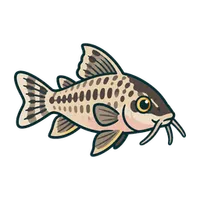
Corydoras sterbai
The warm-water, discus-friendly cory — keep six or more over clean sand; it forages, it does not "clean" your tank.
Difficulty: Beginner Tropical community tank ✓ Fact-checked care guide
Quick facts
| Adult size | ~65 mm / 2.6 in SL |
|---|---|
| Minimum tank | ~41 L / ~11 US gal — a 45 × 30 cm base for a small group, per SeriouslyFish |
| Temperature | 24–28 °C / 75–82 °F (warm-tolerant — a rare discus-compatible cory) |
| pH | 6.0–7.6 |
| Hardness | 1–15 dGH |
| Filtration & flow | Smooth, scrupulously-clean sand (no undergravel filter); protects the barbels |
| Diet | Omnivore — a good sinking pellet/tablet staple plus live/frozen Daphnia, Artemia, bloodworm |
| Social | A shoaling catfish — always keep a group of at least six |
| Temperament | Very peaceful — suitable for many community tanks |
| Lifespan | Commonly cited at ~5 years in the hobby (not stated by the primary source) |
Overview
The sterbai cory is one of the most popular armoured catfish in the hobby — spotty-headed, peaceful, and endlessly busy along the bottom. Its standout trait is temperature: SeriouslyFish gives a range of 24–28 °C (75–82 °F), the warm end of which makes it one of the few corys genuinely comfortable in a discus tank.
Like all corys it is a group animal and a bottom-sifter, not a cleaner. Get its sand, its group size and its water quality right and it is a hardy, characterful, long-serving community fish.
💷 Costing it out? See how much a sterbai cory really costs to keep — the sterbai cory itself is usually the cheapest part.
Water & tank
Lead with the numbers. SeriouslyFish lists temperature 24–28 °C (75–82 °F), pH 6.0–7.6, and hardness 1–15 dGH. That upper temperature tolerance is the reason keepers reach for sterbai as a warm-water / discus-compatible cory.
On space, the source says a tank of 45 × 30 × 30 cm (~41 L / ~11 US gal) is big enough for a small group. Substrate is critical: keep it scrupulously clean, skip undergravel filtration, and note the source’s warning that dirty or poorly-maintained substrates can cause corys to lose their barbels. Smooth sand or fine, clean gravel and good maintenance are the priorities.
Feeding
SeriouslyFish calls it omnivorous and easy to feed, with a good-quality sinking pellet or tablet as the staple, supplemented by live and frozen foods such as Daphnia, Artemia and bloodworm. Crucially, corys should not be left to survive on scraps from the fish above — always use sinking foods so the corys actually get fed.
Behaviour & tankmates
SeriouslyFish describes a very peaceful fish suitable for many community tanks — just not with anything very large or aggressive. Good tankmates it lists include small characins, cyprinids, anabantoids, dwarf cichlids and other peaceful catfish. The one firm social rule: always keep corys in a group, since they are far more confident and active with their own kind, and a group of at least six is best.
The persistent myth to bust is the "cleaner fish" idea. The source is explicit that although corys will polish off uneaten food that reaches the substrate, they will not keep the substrate clean — and in fact substrate maintenance becomes more important with corys present, because dirty conditions damage their barbels.
What to expect
Expect a peaceful, active, warmth-loving shoal that spends its day snuffling through clean sand. Given a group of six or more, smooth substrate, and diligent water changes, sterbai corys are among the easier and more rewarding catfish. Kept singly, over sharp or dirty substrate, or expected to "clean" the tank, they become withdrawn and prone to barbel erosion.
Myths, kindly busted
“Corydoras are cleaner fish that keep the substrate clean for you.”
SeriouslyFish says they’ll eat uneaten morsels but won’t keep the substrate "clean" — and substrate maintenance actually matters more when you keep corys.
“One cory is fine as a bottom-feeder.”
The source says to always keep Corydoras in groups, as they’re far more confident and active with conspecifics; a group of at least six is best.
“Corys are hardy enough to sit over any gravel.”
The source warns they can lose their barbels over poorly-maintained or dirty substrate and says to keep the substrate scrupulously clean without undergravel filtration.
🐟 Did you know? — Sterbai Cory fun facts
Little true delights about the sterbai cory — each one checked against a named source, no pet-shop myths.
- Sterba's cory naturally tolerates warm water up to about 28°C (82°F), which is why it's a favourite bottom-dweller for hot discus tanks. SeriouslyFish
- Like all corys it's a facultative air-breather, gulping air at the surface and absorbing oxygen through a modified, blood-rich intestine. SeriouslyFish
- An armoured catfish, it wears two rows of bony plates instead of scales and carries sharp pectoral spines that can deliver a painful sting. SeriouslyFish
When to act
We triage, not diagnose — but these are worth a closer look (starting with a water test):
- Eroded, shrinking, or missing barbels — a classic sign of dirty or sharp substrate; review substrate type and cleaning, and improve water quality.
- A cory that stops foraging, hides, or looks thin — check whether it is actually getting sinking food, plus water parameters and group size.
- Very frequent, frantic dashes to the surface for air (beyond the occasional normal gulp) — recheck water quality and oxygenation before anything else.
Heading to a vet? Print the Sterbai Cory vet-prep sheet — what to bring, what to tell them, and the questions to ask.
Sources & further reading
- SeriouslyFish — Corydoras sterbai (Sterbai Cory) — Max ~65 mm SL; base 45 × 30 cm (~41 L / ~11 US gal) for a small group; temperature 24–28 °C / 75–82 °F (warm/discus-compatible); pH 6.0–7.6; hardness 1–15 dGH; very peaceful; keep 6+; smooth clean substrate (barbel loss over dirty/sharp substrate); NOT a "cleaner fish".
Written & fact-checked by The Finfern Team against the sources above — kind, general guidance, not a diagnosis. If something looks wrong, test your water and, if it persists, contact a fish-savvy vet.

Get the free Sterbai Cory Starter Kit
The essentials at a glance, a setup checklist and a first-30-days plan for your sterbai cory — what to get right and what to watch for. Join the shoal and we’ll send it over. Free sheets and tools always stay open, no gatekeeping.
Water-first tips and new guides the moment they land. No spam — unsubscribe anytime. See how we handle your data in our privacy notice.