
Species · Rainbowfish
Threadfin Rainbowfish
Iriatherina werneri
A stunning but delicate nano: a mature, calm, planted tank with gentle flow, tiny food, no fin-nippers, and a shoal of six or more (ideally ten).
Difficulty: Intermediate Tropical community tank ✓ Fact-checked care guide
Quick facts
| Adult size | ~40 mm / 1.6 in SL |
|---|---|
| Minimum tank | ~54 L / ~14 US gal — a 60 × 30 cm base (smallest considered), per SeriouslyFish |
| Temperature | 22–30 °C / 72–86 °F |
| pH | 5.0–8.0 |
| Hardness | 1–12 dGH |
| Filtration & flow | Gentle flow only (dislikes a fast current); mature, densely-planted, calm tank; NOT a beginner fish |
| Diet | Tiny mouth — mostly small live foods (Daphnia, Moina, Artemia nauplii, micro worm) + fine dried |
| Social | A shoaling species — keep at least 6, ideally 10 or more |
| Temperament | Very peaceful — but NOT for the general community (easily outcompeted; long fins get nipped) |
| Lifespan | Commonly cited at ~3–4 years in the hobby (not stated by the primary source) |
Overview
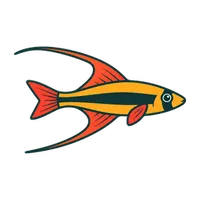
The Threadfin Rainbowfish is a jewel — a tiny 40 mm (1.6 in) fish whose males trail long, filamentous fins and flick them in courtship displays. It is one of the most beautiful nano fish in the hobby, and SeriouslyFish is honest that it is "actually quite delicate with some rather specific care requirements so isn’t a recommended beginner’s fish".
Read that as a warning, not a scare. Threadfins are not hard because they need exotic chemistry; they are hard because they are small, slow, gentle, and easily out-muscled at feeding time. Build the tank around those facts and they thrive.
💷 Costing it out? See how much a threadfin rainbowfish really costs to keep — the threadfin rainbowfish itself is usually the cheapest part.
Water & tank
Water is forgiving on paper — pH 5.0–8.0, hardness 1–12 dGH, temperature 22–30 °C (72–86 °F) — so the numbers aren’t the trap. Stability is. SeriouslyFish flags it as "wants a mature tank" and warns: "do not add this fish to a biologically immature aquarium as it can be susceptible to swings in water chemistry". Cycle fully, keep the tank mature and calm, and change water in small, steady amounts.
On setup, the smallest recommended footprint is 60 × 30 cm (~54 L / ~14 US gal). It is best in a densely planted tank with some floating plants to diffuse light, and gentle filtration — it comes from sluggish waters and "may struggle if there is a fast current", so avoid strong flow.
Feeding
Everything about feeding is "tiny". Its mouth is small, so food must be small: ideally live foods such as Daphnia, Moina, Artemia nauplii, microworm and copepods, with small or crushed floating dried foods also accepted. This is the make-or-break point — in a busy tank it is "easily outcompeted for food", so it needs slow, gentle tankmates and food it can actually reach.
Behaviour & tankmates
SeriouslyFish is clear it is "very peaceful but not suitable for the general community aquarium". Two things ruin it: faster fish that eat all the food before it gets any, and fin-nippers — "the long fins of mature males may be nipped at by certain common species". Keep it alone or with equally tiny, equally calm companions such as Pseudomugil, Microdevario, Danionella, small Trigonostigma, pygmy Corydoras, Otocinclus, and dwarf shrimp.
It is also a shoaling fish: keep "a group of at least 6 specimens, ideally 10 or more". A bigger group makes them less nervous, looks more natural, and — crucially — is when the males put on their best colour and their sparring fin-flicking displays.
What to expect
In the right tank — mature, calm, planted, gentle flow, a group of 6+ (ideally 10+), and tiny food it can win — the Threadfin is a peaceful, dazzling, display-heavy nano fish. In the wrong tank — new, fast, with nippers or greedy tankmates — it fades, starves, or loses its fins. It is a fish you set the stage for before you buy it.
Myths, kindly busted
“It’s a common, cheap nano fish, so it’s a good beginner community fish.”
SeriouslyFish says it is "actually quite delicate… isn’t a recommended beginner’s fish" and "not suitable for the general community aquarium".
“It’ll be fine in a fresh new tank.”
It "wants a mature tank" and can be "susceptible to swings in water chemistry" — don’t add it to a biologically immature aquarium.
“A pair or trio is enough.”
It is a shoaling species that "really should be kept in a group of at least 6 specimens, ideally 10 or more".
🐟 Did you know? — Threadfin Rainbowfish fun facts
Little true delights about the threadfin rainbowfish — each one checked against a named source, no pet-shop myths.
- Male threadfin rainbowfish grow extraordinary thread-like extended dorsal, anal and pelvic fin rays used to woo females and duel rivals. SeriouslyFish
- Displaying males raise the rounded first dorsal fin and “flick” their filamentous fins to entice a mate, often under floating plants. SeriouslyFish
- Iriatherina has stayed a one-species genus since 1974, and its rainbowfish family is most closely related to the freshwater fishes of Madagascar via ancient Gondwana. SeriouslyFish
When to act
We triage, not diagnose — but these are worth a closer look (starting with a water test):
- Threadfins hanging back and getting little food while faster tankmates feed — a sign they are being outcompeted; rethink tankmates and food size.
- Ragged, shortened or torn filamentous fins on males — possible fin-nipping by tankmates (the source warns of this); remove the culprits.
- Nervous, faded, hiding fish, especially after water changes or in a new tank — likely instability/immaturity or too small a group; the source ties this to needing a mature tank and a shoal of 6+.
Heading to a vet? Print the Threadfin Rainbowfish vet-prep sheet — what to bring, what to tell them, and the questions to ask.
Sources & further reading
- SeriouslyFish — Iriatherina werneri (Threadfin Rainbowfish) — Max ~40 mm SL; base 60 × 30 cm (~54 L / ~14 US gal); temperature 22–30 °C / 72–86 °F; pH 5.0–8.0; hardness 1–12 dGH; "quite delicate… isn’t a recommended beginner’s fish"; NOT for the general community (outcompeted for food; long male fins get nipped); gentle flow only; tiny food; keep 6+ (ideally 10+); wants a mature tank.
Written & fact-checked by The Finfern Team against the sources above — kind, general guidance, not a diagnosis. If something looks wrong, test your water and, if it persists, contact a fish-savvy vet.

Get the free Threadfin Rainbowfish Starter Kit
The essentials at a glance, a setup checklist and a first-30-days plan for your threadfin rainbowfish — what to get right and what to watch for. Join the shoal and we’ll send it over. Free sheets and tools always stay open, no gatekeeping.
Water-first tips and new guides the moment they land. No spam — unsubscribe anytime. See how we handle your data in our privacy notice.