
Species · Tetras & rasboras
Tiger Barb
Puntigrus tetrazona
A bold, striped, endlessly energetic barb whose "fin-nipper" reputation is really a stocking problem — buy a proper group of 8+ and give them room and the aggression mostly turns inward.
Difficulty: Beginner–Intermediate Tropical community tank ✓ Fact-checked care guide
Quick facts
| Adult size | ~60 mm / 2.4 in SL |
|---|---|
| Minimum tank | Base of at least 80 × 30 cm (~72 L / ~19 US gal), per SeriouslyFish — go longer for a full group |
| Temperature | 20–26 °C / 68–79 °F |
| pH | 5.0–8.0 (commercial strains are adaptable; acidic-to-neutral suits wild stock) |
| Hardness | 1–20 dGH |
| Filtration & flow | Cycled, moderate flow; a well-planted tank with driftwood shows the best colour |
| Diet | Omnivore — quality dried flakes/granules (some with plant content) plus live and frozen foods |
| Social | A gregarious shoaler — SeriouslyFish calls a group of at least 8–10 the minimum purchase |
| Temperament | Boisterous and famously nippy when kept in too-small a group or too little space |
| Lifespan | Commonly cited at ~5–7 years in the hobby (not stated by the primary source) |
Overview
The tiger barb (Puntigrus tetrazona) is one of the most familiar fish in the hobby — a small, bold, striped cyprinid from Sumatra that rarely tops 60 mm (2.4 in) standard length. Almost everything sold is a commercially bred strain (albino, "green"/moss, golden, platinum), so you are buying an adaptable fish rather than a fussy wild import.
They have a big-fish reputation crammed into a small body: fast, busy, and constantly squabbling among themselves. That energy is the whole appeal — but it is also the source of the fin-nipping stories, and the fix is almost always numbers and space rather than a "mean fish".
💷 Costing it out? See how much a tiger barb really costs to keep — the tiger barb itself is usually the cheapest part.
Water & tank
Get the water right first. SeriouslyFish gives temperature 20–26 °C (68–79 °F), pH 5.0–8.0 (commercial strains are adaptable; acidic-to-neutral is recommended for wild stock), and hardness 1–20 dGH — a genuinely wide, forgiving window, which is why they are a common first barb.
On space, SeriouslyFish lists a minimum base of 80 × 30 cm (~72 L / ~19 US gal) as "the smallest considered". A well-decorated tank with floating or overhanging plants and driftwood shows better colour, but the real reason to go longer than the minimum is swimming room for a proper group.
Feeding
Tiger barbs are easy to feed. SeriouslyFish describes them as "probably an omnivore" and recommends good-quality dried flakes and granules (at least some with added plant content) plus regular small live and frozen foods such as bloodworm, Daphnia and Artemia. Variety brings out their best colour.
Behaviour & tankmates
This is where honesty matters. SeriouslyFish is blunt that the tiger barb is "notoriously aggressive with a reputation for biting the fins of other fishes" — but adds that this "only seems to be pronounced when insufficient numbers are purchased or space is limited". The single most effective thing you can do is buy a proper group: a group of "at least 8-10 specimens" is the minimum purchase, because it keeps the barbs busy with each other rather than their tankmates.
Because they are boisterous, they are a poor match for timid, slow-moving or long-finned species (many livebearers, bettas, angelfish and other anabantoids). Better company is robust, comparably sized, open-water fish — other active cyprinids, suitable loaches, and many rainbowfishes and tetras. Research each choice before you buy.
What to expect
Expect a fast, tight, flickering shoal that is constantly interacting — that is a healthy tiger barb group, not a fight. Kept in eights or more with room to move, the fin-nipping problem mostly evaporates and the males colour up in each other’s company. Kept in twos and threes in a cramped tank, expect exactly the reputation they are famous for.
Myths, kindly busted
“Tiger barbs are just aggressive fin-nippers you can’t keep in a community.”
SeriouslyFish says the fin-biting "only seems to be pronounced when insufficient numbers are purchased or space is limited" — a group of at least 8–10 in adequate space redirects that energy inward.
“A few tiger barbs is fine; they don’t really need a group.”
The profile calls a group of "at least 8-10 specimens" the minimum purchase; too few is exactly what triggers the nipping.
“Dyed or "fancy" tiger barbs are just as tough as any other.”
SeriouslyFish notes many traded fish are "genetically weak, prone to disease, or develop physical deformities due to excessive inbreeding", and condemns artificial dyeing as cruel.
🐟 Did you know? — Tiger Barb fun facts
Little true delights about the tiger barb — each one checked against a named source, no pet-shop myths.
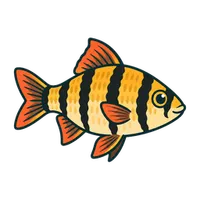
- Tiger barbs are named for the four dark vertical bars on their body — tetrazona means “four bands” in Greek. SeriouslyFish
- The tiger barb is one of the species turned into fluorescent “GloFish”, among the first genetically modified animals to become publicly available. Wikipedia
- Its reputation for fin-nipping seems to flare mainly when too few are kept together or space is limited. SeriouslyFish
When to act
We triage, not diagnose — but these are worth a closer look (starting with a water test):
- Persistent chasing or nipping directed at tankmates rather than at each other — often a sign the group is too small or the tank too cramped; reassess numbers and swimming space.
- A barb hanging alone, clamped, or hiding away from the shoal — barbs are gregarious, so a fish that withdraws warrants a close look at water quality and stress.
- Frayed fins, spots, rapid breathing, or refusal to eat across the group — general early warning signs; check and correct water parameters and consult a knowledgeable source before assuming a specific disease.
Heading to a vet? Print the Tiger Barb vet-prep sheet — what to bring, what to tell them, and the questions to ask.
Sources & further reading
- SeriouslyFish — Puntigrus tetrazona (Tiger Barb) — Max ~60 mm SL; minimum base 80 × 30 cm (~72 L / ~19 US gal); temperature 20–26 °C / 68–79 °F; pH 5.0–8.0; hardness 1–20 dGH; "notoriously aggressive" fin-nipper only when under-stocked or cramped; group of at least 8–10 the minimum purchase.
Written & fact-checked by The Finfern Team against the sources above — kind, general guidance, not a diagnosis. If something looks wrong, test your water and, if it persists, contact a fish-savvy vet.

Get the free Tiger Barb Starter Kit
The essentials at a glance, a setup checklist and a first-30-days plan for your tiger barb — what to get right and what to watch for. Join the shoal and we’ll send it over. Free sheets and tools always stay open, no gatekeeping.
Water-first tips and new guides the moment they land. No spam — unsubscribe anytime. See how we handle your data in our privacy notice.