
Species · Loaches
Weather Loach
Misgurnus anguillicaudatus
A hardy ~11-inch coldwater loach with real personality — but it needs a big, cool, mature tank and a tight lid, and (as a global invasive) must never be released or kept outdoors.
Difficulty: Beginner–Intermediate Coldwater (goldfish) tank ✓ Fact-checked care guide
Quick facts
| Adult size | ~280 mm / 11 in SL |
|---|---|
| Minimum tank | ~243 L / ~64 US gal — a 120 × 45 cm base minimum, per SeriouslyFish |
| Temperature | ~18–23 °C / 64–74 °F recommended (tolerates 5–25 °C) — NOT a tropical species |
| pH | 6.0–8.0 |
| Hardness | 1–12 dGH |
| Filtration & flow | Low flow; soft sandy substrate (it burrows); mature tank; a tight lid and screened intakes |
| Diet | Chiefly a predator — sinking dried foods plus live/frozen (Daphnia, Artemia, bloodworm) |
| Social | Peaceful with its own kind; more active in a small group, though it can be kept singly |
| Temperament | Peaceful and social — but may eat eggs, fry and very small fish |
| Lifespan | Commonly cited at ~10+ years in the hobby (not stated by the primary source) |
Overview
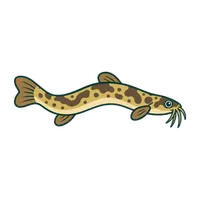
The weather loach — "dojo loach" in the US — is a long, eel-shaped, barbel-faced cobitid with an outsized personality; individuals often become tame enough to hand-feed. It gets its name from a reported sensitivity to barometric pressure, becoming more active before weather changes. It is charming, hardy, and genuinely long-lived.
It is also routinely mis-sold. The single most important honest fact is size: this is not a small-tank fish. SeriouslyFish gives it a maximum standard length of 280 mm (11 in), and its adult size "is rarely taken into account" by buyers. Plan for the adult, not the little juvenile in the shop.
💷 Costing it out? See how much a weather loach really costs to keep — the weather loach itself is usually the cheapest part.
Water & tank
This is a temperate / coldwater loach, not a tropical one. SeriouslyFish records it can tolerate 5–25 °C (41–77 °F), with 17.8–23.3 °C (64–74 °F) recommended for general care, and states plainly that "this is not a tropical species and should not be maintained as such for extended periods". Keep pH at 6.0–8.0 and hardness at 1–12 dGH. It also wants a mature, cycled tank — "it should never be added to a biologically immature set-up".
For space, SeriouslyFish calls a base of 120 × 45 cm (~243 L / ~64 US gal) necessary for long-term care. Give it a soft, sandy or fine-gravel substrate (it buries itself), avoid high flow, cover the tank well because loaches jump, and screen intakes so small ones cannot get sucked in. Critically, the source says it should NEVER be kept outdoors — because it is a globally established invasive species.
Feeding
It is chiefly a predator, foraging for insect larvae, small crustaceans and similar. In the aquarium it takes sinking dried foods but should also get regular small live and frozen meals — Daphnia, Artemia, bloodworm and the like. A varied diet is key to keeping it in good health.
Behaviour & tankmates
Weather loaches are peaceful with one another and with other species, and are social — they can be kept singly but "seem more at ease/active" with their own kind, so a small group suits them. They do best alongside medium-to-large, active fish that swim higher in the water than they do. Be aware they may prey on eggs, fry and very small fish, so nano tankmates are a risk.
They are often upsold as goldfish companions; while this can work with hardy single-tail goldfish (comets, shubunkins), an active weather loach can bother slow-moving "fancy" goldfish, especially at feeding time. As always, match adult size and temperature needs before buying.
What to expect
Expect a hardy, interactive, decade-plus companion that develops real "personality" — but one that grows to nearly a foot, needs a big, cool, mature, well-covered tank with a soft substrate, and must be treated as a long-term commitment. And expect one non-negotiable responsibility: because it is an established invasive species, it must never be released or kept outdoors where it could escape.
Myths, kindly busted
“Weather loaches are a good fish for a small tank or a bowl.”
SeriouslyFish gives a max standard length of 280 mm (11 in) and calls a 120 × 45 cm base necessary for long-term care; adult size is "rarely taken into account" but is a serious consideration.
“It’s a tropical loach — keep it warm.”
The source states it is "not a tropical species", recommends 17.8–23.3 °C (64–74 °F), and notes tolerance down to about 5 °C (41 °F); it is a temperate/coldwater fish.
“If it outgrows the tank I can pop it in the garden pond / let it go.”
SeriouslyFish flags it as an established alien/invasive species worldwide and says it should NEVER be maintained outdoors — releasing it is an ecological hazard, never an option.
🐟 Did you know? — Weather Loach fun facts
Little true delights about the weather loach — each one checked against a named source, no pet-shop myths.
When to act
We triage, not diagnose — but these are worth a closer look (starting with a water test):
- A newly-added loach thrashing at the surface or found out of the tank — expected jumping behaviour, especially when first introduced; secure the lid and screen intakes immediately.
- A loach refusing to bury, sitting on coarse gravel and looking scuffed or scraped — usually the wrong substrate (it needs soft sand/fine gravel) rather than illness; correct the substrate.
- Loss of appetite, sudden lethargy, or constant surface-gulping in an otherwise cool tank — treat as a water-quality/oxygen warning (it wants a mature tank); test parameters and check the setup first.
Heading to a vet? Print the Weather Loach vet-prep sheet — what to bring, what to tell them, and the questions to ask.
Sources & further reading
- SeriouslyFish — Misgurnus anguillicaudatus (Weather / Dojo Loach) — Max ~280 mm SL; base 120 × 45 cm (~243 L / ~64 US gal) necessary; NOT tropical — tolerates 5–25 °C, ~17.8–23.3 °C recommended; pH 6.0–8.0; hardness 1–12 dGH; peaceful/social (may eat fry/tiny fish); jumps (tight lid + screened intakes); needs a mature tank; established global INVASIVE — must NEVER be kept outdoors or released.
Written & fact-checked by The Finfern Team against the sources above — kind, general guidance, not a diagnosis. If something looks wrong, test your water and, if it persists, contact a fish-savvy vet.

Get the free Weather Loach Starter Kit
The essentials at a glance, a setup checklist and a first-30-days plan for your weather loach — what to get right and what to watch for. Join the shoal and we’ll send it over. Free sheets and tools always stay open, no gatekeeping.
Water-first tips and new guides the moment they land. No spam — unsubscribe anytime. See how we handle your data in our privacy notice.