
Species · Loaches
Yoyo Loach
Botia almorhae
Not a small snail-zapper: a ~6-inch social loach that needs a mature tank, a group of five or more, and a locked-down lid.
Difficulty: Beginner–Intermediate Tropical community tank ✓ Fact-checked care guide
Quick facts
| Adult size | ~160 mm / 6 in SL |
|---|---|
| Minimum tank | ~243 L / ~64 US gal — a 120 × 45 cm base minimum, per SeriouslyFish |
| Temperature | 19–27.5 °C / 66–82 °F (aim mid-range) |
| pH | 6.0–7.5 |
| Hardness | 2–12 dGH |
| Filtration & flow | A mature, stable tank only; smooth substrate; a tight-fitting lid (it jumps) |
| Diet | Chiefly carnivorous omnivore — varied dried, live/frozen foods plus fresh vegetables |
| Social | Gregarious — keep at least 5–6, preferably 10 or more; never singly |
| Temperament | Not especially aggressive, but big and active — nips slow, long-finned fish |
| Lifespan | Commonly cited at ~10+ years in the hobby (not stated by the primary source) |
Overview
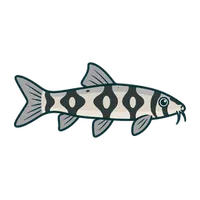
The yoyo loach gets its name from the "y-i-y-o" pattern of dark bars down a young fish’s silvery body — SeriouslyFish notes those bars break up as the fish ages. Taxonomy here is genuinely messy: the fish sold as "Botia lohachata / almorhae" is a group of closely-related species, and SeriouslyFish is honest that true B. almorhae "possibly [has] never been seen in the aquarium trade".
What matters for a keeper is simpler: this is a social, digging, snail-cracking loach that gets to a solid ~160 mm (6 in), needs a mature tank, and needs its own kind. It is sold as a small "algae/snail helper" and it is neither small forever nor a pest-control device.
💷 Costing it out? See how much a yoyo loach really costs to keep — the yoyo loach itself is usually the cheapest part.
Water & tank
Chemistry first: SeriouslyFish lists temperature 19–27.5 °C (66–82 °F) — aim around the middle — pH 6.0–7.5, and hardness 2–12 dGH (soft-to-moderate, slightly acidic to neutral). Note the cool low end: this is not a fish that wants to be cooked at 28 °C+.
Size and maturity are the two things people underestimate. The profile sets the minimum base at 120 × 45 cm (~243 L / ~64 US gal) — a big footprint for a "little" loach. It is emphatic that these loaches "should never be introduced to biologically immature set-ups" and want weekly 30–50% water changes. One more non-negotiable: "a tightly-fitting cover is also essential as these loaches do jump".
Feeding
SeriouslyFish describes Botia as "chiefly carnivorous" — the natural diet is aquatic molluscs, insects, worms and other invertebrates — but they also take vegetable matter. In the tank they are "largely unfussy" but "must be offered a varied diet": quality dried food, live or frozen bloodworm, Tubifex, Artemia, plus fresh veg like cucumber, melon, blanched spinach or courgette. They do eat snails, but the profile is blunt they "should never be considered the answer to an infestation since they’re not obligate molluscivores".
Behaviour & tankmates
Temperament is "not especially aggressive", but SeriouslyFish warns that "much smaller fishes may be intimidated by its size and sometimes very active behaviour", and that "slow-moving, long-finned species such as ornamental bettas, guppies and many cichlids should be avoided as trailing fins can be nipped". So: no fin-trailers, no timid nanos.
The group rule is the heart of yoyo-loach care. They are "gregarious, form complex social hierarchies and should be maintained in groups of at least 5 or 6 specimens, preferably 10 or more". Kept singly they "can become withdrawn or aggressive", and in a pair or trio "the dominant individual may stress the other(s) to the extent that they stop feeding". If you only have room for two or three, you do not have room for yoyo loaches.
What to expect
Expect a busy, clicking, personality-heavy fish that wedges itself in odd places, sometimes lies flat, and "greys out" during harmless dominance squabbles. In a proper group in a mature, well-oxygenated tank they are bold feeders that rise into midwater at mealtimes. Newly-imported fish are prone to weight loss ("skinny disease"), so quarantine and watch that they are actually eating before adding them to a display.
Myths, kindly busted
“Yoyo loaches are small snail-eaters — perfect pest control.”
They reach ~160 mm / 6 in, and SeriouslyFish says they "should never be considered the answer to an infestation since they’re not obligate molluscivores".
“One loach is fine in a community tank.”
The profile calls them "gregarious" and says keep "at least 5 or 6, preferably 10 or more" — kept singly or in twos/threes the dominant fish can stress others until "they stop feeding".
“Any warm, running tank will do.”
SeriouslyFish says they "should never be introduced to biologically immature set-ups", need a 120 × 45 cm base, and jump — "a tightly-fitting cover is essential".
🐟 Did you know? — Yoyo Loach fun facts
Little true delights about the yoyo loach — each one checked against a named source, no pet-shop myths.
- Yoyo loaches make audible clicking sounds that grow louder when the fish are excited, thought to come from grinding their throat teeth. SeriouslyFish
- Like most botiid loaches they will prey on aquatic snails, though they are not obligate snail-eaters. SeriouslyFish
- It is named for the Almora district of India; the common “Pakistani loach” label is a misnomer, as it lives in the Ganges drainage. SeriouslyFish
When to act
We triage, not diagnose — but these are worth a closer look (starting with a water test):
- A visibly thin, hollow-bellied fish, especially recently bought — SeriouslyFish flags "skinny disease" / weight loss as common in newly-imported loaches; isolate, confirm it is eating, and seek qualified advice.
- One loach hiding constantly or bullying tankmates — the classic under-grouped signal; the fix is a proper group of 5–6+, not more hiding spots alone.
- A loach found on the floor, or gasping after a new setup — jumping and intolerance of immature tanks are both documented; secure the lid and confirm the tank is fully cycled and stable.
Heading to a vet? Print the Yoyo Loach vet-prep sheet — what to bring, what to tell them, and the questions to ask.
Sources & further reading
- SeriouslyFish — Botia almorhae (Yo-Yo Loach) — Max ~160 mm SL; minimum base 120 × 45 cm (~243 L / ~64 US gal); temperature 19–27.5 °C / 66–82 °F; pH 6.0–7.5; hardness 2–12 dGH; gregarious, keep 5–6+ (preferably 10+); nips long-finned fish; needs a mature tank + tight lid (jumps); NOT snail pest-control. Trade "B. lohachata" = this B. almorhae group; true B. almorhae likely never in the trade.
Written & fact-checked by The Finfern Team against the sources above — kind, general guidance, not a diagnosis. If something looks wrong, test your water and, if it persists, contact a fish-savvy vet.

Get the free Yoyo Loach Starter Kit
The essentials at a glance, a setup checklist and a first-30-days plan for your yoyo loach — what to get right and what to watch for. Join the shoal and we’ll send it over. Free sheets and tools always stay open, no gatekeeping.
Water-first tips and new guides the moment they land. No spam — unsubscribe anytime. See how we handle your data in our privacy notice.