
Species · Cichlids
Severum
Heros efasciatus
A severum grows to the size of a side plate and wants warm, soft, acidic Amazon water. Give it a 4-foot-plus tank with hardscape to break sightlines, and it will reward you as one of the calmest big cichlids you can keep.
Difficulty: Intermediate Cichlid setup ✓ Fact-checked care guide
Quick facts
| Adult size | Honestly around 20-25 cm (8-10 in) at home, with wild fish reaching 30 cm / 12 in standard length. Shops sell them at 5 cm, but this is a full-hand-sized cichlid, not a "small" one. |
|---|---|
| Minimum tank | Footprint first: SeriouslyFish sets the floor at a 120 x 45 cm base (48 x 18 in), about 243 L / 64 US gal, for one fish. In practice most keepers go bigger: roughly 284 L / 75 US gal (a 4-foot tank) for a single severum, 379 L / 100 US gal for a bonded pair, and 750 L / 200 US gal or more for a group of six. Bigger is genuinely better here, because floor space and broken sightlines are how you manage a deep-bodied territorial cichlid, not a number printed on a bag. |
| Temperature | 22.2-28.9 C (72-84 F); most keepers settle around 26-28 C (79-82 F). |
| pH | 5.5-7.0 (soft and slightly acidic; this is a blackwater/whitewater Amazonian fish, NOT a hard-water Rift-lake cichlid) |
| Hardness | Soft: 1-8 dGH. Aim below about 5 dGH if you want them to spawn. |
| Filtration & flow | Strong biological filtration sized for a messy, large-bodied fish (over-filter rather than under-filter), but keep the current gentle to moderate. As a slow-water Amazonian, a severum dislikes being blasted, so aim for well-oxygenated water with turnover you can baffle down, not a river. |
| Diet | Omnivore that leans herbivorous. A good-quality cichlid pellet is the staple, plus regular vegetable matter (blanched courgette/zucchini, peas, spinach, spirulina) and occasional meaty treats (bloodworm, chopped prawn/earthworm). They will also eat plants and small tankmates given the chance. |
| Social | Not an obligate shoaler. Keep as a single fish, as one bonded pair, or as a group of 6 or more raised together so aggression is spread out rather than focused on one victim. Avoid keeping exactly two unrelated adults, as one usually bullies the other. |
| Temperament | Semi-aggressive but famously mild-mannered for its size, genuinely peaceful outside of spawning, when a bonded pair will fiercely defend a territory. Kept alone long-term, some individuals turn grumpy as they mature. |
| Lifespan | Typically 7-10 years, and often longer with clean, stable water and enough space. |
Overview
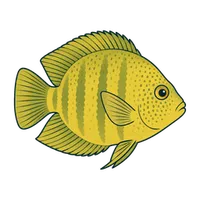
The severum (Heros efasciatus) is a deep, disc-shaped South American cichlid from the Amazon basin, often nicknamed the "poor man's discus" for its round shape and the fact it is far hardier and cheaper than a real discus.
It is one of the gentler large cichlids: outside of breeding it is calm enough to share a big tank with other robust, peaceful species, which is unusual for a fish this size.
You will meet it as several colour forms, wild-type green, plus line-bred gold, red-spot/super-red and turquoise. These are generally regarded as line-bred colour forms of the same species — though the provenance of some (notably gold and super-red) is genuinely unclear and may involve historical hybridisation.
The catch is size and water: it needs a genuinely large, well-filtered tank of soft, warm, slightly acidic water, and it will treat anything bite-sized as food.
💷 Costing it out? See how much a severum really costs to keep — the severum itself is usually the cheapest part.
Water & tank
Water first. Target soft, warm, slightly acidic conditions: 22.2-28.9 C (72-84 F), pH 5.5-7.0, and 1-8 dGH. This is a South American softwater fish, so do NOT try to keep it in the hard, alkaline water Rift-lake cichlids want, the chemistry is the opposite end of the scale.
Cycle the tank before the fish arrives. A severum is big and messy; it needs an established biological filter holding ammonia and nitrite at 0 ppm, with nitrate kept low by regular water changes. New, uncycled tanks are the number-one killer of large cichlids.
Space and footprint matter more than raw litres. SeriouslyFish's floor is a 120 x 45 cm base (243 L / 64 US gal) for one fish; realistically plan on a 4-foot, 284 L / 75 US gal tank for a single, 379 L / 100 US gal for a pair, and 750 L / 200 US gal or more for a group of six. Length and floor area are what let a territorial cichlid hold a territory without cornering others.
Aquascape to break lines of sight. Use smooth sand (they dig and sift), plus driftwood, rounded rocks and tall hardscape so no fish can see across the whole tank. Broken sightlines are the single best aggression-management tool for cichlids. Dim, tannin-stained "blackwater" light suits them and shows off colour.
Overpower the filtration but tame the flow. Filter for a heavy bioload, yet keep the current gentle to moderate; this is a slow-water fish that resents being blasted. Do consistent weekly water changes to export the waste all that food produces.
Feeding
Make a quality cichlid pellet the everyday staple; a green/herbivore-leaning formula suits their mostly plant-and-fruit wild diet.
Offer vegetable matter often: blanched courgette/zucchini, peas, spinach or spirulina. A veg-heavy diet keeps their gut and colour healthy.
Add meaty foods as treats, not the base: bloodworm, chopped prawn or earthworm a couple of times a week is plenty.
Feed small amounts once or twice a day and don't overfeed; leftover food fouls the water fast in a tank this heavily stocked, and severums put on weight easily.
Remember they see fish and shrimp small enough to swallow as food, so "feeding" can accidentally mean eating tankmates.
Behaviour & tankmates
Reputation earned: for a 20 cm+ cichlid the severum is remarkably peaceful, and a good centrepiece for a community of large, calm species.
The exception is spawning. A bonded pair becomes territorial and will defend eggs and fry hard, so give a breeding pair their own space or expect conflict.
Do not pair it with dedicated bruisers like oscars, jack dempseys or firemouths; the severum usually comes off worse and the tank turns into a warzone.
Skip anything small enough to eat. Neon-sized fish, dwarf shrimp and tiny snails are snacks. Choose sturdy, similar-sized, non-nippy tankmates instead (think larger peaceful cichlids, big tetras/silver dollars, robust catfish), always sized to the tank.
Two unrelated adults is the classic mistake: one dominates and bullies the other. Keep a single fish, a genuine bonded pair, or a group of six or more raised together so aggression is diluted.
What to expect
A slow-growing, long-lived centrepiece: expect a curious, plate-sized fish that learns to recognise you and "begs" at feeding time.
Digging and rearranging: they sift sand and may uproot plants, so anchor or pot planting and use smooth substrate.
Colour that develops with age and diet, greens deepen and the line-bred golds/reds/turquoise intensify as they mature.
A years-long commitment: at 7-10+ years and 20 cm+, this is not a fish to buy on impulse for a small tank.
Myths, kindly busted
“A severum is basically a discus, or a "lesser" discus.”
The "poor man's discus" nickname is about the round shape and lower price, not a real relationship. Severums are their own beautiful species and are far hardier and more forgiving than discus, though they still need soft, warm, clean water.
“It's a small cichlid, a 55 gallon (or a starter tank) is fine forever.”
Severums reach 20-25 cm (8-10 in), even up to 30 cm in the wild. SeriouslyFish's minimum is a 4-foot, ~243 L / 64 US gal footprint for ONE, and most keepers go to 284 L / 75 US gal or well beyond. Undersized tanks stunt them and turn a mellow fish aggressive.
“Cichlids all like hard, alkaline "cichlid salt" water.”
That's true for Rift-lake (African) cichlids, not this one. Heros efasciatus is a soft-water Amazonian: pH 5.5-7.0 and 1-8 dGH. Hardening the water to "cichlid" levels works against it.
“Gold, super-red and turquoise severums are man-made hybrids like blood parrots.”
These are selectively line-bred colour strains of Heros efasciatus itself (gold appeared as a colour mutation in captive greens, and red-spot/turquoise were bred up from there), not deformed interspecies crosses. That's an important welfare distinction: unlike the blood parrot, whose crossbreeding leaves fish with a deformed mouth and swim-bladder and breathing problems that many keepers consider an ethical concern, colour-morph severums are normal, fully functional fish.
“The severum you bought is Heros severus.”
For decades shop fish were labelled Heros (or Cichlasoma) severus, but almost every "severum" in the trade is actually Heros efasciatus. The true H. severus is a rounder-headed, rarer mouthbrooder from the Orinoco/Rio Negro; H. efasciatus is the Amazon-basin substrate spawner you'll actually own.
When to act
We triage, not diagnose — but these are worth a closer look (starting with a water test):
- Gasping at the surface, clamped fins or sudden listlessness: stop feeding, test the water for ammonia/nitrite (should be 0) and nitrate, and do a water change. In a big messy cichlid this is usually a water-quality problem first.
- Rapid or laboured gill movement, or all the fish hanging near the filter outflow: check temperature and oxygenation, and confirm the tank is fully cycled.
- White salt-grain spots (ich), fuzzy patches, or a fish rubbing/"flashing" against decor: early disease. Quarantine if you can, check temperature stability, and seek reputable treatment guidance rather than guessing.
- Torn fins, missing scales or one fish constantly hiding in a corner: aggression, usually from overcrowding, too few hiding spots, a too-small tank, or a spawning pair. Add sightline breaks/space or rehome the odd-one-out.
- Hole-in-the-head style pitting on the face, bloating, or a fish that stops eating for days: escalate. Review diet and water quality and consult a fish-savvy vet or an experienced fishkeeping community, this record triages, it does not diagnose.
Heading to a vet? Print the Severum vet-prep sheet — what to bring, what to tell them, and the questions to ask.
Sources & further reading
- Seriously Fish - Heros efasciatus (Severum) — Primary authority: max length 300 mm/12 in SL, minimum 120x45 cm base (~243 L / 64 US gal), 22.2-28.9 C / 72-84 F, pH 5.5-7.0, 1-8 dGH, diet, temperament, substrate egg-guarder, distribution.
- Aquariadise - Severum Cichlid Care Guide — Modern welfare tank sizes (75/100/200+ US gal for single/pair/group), lifespan 7-10 years+, temperature, pH, hardness, peaceful reputation, debunks the "poor man's discus" put-down.
- Aquarium Store Depot - Severum Cichlid Care Guide — Semi-aggressive temperament, adult size 20-25 cm, lifespan 7-10 years, pair-bonding, taxonomy note (H. severus vs H. efasciatus) and the "poor man's discus" myth.
- Wikipedia - Heros (fish) / Heros efasciatus — Confirms H. efasciatus is the species actually dominant in the aquarium trade; H. severus is from the Orinoco/Rio Negro and distinguished by a rounder head.
- Fishipedia - Heros efasciatus severum sheet — Cross-check on size, soft-water parameters and Amazon-basin origin; notes H. efasciatus commonly exceeds 20 cm.
Written & fact-checked by The Finfern Team against the sources above — kind, general guidance, not a diagnosis. If something looks wrong, test your water and, if it persists, contact a fish-savvy vet.

Get the free Severum Starter Kit
The essentials at a glance, a setup checklist and a first-30-days plan for your severum — what to get right and what to watch for. Join the shoal and we’ll send it over. Free sheets and tools always stay open, no gatekeeping.
Water-first tips and new guides the moment they land. No spam — unsubscribe anytime. See how we handle your data in our privacy notice.